How to Choose the Best Fleet Camera in 2026?
Choosing the best Fleet Camera in 2026 requires more than comparing image resolution or storage capacity. Fleet managers must examine real driving conditions, installation quality, driver feedback, and long-term operating costs. A camera that performs well in a showroom may struggle on a rain-covered windshield or a dark rural road.
Sanjit Biswas, co-founder and CEO of Samsara, has said, “The future of physical operations is connected.” This idea reflects the growing role of connected Fleet Camera systems in safer, more accountable transportation. Modern solutions can combine road footage, cabin views, GPS data, collision detection, and vehicle diagnostics. However, more data does not automatically mean better decisions. Managers still need clear policies, trained supervisors, and reliable review procedures.
The right choice depends on your fleet’s daily reality. A regional delivery company may value sharp night footage and simple installation. A long-haul operator may need cloud access, offline recording, and stable cellular performance. Check the camera’s field of view, frame rate, storage design, alert accuracy, and compatibility with existing telematics software. Test the system in actual vehicles. That step is easy to overlook.
No device is perfect. False alerts can waste review time, while poor mounting can create blind spots. Driver acceptance may also affect results. A practical evaluation should measure safety improvements, maintenance effort, data security, and total cost over several months. The best Fleet Camera is not necessarily the most expensive model. It is the system your team can install correctly, use consistently, and improve honestly.
What a Fleet Camera Is and Why It Matters in 2026
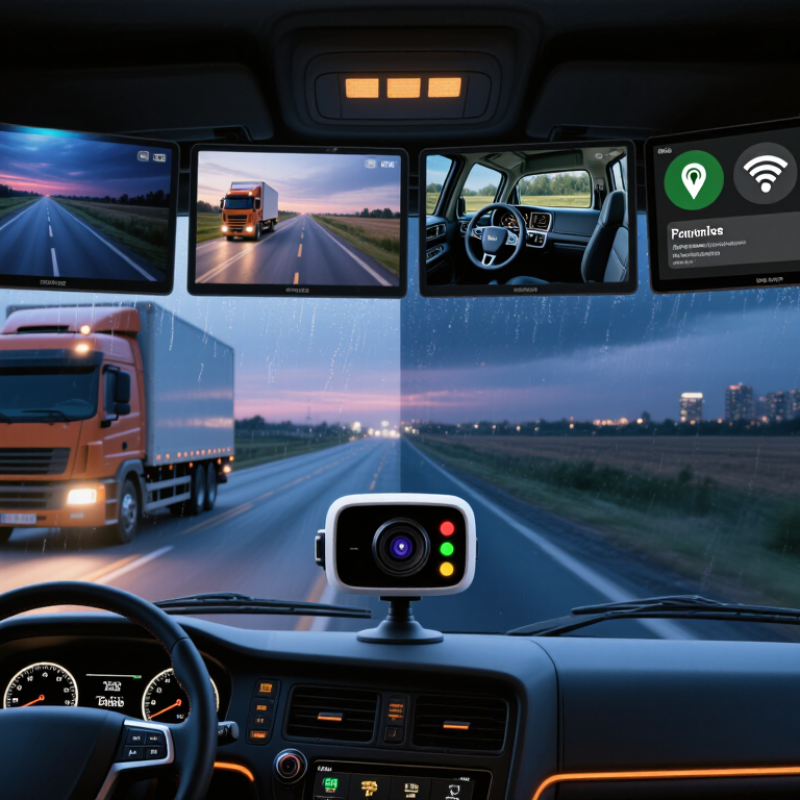
A fleet camera is an in-vehicle system that records road scenes, driver actions, and operational events. It may combine forward-facing, cabin-facing, side, and rear cameras. Unlike a basic dashcam, it can connect footage with speed, location, braking, and impact data. The useful output is context. A clear clip can show a sudden merge, blocked visibility, or harsh braking. It is not a truth machine.
The need is measurable. NHTSA’s 2023 Traffic Safety Facts reported 40,901 traffic deaths in the United States. That figure covers all road users, not fleets. It still shows the level of daily exposure businesses manage. In 2022, FMCSA reported 5,837 large trucks involved in fatal crashes in its Large Truck and Bus Crash Facts. IIHS research indicates that rear cameras can improve rear visibility, but they cannot replace mirrors or direct observation. Data helps, but setup matters.
In 2026, the best fleet camera should capture useful evidence without overwhelming managers. Test low-light clarity, image stability, storage retention, event tagging, and secure access. Consider forward views, cabin activity, side zones, and loading areas. Drivers also need a clear recording policy. Poor placement can create glare, false alerts, or privacy concerns. I would test three ordinary routes before buying. Urban turns. Night loading. Busy depots. If footage cannot explain who, what, and when, the purchase is incomplete. That limitation deserves honest review.
Which Fleet Camera Features Match Your Operational Needs
Choosing a fleet camera in 2026 starts with the operation, not the specification sheet. A regional delivery fleet may need forward, side, and rear views for crowded loading areas. Long-haul operators may value driver-facing footage, fatigue indicators, and reliable night recording. A perfect camera does not exist.
The Federal Motor Carrier Safety Administration’s 2022 Large Truck Crash Facts recorded 5,837 fatal crashes involving large trucks. That figure makes clear video evidence should support prevention, not only post-crash reviews. Select cameras with event-based recording, clear timestamps, GPS context, and secure cloud access. Low-light performance matters during a 5 a.m. departure. So does adequate storage when cellular coverage disappears.
Independent research can guide expectations. The Insurance Institute for Highway Safety found forward collision warning reduced rear-end crashes by 27%, while automatic emergency braking reduced them by 50% in passenger vehicles. Heavy vehicles operate differently, so these results should not be copied blindly. Test alerts on your actual routes. Excessive warnings may train drivers to ignore every notification. Driver-facing cameras can improve coaching, but unclear privacy policies may damage trust. Define retention periods, access permissions, and review procedures before installation. In real fleets, overlooked details often matter most.
How to Choose the Best Fleet Camera in 2026?
Which Fleet Camera Features Match Your Operational Needs
Higher resolution provides more pixels for identifying road signs, license plates, and incident details.
1080p offers a practical balance for everyday fleet monitoring, while 1440p and 4K are better suited
to operations that require greater image detail. Higher resolutions also increase storage and bandwidth
requirements.
Data is based on standard raster dimensions: HD 1280×720, Full HD 1920×1080, QHD 2560×1440, and 4K UHD 3840×2160.
How to Compare Video Quality, Coverage, and Night Performance
Choosing the best fleet camera in 2026 starts with useful video, not impressive specifications. Compare resolution, frame rate, bitrate, and dynamic range together. A 4K image may reveal a license plate, but heavy compression can erase crucial details. I would test footage from moving vehicles, not only showroom clips. Check plates at 20 metres, faces under glare, and road signs during rain.
Coverage requires more than a forward-facing lens. Map the camera’s actual viewing zones around the cab, trailer, and side blind spots. A 120-degree lens may miss a close cyclist beside the vehicle. A wider lens can create edge distortion. The FMCSA’s Large Truck and Bus Crash Facts 2022 recorded 5,837 large trucks involved in fatal crashes. That figure reinforces the value of clear, multi-angle evidence, although cameras cannot replace attentive driving. Small gaps matter.
Night performance deserves harder testing. NHTSA’s Traffic Safety Facts 2020 reported that nighttime travel represented about 25% of vehicle travel, yet nighttime crashes caused roughly 49% of passenger-vehicle occupant fatalities. Compare infrared visibility, low-light colour retention, headlight glare control, and motion blur. Test an unlit depot, a wet road, and a bright intersection. Night footage often looks acceptable on a phone, then fails when enlarged. I have learned that more pixels do not guarantee better evidence. Storage costs, dirty lenses, and poor installation can quietly defeat a strong sensor. Field testing remains imperfect, but it exposes those weaknesses early.
How to Assess Installation, Costs, Reliability, and Fleet Support
Choosing the Best Fleet Camera in 2026
Installation affects performance more than many buyers expect.
A camera may have excellent specifications, yet poor positioning can create blind spots or glare. Inspect the windshield angle, cable route, power source, and mounting strength before approving a fleet-wide rollout. Test several vehicle types, including older models with different dashboards. Keep the installation process simple. Complex wiring increases maintenance time and creates more failure points.
Cost should include hardware, installation labor, connectivity, storage, training, and replacement units.
A low purchase price can become expensive when technicians repeatedly revisit vehicles. Ask for a clear five-year cost estimate, not only a monthly subscription figure. Reliability testing should cover heat, vibration, dust, weak network coverage, and overnight parking. Review uptime records, warranty terms, diagnostic tools, and data recovery procedures. Numbers help, but field evidence matters more.
Fleet support needs practical measurement.
Can support staff respond quickly when a vehicle stops transmitting? Are firmware updates controlled and documented? Can managers export usable footage without complicated steps? Request a pilot period with written acceptance standards. No checklist is perfect. Some failures appear only after months of vibration or seasonal temperature changes. That uncertainty deserves attention. A careful buyer should record installation issues, driver feedback, and support response times during the pilot, then revise the purchase decision when the evidence disagrees with initial expectations.