

TREND FOR

MINIATURIZATION

Why Buy Outdoor Trampolines in Bulk?

Buying an Outdoor Trampoline in bulk can suit schools, camps, resorts, retailers, and recreation centers that need several units. A larger order may reduce the per-unit price and simplify purchasing. It can also help keep equipment consistent across multiple play areas. But bulk purchasing is not automatically the smarter choice. Storage, delivery, and maintenance costs can reduce the savings.

The right decision starts with a clear estimate of demand. Consider who will use each trampoline, how often, and where it will be installed. Compare frame materials, weight limits, enclosure design, weather resistance, warranty terms, and access to replacement parts. Ask suppliers for product specifications and written pricing, including freight and any assembly requirements. Check that the chosen models match the intended setting and follow the manufacturer’s installation and care instructions.

Look closely at the practical details. Several large cartons need dry, secure storage; a crowded warehouse can turn a good discount into a headache. Staff should also have a simple plan for routine checks, such as inspecting the mat, springs, frame, and netting. Small wear matters. A bulk order may offer better value when demand is steady and products are dependable, but buying too many can tie up cash and space. That part is easy to underestimate. A measured comparison of total costs, supplier support, and expected use can help buyers choose a quantity they can manage—not merely the largest quantity offered.
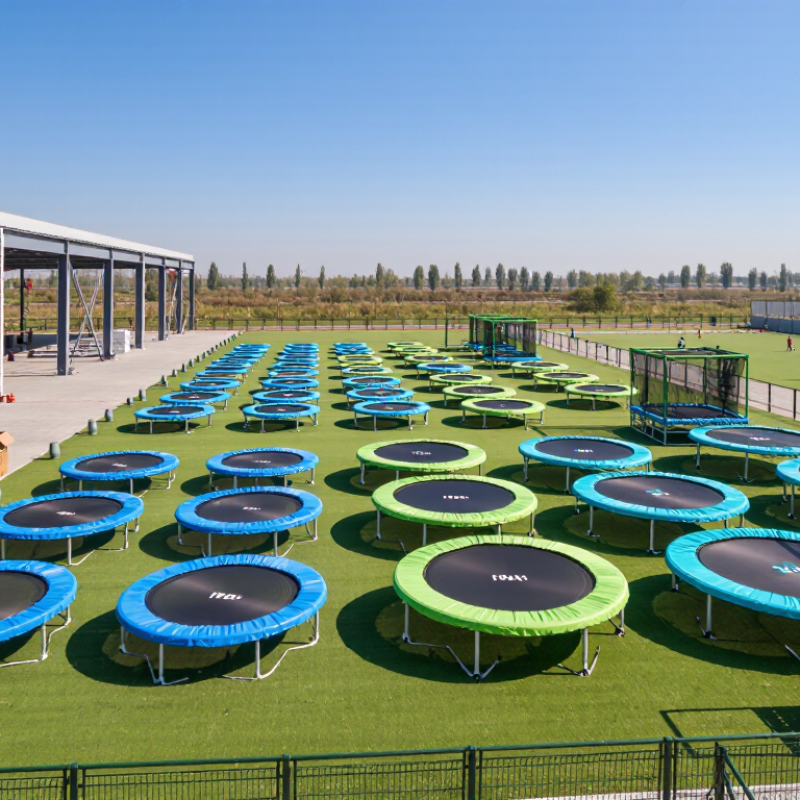
Why Buy Outdoor Trampolines in Bulk?

Outdoor Trampolines in Bulk: How Group Purchasing Works

Why Buy Outdoor Trampolines in Bulk?

Outdoor Trampolines in Bulk: How Group Purchasing Works

Group purchasing works best when buyers agree on specifications before requesting quotes. A school, recreation center, or group of families can compare frame size, enclosure design, replacement-part availability, and delivery terms in one shared checklist. The SFIA 2024 Topline Participation Report says 242.1 million Americans took part in at least one sport or fitness activity in 2023. That broad participation figure does not predict trampoline demand, but it supports the value of planning shared recreation purchases carefully.

A coordinator can collect quantities, confirm delivery addresses, and ask suppliers for written pricing at several order sizes. Compare the full landed cost, not just the unit price: freight, unloading, assembly, and spare parts can change the budget. Request clear product specifications and warranty terms, then inspect each shipment against the order. Bulk buying is not automatically cheaper. Uneven ground, storage limits, or changing enrollment can leave equipment unused. I have seen planning miss those practical details.

Tips: Set a firm order deadline, keep a small contingency budget, and name one person to track payments and delivery. Ask for the packing list before dispatch. Check each carton on arrival.

Demand and Risk: CPSC Estimated 104,691 Trampoline ER Visits in 2014

Why Buy Outdoor Trampolines in Bulk?

The CPSC estimated

104,691 emergency-room visits related to trampoline injuries in the United States in 2014.

That figure deserves attention. It is a national estimate, not a prediction of injuries at any one site. Still, it shows why demand and safety planning belong in the same conversation. A trampoline may look inviting in a yard, but a loose frame joint or crowded jumping surface can change the experience quickly. Numbers alone cannot explain every accident. They can, however, prompt buyers to ask better questions.

For camps, recreation facilities, and other group settings, bulk purchasing can make equipment selection more consistent. It can also make inspection routines easier to organize. Check springs, frame connections, padding, and anchor points before use, and keep the landing area clear. Set clear rules, including one jumper at a time, and ensure active adult supervision. Buying more units does not make use safer by itself. That part takes ongoing work. A skipped inspection may seem minor on a busy morning, but it is worth reconsidering. Choose models with clear setup instructions and maintain a written inspection schedule.

Safety Benchmarks: ASTM F381 Sets Consumer Trampoline Requirements

ASTM F381 sets safety benchmarks for consumer trampolines, covering components, assembly, use, warnings, and enclosure-related requirements. For bulk buyers, it offers a practical checklist: request test documentation, review assembly instructions, and inspect sample units before approving a large order. Look closely at spring padding, frame joints, enclosure attachments, and warning labels. Small details matter.

The U.S. Consumer Product Safety Commission’s 2014 NEISS data estimated 104,691 trampoline-related emergency department visits nationwide. That figure makes safety checks more than paperwork. ASTM conformity does not remove every risk, and the standard is not a magic shield. Buyers should verify which edition a supplier uses and confirm that the delivered units match the tested configuration. A mismatch can be easy to overlook.

For repeat orders, retain inspection records and compare samples across production lots. Check that enclosure poles remain firmly secured and padding covers exposed springs. Ask for clear weight limits and maintenance guidance, too. These steps take time. A rushed installation can still undermine careful purchasing, so provide readable setup instructions and allow space for proper anchoring and supervision. Bulk buying can simplify sourcing, but consistency deserves ongoing attention.

Bulk Cost Planning: Compare Unit Price, Freight, Setup, and Lifetime Costs

Bulk buying changes more than the factory price. Compare landed cost per trampoline: unit price, crating, freight, unloading, and assembly labor. The American Transportation Research Institute’s 2024 Operational Costs of Trucking report put average trucking costs at $2.26 per mile in 2023. Treat this as context, not a freight quote; route, fuel, trailer space, and delivery access all change the bill. Ask suppliers for freight pricing by shipment size, then calculate cost per usable unit. A low unit price can lose its appeal when pallets arrive across several delivery windows.

Setup deserves its own line. Count crew hours, tools, ground preparation, and the time needed to inspect frames, springs, and netting. For a fair comparison, use the same installation assumptions for every quote. Then estimate lifetime costs: replacement parts, routine checks, weather exposure, and expected service life. NIST’s Life-Cycle Costing Manual recommends comparing costs over an asset’s full life, rather than purchase price alone. That method is useful here, though trampoline lifespan varies sharply with use and care. I would leave a contingency in the spreadsheet; outdoor wear rarely follows a neat schedule. Bulk savings look real only when delivered, installed, and maintained costs still work per unit.

Fleet Management: Use Inspection Schedules and Manufacturer Load Ratings

Buying outdoor trampolines in bulk can make fleet management more consistent. Matching models often share inspection procedures and replacement-part specifications. That helps staff compare units across a site. But a uniform fleet still needs individual checks.

Set an inspection schedule using the manufacturer’s instructions, then record each check by unit number and date. Before use, staff can look for loose frame connections, stretched springs, torn mats, worn padding, damaged enclosures, and shifting anchors. Check again after severe weather or heavy use when appropriate. Small cracks matter. If a defect affects safe operation, take that trampoline out of service until it has been assessed and repaired.

Load ratings are not estimates. Follow the rating and conditions stated by the manufacturer; do not assume that similar-looking units have identical limits. Post the relevant information where staff can see it, and train them to manage the number of users and their combined weight accordingly. Keep manuals and inspection records together, so a supervisor can spot recurring problems across the fleet. A schedule can become a checkbox exercise, though. Review the findings, adjust inspection frequency when wear patterns change, and ask qualified service personnel about damage staff cannot confidently assess.

Why Buy Outdoor Trampolines in Bulk? - Fleet Management: Use Inspection Schedules and Manufacturer Load Ratings
Fleet Management Area Suggested Timing or Rating What to Check or Verify Record or Action
Pre-use inspection Before each operating day or use period Check the frame, legs, springs or other connectors, jumping mat, padding, enclosure net, access point, and surrounding area for visible damage, looseness, wear, or hazards. Record the unit ID, date, inspector, findings, and whether the trampoline was cleared for use. Remove damaged equipment from service until assessed and repaired.
Routine detailed inspection At a documented interval set by the operator, manufacturer instructions, and local requirements Examine connection points, stitching, mat attachment points, frame joints, anchors, protective padding, and enclosure components more closely than during a visual pre-use check. Log defects, maintenance, replacement parts, and return-to-service approval. Increase inspection frequency where use or weather exposure is heavier.
After severe weather or an incident Before the next use Check for movement, displaced anchors, bent or separated frame parts, damaged fabric, water-related deterioration, and impact damage. Keep the unit closed until a competent inspection confirms it is safe to use; document the event and any corrective work.
Periodic maintenance review At intervals specified by the manufacturer, with frequency adjusted to usage and condition Review inspection logs and assess wear-prone parts, fasteners, anchors, padding, enclosure materials, and the condition of the installation surface. Plan repairs and replacement parts across the fleet. Do not treat a maintenance interval as a substitute for checks before use.
Manufacturer load rating Use the maximum user weight and any other limits stated on the unit or in its instructions Confirm the rating for each specific model and configuration. Load limits are product-specific; do not assume one rating applies to every trampoline in a bulk order. Keep the rating accessible to staff and users. Do not exceed the stated limit, and follow the manufacturer’s rules on the number of users and permitted use.
Bulk-order receiving check For every delivery and unit received Match model and configuration details to the purchase records; check supplied instructions, safety labels, included components, and stated load information. Assign a unique fleet ID to each unit and retain its model, serial or other identifying details, installation date, documentation, and inspection history.
Fleet-level purchasing decision Before ordering and when reviewing replacement needs Compare documented specifications, parts availability, installation requirements, warranty terms, and the inspection and maintenance workload for the intended use. Estimate the number of units needed, spare parts, storage, and staff time. Bulk buying can simplify tracking and purchasing, but does not change each unit’s load rating or inspection needs.
Important safety note Always follow the instructions supplied with the specific product Inspection intervals and operating limits can vary by product, usage, site conditions, and applicable regulations. Use the manufacturer’s instructions and applicable local requirements where they specify stricter procedures or limits.