What Is Foot Scrub and What Is It Used For?
Foot Scrub is a textured product designed to loosen dry, rough surface skin on the feet. It may use sugar, salt, pumice, or other exfoliating ingredients. Picture a small amount worked gently over damp heels, then rinsed away. The goal is smoother-feeling skin, not a raw or tender sole. Less pressure is often wiser.
The market context is broad, not scrub-specific. Grand View Research estimated the global foot-care market at about US$3.4 billion in 2023; its report covers many products, not Foot Scrub alone. That figure signals commercial interest, but it does not prove that scrubs improve every foot condition. A market estimate is not a clinical result.
Podiatrist Dr. Miguel Cunha is one recognized voice in foot care. A cautious summary of common podiatric guidance is to exfoliate gently and moisturize afterward; I cannot verify a verbatim Foot Scrub-specific quotation from him. That distinction matters. Scrubbing too hard may irritate skin, especially when it is cracked, sensitive, or already sore. A mild scrub can help with ordinary roughness, but it is not a treatment for every foot problem. Results vary. This guide explains what Foot Scrub does, what it is used for, and how to approach it with realistic expectations.
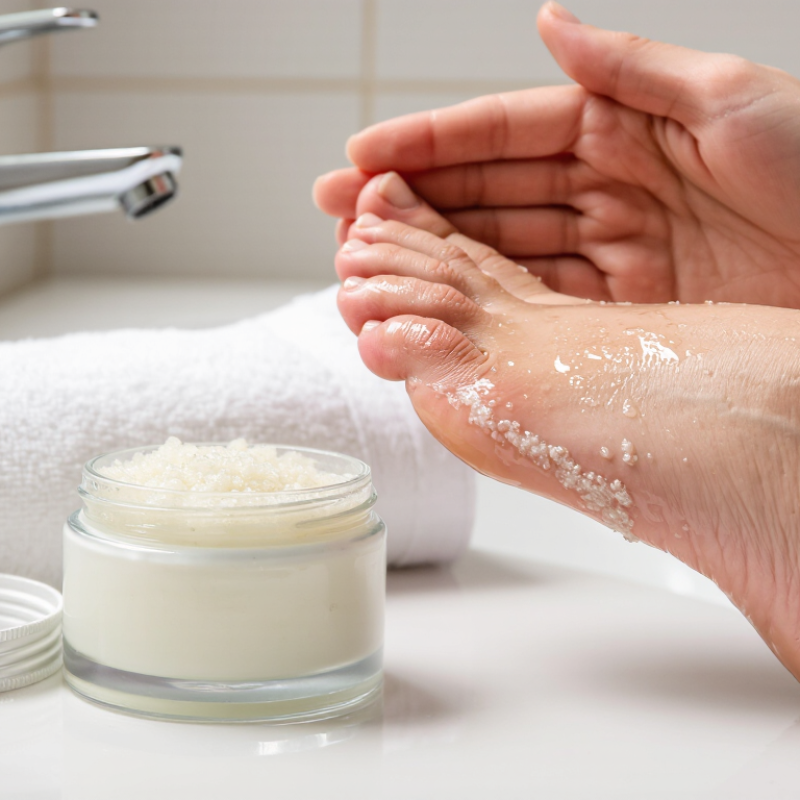
What a Foot Scrub Is: A Physical or Chemical Exfoliant for Feet
A foot scrub is an exfoliant made for the thicker skin on the soles. Physical scrubs use particles, such as fine pumice, to loosen surface flakes through gentle rubbing. Chemical exfoliants use ingredients such as alpha-hydroxy acids to help shed dead skin without abrasive grains. Some products combine both methods. Neither type can reliably treat a corn, infection, or deep crack.
The American Podiatric Medical Association reported that 77% of Americans had experienced foot problems in its 2014 foot-health survey. That figure describes foot problems broadly; it does not show that scrubs prevent or treat them. A scrub may smooth rough heels, but overuse can leave skin sore or irritated. Results vary, and it is easy to rub too hard when skin feels thick. People with diabetes, reduced foot sensation, or open cracks should ask a healthcare professional before exfoliating.
Tips: Use a small amount on damp, intact skin. Rub lightly, rinse well, and apply moisturizer. Stop if it stings or reddens. A softer heel may take time; more pressure is not better.
How It Works: Sole Skin Can Reach About 1.5 mm in Thickness
The skin on your soles is built to withstand pressure from standing and walking. NCBI Bookshelf’s clinical reference, Skin Anatomy, Histology, and Physiology, reports that epidermal thickness can reach about 1.5 mm on the soles. That is much thicker than eyelid skin. But this figure describes natural anatomy, not a target for scrubbing. Thickness varies across the foot and between people.
A foot scrub uses abrasive particles or exfoliating ingredients to loosen surface flakes. Gentle exfoliation may smooth dry, rough patches on the heel, but it should not remove the skin’s protective barrier. Think of the firm edge of a callus, not a layer to grind away. The American Academy of Dermatology advises gentle exfoliation and moisturizing afterward. Scrubbing too hard can leave skin sore or cracked. Easy to overdo.
Tips: Soak briefly in lukewarm water, then scrub lightly and rinse. Apply moisturizer afterward. Stop if skin stings, splits, or turns red. If you have diabetes, reduced sensation, or persistent cracks, ask a clinician before exfoliating; small injuries can be harder to notice.
What It Is Used For: Loosening Surface Scale and Smoothing Rough Skin
A foot scrub is a rinse-off exfoliant that uses small particles or a textured base to help lift loose surface scale. On heels and the balls of the feet, this can make dry, rough skin feel smoother. A systematic review and meta-analysis published in 2021 estimated xerosis, or dry skin, in about 38.9% of older adults. That figure describes older adults, not foot-scrub results, so it should not be treated as proof that scrubbing prevents dryness. The distinction matters.
Use a small amount on damp skin, then massage gently over rough areas with light pressure. Rinse well and apply moisturizer while the skin is still slightly damp. Less is safer. Scrubbing cannot remove deep calluses, and repeated friction may leave skin tender or cracked. Skip the scrub over cuts, fissures, redness, or irritation. The American Academy of Dermatology cautions that aggressive exfoliation can worsen sensitive or damaged skin. If roughness persists, consider causes such as repeated shoe friction or dry skin; a clinician can help assess it. Even gentle scrubbing can be too much when the skin is already sore.
What Is Foot Scrub Used For?
Foot scrubs use gentle friction to loosen surface scale and smooth rough skin. Urea creams are a separate option for softening dry or thickened skin; the chart shows commonly used concentration ranges, not scrub ingredients.
Common ranges vary by product. Avoid aggressive exfoliation, especially on cracked skin or if you have diabetes or reduced foot sensation.
Key Formula Types: Abrasives, AHAs, and Moisturizing Ingredients
What Is Foot Scrub and What Is It Used For?
Key Formula Types: Abrasives, AHAs, and Moisturizing Ingredients
A foot scrub is a wash-off product that helps loosen dry, rough skin. Abrasive formulas use particles such as sugar, salt, or finely ground pumice. Rubbing them gently over damp heels can smooth flaky patches. The grains matter: coarse particles and vigorous scrubbing may leave skin sore, especially around cracks.
Some scrubs contain alpha hydroxy acids, or AHAs, such as lactic acid. These ingredients loosen bonds between surface skin cells, helping dull areas shed more evenly. Results can feel subtle, not instant. Sensitive skin may sting or become irritated, so follow the label and stop if discomfort develops. Moisturizing ingredients, including glycerin, oils, and urea, help reduce dryness and leave skin feeling softer. A scrub with both exfoliating and moisturizing ingredients may still feel drying for some people.
Tips: Apply a small amount to wet feet, and use light pressure. Rinse well, then moisturize, especially over the heels. Skip scrubbing open, cracked, or inflamed skin. I sometimes expect one use to fix rough heels; it usually takes gentle, consistent care. Persistent cracks or pain deserve professional advice.
Safe Use: FDA Notes AHAs May Increase Sun Sensitivity for Up to 1 Week
A foot scrub loosens rough, flaky skin on heels and the balls of the feet. Some formulas use alpha hydroxy acids, or AHAs, such as glycolic or lactic acid. Others rely on gritty particles. Check the ingredient list; “foot scrub” does not tell you which kind you have. A warm rinse can soften skin, but soaking is not required.
The FDA notes that AHAs may make skin more sensitive to sunlight and increase the chance of sunburn during use and for up to one week afterward. That warning matters even when treating feet. Sandals can expose freshly scrubbed heels to strong midday sun. Use broad-spectrum sunscreen on exposed feet, wear protective footwear, and limit direct sun while using an AHA product and for a week after stopping it. Reapply sunscreen as its label directs, especially after swimming or sweating.
Use the product only as directed, and avoid applying it to cracked, irritated, or wounded skin. Stop if you notice persistent burning, swelling, or unusual redness. Be gentle. Scrubbing harder does not necessarily remove rough skin faster; it may leave the area sore. I would also check the label before combining an AHA scrub with other exfoliating products, since skin can react differently from one person to another.