

Buying Pinball Machines is not simply a nostalgic purchase. It is a decision involving condition, maintenance, transport, resale value, and long-term enjoyment. A bright cabinet can hide weak flippers, damaged boards, or expensive display problems. Buyers should inspect playfield wear, solenoid performance, sound quality, lighting, and service records. The machine should also be tested repeatedly, not only switched on for a quick demonstration.
Industry reports offer useful context, but they require careful interpretation. IAAPA’s 2024 Global Economic Impact Report shows continued strength across location-based entertainment, where arcade attractions remain commercially important. Grand View Research’s 2024 Arcade Games Market report also identifies ongoing market growth. However, its category includes video games and other equipment, not only pinball. That distinction matters. It would be careless to treat broad arcade data as a precise forecast for every Pinball Machines model.
Specialist knowledge becomes essential when comparing new, refurbished, and collectible machines. Stern Pinball’s published manuals and parts information can help buyers assess serviceability. The International Flipper Pinball Association’s tournament activity also demonstrates the continuing relevance of competitive play and community support. Yet popularity does not guarantee value. A limited-edition title may still perform poorly if it has neglected electronics or unavailable parts.
This guide examines what buyers should know before paying. It considers pricing, authenticity, ownership costs, delivery risks, and practical testing. No checklist is perfect. Some advice may need adjustment as parts availability and buyer demand change. The safest decision combines documented evidence, hands-on inspection, and a realistic maintenance budget.
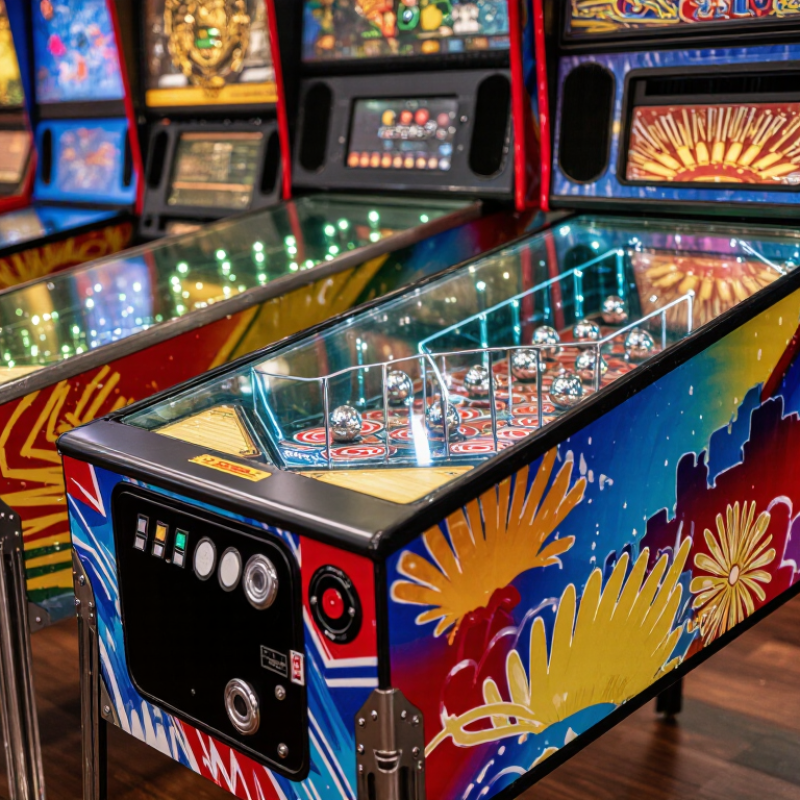
Pinball machines differ sharply in technology, play style, and maintenance needs. Electromechanical models use relays, motors, bells, and scoring reels. They create a warm, physical experience with audible clicks and clacks. However, aging wiring can require careful inspection and regular adjustment. I once underestimated this work, especially when a weak relay caused intermittent scoring.
Solid-state machines use circuit boards and electronic displays. They usually offer more reliable scoring, varied rules, and brighter playfield effects. Buyers should test every flipper, target, ramp, light, and display before purchasing. A machine may look attractive while hiding cracked plastics or repaired wiring. Ask for service records when available.
Digital machines provide many themed tables through a screen and software system. They need less mechanical maintenance, but image quality, sound response, and software stability matter. Check screen brightness from several angles. Test the cabinet controls and confirm that the legs stand firmly on a level floor. Size matters too. Many full-size machines need a clear doorway, strong flooring, and ventilation around electronic components. Younger players may prefer digital variety, while experienced players often value the physical feedback of a metal ball. Neither option is automatically better. The right choice depends on space, maintenance confidence, and the kind of play that feels satisfying.
When evaluating a pinball machine, begin with the cabinet, playfield, and backbox. Look closely, not quickly.
From my experience, deep corner damage often signals rough moving or poor storage. Small scratches are usually cosmetic. Check the playfield under bright, angled light. Raised inserts, worn artwork, and cloudy plastic parts can reveal heavy use. A polished surface may hide repairs. I once trusted a spotless machine too soon.
Ask to see the machine operating through several games. Listen for weak coils, irregular sounds, and delayed scoring. Every flipper should feel firm and return cleanly. Balls should travel smoothly without repeated stops. Inspect switches, lamps, wiring, and the display for missing segments or flickering. Power it down and check for burnt smells. Do not accept "recently serviced" as proof. Request dated service notes, replaced parts, and a clear explanation of faults.
Quality also depends on originality and maintenance, not age alone. Replaced rubbers are normal; careless modifications deserve closer inspection. A qualified technician can test voltage, grounding, and mechanical timing more reliably than a brief buyer visit. Still, an inspection is not magic. Set a budget for hidden repairs, because one weak mechanism can create several related costs. Keep photographs of defects and written repair promises before payment.
Buying a pinball machine is not only about artwork or a loud, attractive cabinet. Compare the playfield condition, mechanical response, electronics, and service access before discussing price. During inspections, I check the flippers, bumpers, targets, ramps, and ball return. Each should respond cleanly without hesitation. A weak flipper can signal worn parts, but it may also reflect a simple adjustment. Ask for evidence, not guesses. Request a play video and a clear list of recent repairs. Short test. Important detail.
The playfield deserves close attention. Look for lifted plastics, cracked ramps, worn inserts, loose posts, and deep scratches around high-traffic areas. A glass reflection can hide damage, so inspect it under ordinary room lighting. I once trusted bright LEDs and missed inconsistent scoring. That mistake changed my checklist. Compare display readability, sound clarity, button response, and rule navigation. Modern features are useful, but reliability matters more than novelty. Confirm that every switch registers during a full game.
Cabinet structure and ownership costs also deserve comparison. Check the legs, hinges, locks, wiring, and signs of moisture. Ask whether replacement parts remain available and whether a qualified technician can service the machine locally. Calculate delivery, setup, electricity, and future maintenance costs. The cheapest listing may become expensive after one neglected repair. Still, estimates are imperfect. Leave room for surprises. A machine with documented maintenance, stable gameplay, and accessible components usually creates fewer problems during long-term ownership.
Reliable pinball machines for sale usually come from specialist dealers, established arcades, and verified private sellers. Check their service records, return terms, and customer feedback before paying. A clean cabinet can hide a tired coil. Ask for close photos of the playfield, wiring, display, legs, and serial plate. A video showing the machine starting, scoring, and completing a game provides useful evidence.
Industry data supports careful buying. The International Flipper Pinball Association reported more than 100,000 ranked players worldwide in its 2024 statistics, showing strong community activity. IAAPA’s 2024 Global Economic Impact Study valued the global attractions industry at about $269 billion in 2023. These figures do not prove every machine is a good investment. They show why demand and resale interest can vary by location, condition, and model history. I have found that local collector groups often reveal faults faster than polished listings. Still, community advice can be biased.
Tips: Compare at least three listings with similar age and condition. Request a repair invoice, not only verbal promises. Test every button, lamp, flipper, sound effect, and ball sensor. Confirm shipping insurance and inspect the crate before signing. A professional technician’s inspection may cost extra, but it can expose corrosion, modified wiring, or missing parts. Keep a written record of every question and answer. Mistakes happen, especially with older machines.gbc
Typical U.S. asking-price ranges vary by age, condition, restoration quality, and included warranty. Use these bands as a practical starting point when comparing listings and inspecting a machine before purchase.
Buying tip: Reliable listings should clearly describe the machine’s condition, playfield and cabinet wear, display and sound operation, recent servicing, included accessories, and delivery or return terms. A hands-on test is recommended before completing a purchase.
Top Pinball Machines for Sale: What Buyers Should Know?
The purchase price is only the beginning. New machines often cost several thousand dollars, while used units can require immediate repairs. Ask for service records, test every flipper, and inspect the display, cabinet, wiring, and playfield. A machine that looks clean may still hide worn rubbers or weak coils. Set aside a repair fund before paying.
Delivery is different. Measure doorways, stair turns, and elevator interiors carefully. Many machines arrive on a pallet and need two strong adults or professional movers. Confirm whether the seller includes inside delivery, unpacking, and packaging removal. Damage claims become difficult after the driver leaves, so photograph the crate and machine immediately. Keep receipts.
Setup affects both play and safety. Place the machine on a solid, level floor with enough rear clearance for opening the backbox. Use a proper grounded outlet and avoid overloaded extension cords. Level the cabinet with a spirit level, then test sound, lights, buttons, and scoring. Plan for noise, especially in apartments or rooms beside bedrooms.
Long-term maintenance is manageable but consistent. Clean the playfield gently, replace worn rubber parts, and inspect loose bulbs, connectors, and fasteners. Dust buildup can affect cooling and electronics. Keep the machine away from direct sunlight and damp areas. I would not promise “maintenance-free” ownership; that phrase sounds attractive but rarely matches reality. Record each repair date and part replaced. That simple habit can protect resale value and prevent small faults from becoming expensive ones.
| Buyer Consideration | Typical Range or Requirement | What Buyers Should Know |
|---|---|---|
| New machine purchase price | Approximately $6,000–$12,000 | New machines generally include modern electronics, current software, a manufacturer warranty, and fewer immediate repair needs. Final pricing varies by playfield complexity, display technology, and availability. |
| Used machine purchase price | Approximately $1,500–$8,000 | Condition, age, rarity, cabinet wear, playfield condition, and documented service history have a major effect on value. A low purchase price may be offset by restoration or repair costs. |
| Entry-level digital cabinet | Approximately $500–$2,500 | Digital cabinets can offer multiple virtual tables and easier content updates, but screen quality, computer hardware, software licensing, and technical support should be checked carefully. |
| Shipping and freight delivery | Approximately $300–$1,200 within the continental U.S. | The cost depends on distance, shipment weight, residential delivery, delivery speed, and whether a liftgate or appointment service is required. Remote locations and international delivery can cost substantially more. |
| Inside delivery or room placement | Approximately $100–$500 additional | Standard freight often delivers only to the curb or driveway. Inside placement, unpacking, debris removal, and stair service should be confirmed before payment. |
| Typical machine weight | Approximately 250–350 lb (113–159 kg) | Plan for at least two strong adults or professional movers. Some machines can be partially disassembled, but the procedure varies by model and should follow the service manual. |
| Assembled footprint | Approximately 56–59 in. long × 27–30 in. wide | Measure doorways, hallways, elevators, and turns before ordering. Account for packaging dimensions, which are larger than the assembled cabinet. |
| Playing clearance | At least 24 in. behind the machine and 36 in. in front | Rear clearance allows access to the service panel and power connection. Front clearance provides comfortable standing room and safer gameplay. |
| Floor and leveling requirements | Solid, level floor; adjustable leg levelers required | Avoid unstable platforms and thick carpeting that allows movement. Correct leveling helps the ball follow the intended playfield paths and reduces mechanical stress. |
| Electrical requirements | Standard grounded household outlet; commonly 100–240 V depending on market | Use the voltage specified on the machine label. Avoid overloaded power strips, extension cords that are not rated for the load, and ungrounded outlets. |
| Initial setup time | Approximately 30–90 minutes | Typical tasks include attaching legs, installing the backbox, connecting cables, removing shipping protection, leveling the cabinet, and performing a test game. |
| Professional setup service | Approximately $200–$600 | A professional service may include delivery, assembly, leveling, functional testing, and packaging removal. Stair access and long-distance travel may add charges. |
| Routine cleaning | Every 1–3 months, or more often with heavy use | Use a soft, lint-free cloth and cleaner approved for the playfield surface. Keep liquids away from circuit boards, displays, switches, and connectors. |
| Rubber or ring replacement | Approximately $30–$150 for parts; $150–$400 with labor | Rubber components gradually harden, crack, or lose elasticity. Replacement intervals commonly range from 1–5 years depending on use, storage conditions, and material quality. |
| Common replacement parts | Approximately $5–$250 per part | Frequently replaced items include lamps or LEDs, fuses, switches, coils, flipper components, belts, opto-sensors, balls, and small plastic parts. |
| Annual maintenance budget | Approximately $100–$500 for normal home use | The amount depends on play frequency, machine age, parts availability, and whether the owner performs basic service or hires a technician. |
| Major repair or restoration reserve | Approximately $500–$2,500 or more | Older or heavily used machines may require board repair, display replacement, cabinet work, playfield restoration, or several mechanical repairs at once. |
| Energy consumption | Usually about 0.1–0.3 kWh per hour while powered on | Actual consumption depends on display type, lighting, sound, active motors, and standby settings. Turning the machine off when not in use reduces electricity use. |
| Climate and storage conditions | Dry indoor environment; approximately 40%–60% relative humidity preferred | Avoid garages, damp basements, direct sunlight, and extreme temperature changes. Moisture can damage wood cabinets, metal parts, displays, and electronics. |
| Pre-purchase inspection checklist | Test every flipper, switch, target, light, display, sound function, and coin or free-play setting | Check for corrosion, cracked plastics, lifting artwork, playfield wear, missing parts, altered wiring, non-original repairs, and error messages. Request service records and a video of the machine operating. |
Cost ranges are general U.S. consumer-market estimates and can vary by location, condition, shipping distance, machine configuration, and labor rates.