
TREND FOR

MINIATURIZATION

China Top 10 Sensor Camera Manufacturers for Global Buyers

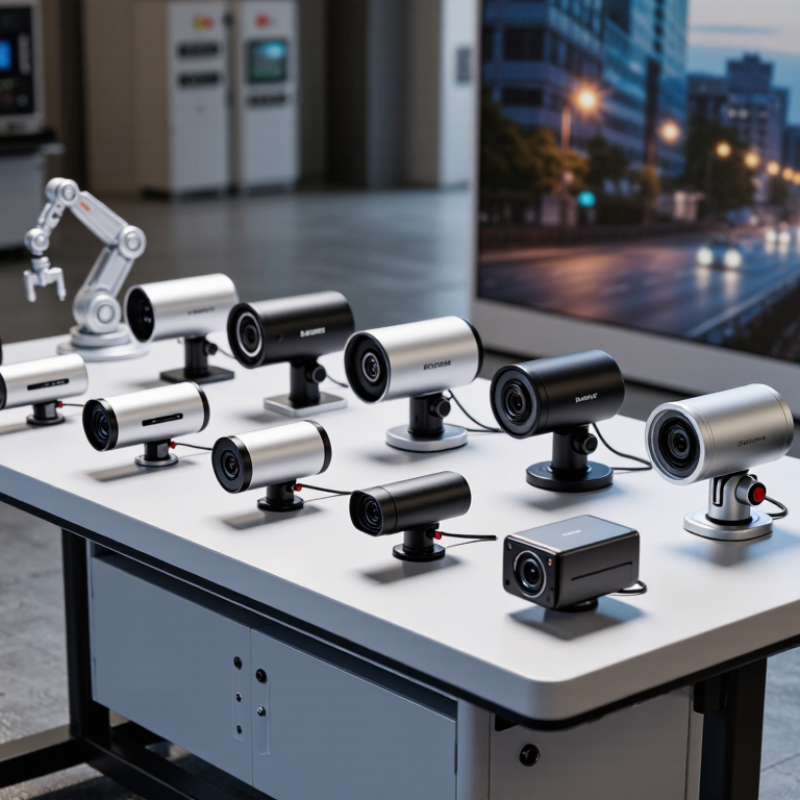
China has become a significant source of imaging technology for global buyers. Its Sensor Camera manufacturers serve industrial inspection, traffic monitoring, robotics, security, agriculture, and smart retail applications. This guide introduces ten Chinese companies that deserve careful attention when buyers compare suppliers, product depth, and international service capabilities.

A reliable Sensor Camera is more than a high-resolution device. Buyers should examine sensor performance, frame rate, low-light behavior, lens compatibility, heat management, and software integration. A camera may look impressive in a product photograph but perform poorly near reflective metal or changing sunlight. Real testing matters.

The selected manufacturers are considered through practical purchasing criteria. These include manufacturing experience, research investment, quality control, customization ability, communication efficiency, and export support. Certifications and documented test results should also be checked for the target market. Requirements can differ between Europe, North America, Asia, and other regions.

Details matter.

For example, a factory inspection camera may need stable imaging during continuous operation. A mobile robot may require low latency, compact dimensions, and vibration resistance. A traffic camera may depend on weather protection and dependable night performance. The best supplier is not always the largest one. It is often the company that understands the buyer’s actual environment.

This list is not a substitute for technical validation. Supplier information can change, and published specifications may not reveal every limitation. Buyers should request samples, test firmware, review warranty terms, and confirm production capacity before placing substantial orders. That extra step may feel slow. It can prevent expensive integration problems later.
China Top 10 Sensor Camera Manufacturers for Global Buyers

China’s Sensor-Camera Market: CMOS, CCD, SWIR, and 2024 Industry Data

China’s sensor-camera market expanded in 2024, supported by factory automation, machine vision, smart transport, and scientific imaging. CMOS remained the volume leader because it offers lower power use, faster readout, and competitive pricing. Many Chinese manufacturers now provide board-level modules, industrial cameras, and customized imaging systems for overseas buyers.

CCD still serves applications requiring stable image quality, low noise, and consistent long-exposure performance. However, its supply chain is narrower, and replacement planning matters. SWIR cameras occupy a smaller but important segment. They help inspect moisture, silicon, plastics, and materials that ordinary visible-light sensors cannot distinguish. Prices remain higher, while lenses and lighting can strongly affect the final result.

2024 industry data should be read carefully. Market estimates differ because some reports count sensors, while others count complete cameras or imaging systems. This is easy to overlook. A practical supplier review should examine pixel size, quantum efficiency, dynamic range, interface stability, calibration records, and export documentation. Ask for test images under your actual lighting conditions. A bright laboratory sample proves little. Field experience also shows a common weakness: customized firmware may delay delivery or complicate maintenance. Buyers should confirm spare-unit policies, software support, and production traceability before selecting a top-ten manufacturer. Temperature tests, vibration checks, and repeated captures at the intended frame rate can reveal problems that brochures rarely mention.

Ranking Methodology: Resolution, Quantum Efficiency, Dynamic Range, and FPS

China Top 10 Sensor Camera Manufacturers for Global Buyers

Global buyers need more than a polished specification sheet. This ranking uses repeatable tests and published technical evidence. Resolution receives attention, but pixel count alone can mislead. We examine usable detail with calibrated charts, edge sharpness, and image consistency across the frame. A higher number is not always better.

Quantum efficiency measures how effectively the sensor converts light into electronic signal. We check performance across relevant wavelength bands, especially in dim industrial scenes. Dynamic range is tested from shadow noise to highlight saturation. This reveals whether a camera can capture dark surfaces beside bright reflections. The test is demanding. Small lighting changes can affect results.

Frames per second means sustained output, not a brief laboratory burst. We record long sequences while monitoring dropped frames, heat, and data stability. The scoring model balances resolution, quantum efficiency, dynamic range, and sustained FPS. Independent measurements receive more weight than unverified claims. Product documentation, factory experience, service responsiveness, and sample availability also influence reliability. Some manufacturers perform strongly in one category but weaken under thermal stress. That matters in real installations. No ranking is perfect, because sensor size, lens choice, software, and lighting can change field results. Buyers should repeat key tests with their own targets before making a final decision.

Top 10 Chinese Manufacturers: Sensors, Camera Types, Interfaces, and Use Cases

China Top 10 Sensor Camera Manufacturers for Global Buyers

The top ten Chinese manufacturers serve different imaging needs, from factory inspection to traffic monitoring and medical equipment. Their product lines commonly include CMOS area-scan cameras, line-scan cameras, thermal cameras, depth cameras, and compact embedded modules. MarketsandMarkets estimates that the global machine vision market may grow from about USD 13 billion in 2024 to more than USD 20 billion by 2029. This demand favors suppliers with stable sensor sourcing and practical integration support.

Sensor selection remains critical. Global buyers should compare resolution, pixel size, dynamic range, shutter type, frame rate, and low-light performance. GigE Vision and USB3 Vision simplify factory deployment, while MIPI CSI-2 suits smaller embedded systems. CoaXPress remains useful for high-speed inspection lines. The ten manufacturers also target logistics scanning, agricultural sorting, robotics, intelligent transportation, and research laboratories. A camera that performs well in a bright test room may struggle near reflective metal.

According to the 2024 Yole Group imaging report, CMOS image sensors continue to dominate many commercial imaging applications. However, specifications can hide thermal noise, lens compatibility issues, or delayed software updates. Buyers should request sample images, interface documentation, calibration records, and long-duration test results. I would not rank suppliers by resolution alone. That approach is convenient, but incomplete. Field validation still matters more than a polished datasheet.

Global Buyer Standards: ISO 12233, GigE Vision, USB3 Vision, and IP67

China Top 10 Sensor Camera Manufacturers for Global Buyers

For global buyers, sensor performance starts with measurable evidence, not attractive resolution claims. ISO 12233 testing evaluates spatial resolution, sharpness, and frequency response under controlled conditions. Ask manufacturers for original test charts, lighting settings, lens details, and raw images. A datasheet alone is not enough.

The International Federation of Robotics reported 541,302 industrial robot installations worldwide in 2023. This growth increases demand for stable vision at high production speeds. MarketsandMarkets’ 2024 machine vision study estimates the sector could grow from about USD 15.9 billion in 2024 to USD 25.4 billion by 2029. GigE Vision suits long cable runs and distributed factory layouts. USB3 Vision can deliver low-latency transfer near the inspection station. Neither interface guarantees image quality. Firmware, drivers, cable shielding, and host compatibility still matter.

IP67 should be verified against IEC 60529 conditions. It indicates dust-tight protection and temporary immersion up to one meter for 30 minutes. It does not prove resistance to hot washdown chemicals or repeated thermal shock. I would request ingress-test records, connector drawings, and sample units before volume orders. No checklist is perfect. Even careful buyers can overlook vibration, condensation, or unstable illumination during factory trials. A practical evaluation should repeat ISO 12233 measurements after temperature cycling, cable movement, and continuous image capture.

China Top 10 Sensor Camera Manufacturers for Global Buyers

Global Buyer Standards: ISO 12233, GigE Vision, USB3 Vision, and IP67

This standards-scope chart is manufacturer-neutral and does not rank or disclose company data. A value of 1 indicates that the standard directly addresses the buyer requirement; 0 indicates that it is outside the standard’s primary scope. ISO 12233 focuses on image-quality and resolution measurement, GigE Vision and USB3 Vision define industrial-camera connectivity and interoperability, while IP67 specifies dust and water-ingress protection.

Application Comparison: Automation, Medical Imaging, Traffic, and Security Systems

China Top 10 Sensor Camera Manufacturers for Global Buyers

Sensor cameras serve different duties across industrial and public environments. In automation, buyers should examine frame rate, shutter control, trigger accuracy, and resistance to vibration. A camera inspecting bottle caps may need stable lighting and precise edge detection. Medical imaging requires cleaner data, low noise, and dependable calibration. Small image defects can affect clinical interpretation. Compliance records and traceable quality testing matter here.

Traffic systems prioritize rapid capture, wide dynamic range, and reliable performance during rain, glare, and darkness. A roadside camera must read lane markings without losing detail from headlights. Security systems need strong low-light sensitivity, long operating life, and secure data handling. Storage compatibility also affects total cost. A high-resolution specification alone can mislead. Practical tests sometimes reveal weak performance under real lighting.

Tips: Ask manufacturers for application samples, test reports, interface details, and failure-rate data. Compare identical scenes, not only laboratory charts. Confirm lens compatibility and service response times. It is easy to overlook installation heat. That mistake becomes expensive. Buyers should also review warranty terms, software updates, and regional compliance documents before choosing among leading sensor camera manufacturers. The best option may not offer the highest pixel count. It should deliver consistent images, simple integration, and measurable reliability in the intended environment.

China Top 10 Sensor Camera Manufacturers for Global Buyers - Application Comparison: Automation, Medical Imaging, Traffic, and Security Systems
No. Manufacturer-Neutral Camera Category Primary Application Sensor Technology Typical Resolution / Pixel Size Typical Speed Spectral Range Common Interfaces Key Selection Criteria Typical Protection or Compliance Considerations
1 Industrial Area-Scan Camera Factory Automation
Inspection, robot guidance, measurement, and defect detection
Monochrome or color CMOS; global shutter preferred for moving objects 2–25 MP; approximately 2.74–6.5 μm pixel pitch 30–300 frames per second, depending on resolution and interface Visible light, approximately 400–700 nm; optional near-infrared sensitivity GigE Vision, USB3 Vision, Camera Link, CoaXPress Dynamic range, exposure control, trigger latency, lens compatibility, SDK support, and long-term availability CE, FCC, RoHS, EMC testing, and suitable industrial enclosure or housing
2 Industrial Line-Scan Camera Factory Automation
Web inspection, printing, textiles, electronics, and continuous materials
CMOS line sensor; monochrome commonly used for high-contrast inspection 2,048–16,384 pixels per line; approximately 5–14 μm pixel pitch 10–200 kHz line rate, application dependent Visible light; specialized versions available for near-infrared and short-wave infrared CoaXPress, Camera Link, GigE Vision Line rate, sensor length, encoder synchronization, uniformity, readout noise, and illumination design EMC compliance, industrial temperature range, vibration resistance, and dust protection where required
3 3D Laser-Triangulation Camera Factory Automation
Profile measurement, surface inspection, dimensional control, and robot applications
CMOS line sensor paired with laser illumination and triangulation optics Approximately 1,000–8,000 pixels per profile; micrometer-level measurement is application dependent 1–100 kHz profile rate, depending on working distance and resolution Visible red or blue laser bands; near-infrared variants also exist GigE Vision, Ethernet, Camera Link, or integrated industrial Ethernet Measurement repeatability, triangulation angle, laser safety class, working distance, and calibration method IEC 60825-1 laser safety classification; IP rating and machine-safety integration should match the installation
4 Scientific CMOS Camera Medical Imaging
Fluorescence microscopy, live-cell imaging, pathology research, and laboratory analysis
Back-illuminated or front-illuminated scientific CMOS; cooled models available 2–25 MP; commonly 4–6.5 μm pixel pitch 30–100 frames per second; lower-noise modes may reduce speed Visible light; ultraviolet and near-infrared response depends on sensor and window design USB 3.0, 10 Gigabit Ethernet, Camera Link, or proprietary high-speed links Read noise, quantum efficiency, dark current, cooling stability, rolling or global shutter, and optical compatibility IEC 61326-1 may apply to laboratory equipment; medical-device compliance depends on the complete system
5 Endoscopic Video Camera Medical Imaging
Minimally invasive surgery, endoscopy, arthroscopy, and surgical visualization
Compact CMOS, commonly with electronic rolling shutter and integrated image processing 1920 × 1080 to 3840 × 2160; small pixels designed for compact optical assemblies 30–60 frames per second, with low-latency video output Visible light, approximately 400–700 nm; white-light and fluorescence modes may be supported HDMI, 3G-SDI, 12G-SDI, USB, or medical video interfaces Color accuracy, low latency, sterilization compatibility, image enhancement, ergonomics, and reliable video transmission IEC 60601-1 and IEC 60601-1-2 may apply to medical electrical systems; the complete device requires applicable regulatory clearance
6 Digital X-Ray Detector Medical Imaging
Radiography, dental imaging, orthopedic imaging, and nondestructive testing
Amorphous silicon with scintillator, CMOS, or complementary detector architectures Approximately 100–400 μm pixel pitch; active areas commonly support 2K–4K imaging matrices Approximately 5–30 frames per second, depending on detector size and exposure mode X-ray energy converted through a scintillator, commonly cesium iodide or gadolinium oxysulfide Gigabit Ethernet, Wi-Fi, USB, or dedicated detector interfaces Detective quantum efficiency, dose efficiency, lag, durability, calibration, synchronization, and wireless reliability IEC 60601-1 and IEC 60601-1-2 may apply; radiation safety, local registration, and medical-device regulations are essential
7 Automatic Number-Plate Recognition Camera Traffic Management
Tolling, access control, parking, law enforcement, and road monitoring
High-speed CMOS with global shutter or fast rolling shutter; dedicated near-infrared illumination 2–12 MP; resolution selected according to lane width, vehicle speed, and recognition distance 30–120 frames per second; short exposure is used to reduce motion blur Visible light plus near-infrared illumination, commonly around 850 or 940 nm GigE, PoE, fiber, serial trigger, and traffic-controller interfaces Plate pixel density, shutter speed, HDR, glare handling, character-set support, and evidence integrity IP66 or higher is common for outdoor housing; local privacy, data-retention, and traffic regulations apply
8 Traffic Monitoring Camera Traffic Management
Vehicle counting, incident detection, speed analytics, and intelligent transport systems
Color CMOS with HDR and low-light processing; AI-capable edge processing may be integrated 4–12 MP; wide-area systems may use multiple streams or panoramic optics 15–60 frames per second, depending on analytics and network bandwidth Visible light with optional near-infrared night illumination ONVIF, RTSP, Ethernet, PoE, fiber, and digital input/output Wide dynamic range, low-light sensitivity, object classification accuracy, latency, and weather performance IP66/IP67, IK10, EMC compliance, surge protection, and operating temperature suitability are commonly evaluated
9 Low-Light Security Camera Security Systems
Perimeter protection, commercial surveillance, residential monitoring, and critical infrastructure
Back-illuminated CMOS with large pixels, wide dynamic range, and image-noise reduction 2–8 MP; approximately 2.8–8 μm pixel pitch depending on sensor format 25–60 frames per second in standard video modes Visible light plus near-infrared sensitivity; some models support day/night switching IP video, RTSP, ONVIF, PoE, fiber, and alarm input/output Minimum illumination, WDR, bitrate control, cybersecurity, storage compatibility, and false-alarm performance IP66/IP67, IK10, IEC 62443-related cybersecurity practices, regional radio rules, and privacy requirements may apply
10 Uncooled Thermal Camera Security Systems
Fire detection, border surveillance, perimeter monitoring, and industrial temperature screening
Uncooled microbolometer, commonly based on vanadium oxide or amorphous silicon 320 × 256, 384 × 288, or 640 × 512; typical pixel pitch is 12–17 μm 9–60 frames per second, subject to regional export and frequency restrictions Long-wave infrared, typically approximately 8–14 μm Ethernet, PoE, analog video, serial control, and digital alarm interfaces NETD, lens focal length, detection range, temperature measurement accuracy, calibration, and image fusion IP66/IP67, export-control screening, EMC compliance, environmental testing, and local privacy rules should be considered
Data shown are manufacturer-neutral typical ranges for global buyer evaluation. Actual performance depends on sensor selection, optics, illumination, firmware, operating conditions, and complete-system certification.