TREND FOR

MINIATURIZATION

China Top System Camera Manufacturers for Global Buyers

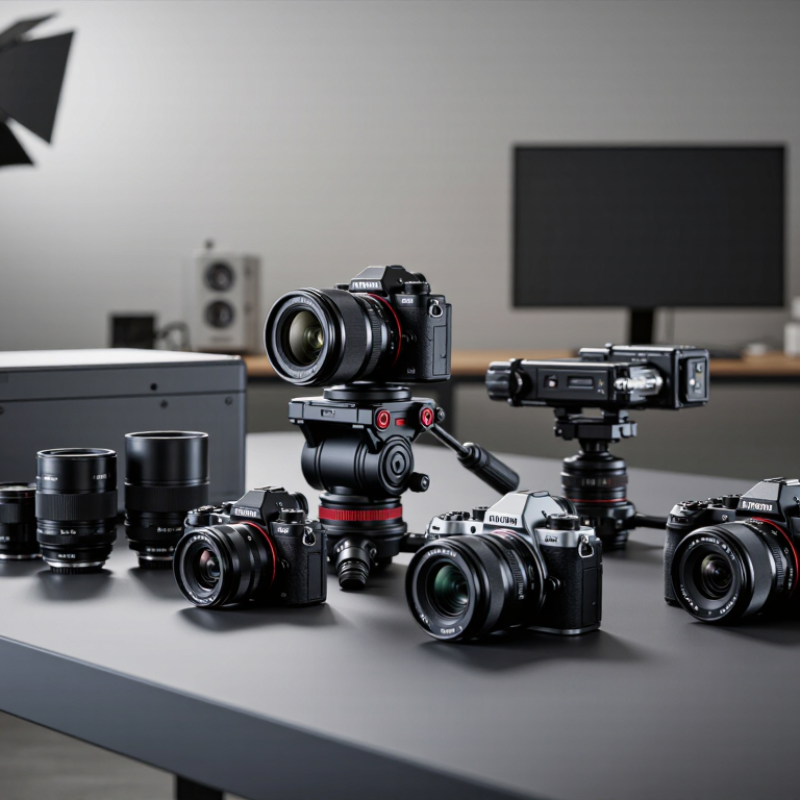
China’s system camera industry has moved far beyond low-cost assembly. Today, Chinese manufacturers serve studios, filmmakers, laboratories, security teams, and demanding global buyers. Their product ranges may include mirrorless bodies, interchangeable lenses, industrial cameras, PTZ systems, and modular imaging platforms.

This guide examines China’s top system camera manufacturers through practical buying criteria. These include sensor performance, autofocus reliability, lens compatibility, thermal control, firmware support, and export documentation. A camera may look impressive in a product photograph. Field testing often reveals more. Battery life, menu translation, mounting accuracy, and response under continuous recording can decide a purchase.

Photographer Chase Jarvis once said, “The best camera is the one that's with you.” His point remains useful for professional buyers. The strongest specification means little if the system is difficult to operate or maintain. We will compare manufacturers by engineering capability, production experience, quality control, and after-sales communication.

Not every supplier deserves the same confidence. Some companies publish limited technical data. Others provide clear test reports, sample footage, API documents, and traceable certifications. That difference matters. It affects integration, warranty decisions, and long-term operating costs.

This overview is not a promise of perfection. Supplier information can change. Performance can vary between models and production batches. Buyers should request current samples, verify compliance requirements, and test the complete System Camera workflow before placing large orders. The better choice is rarely the cheapest one. It is the system that performs consistently when the shooting schedule becomes difficult.

China Top System Camera Manufacturers for Global Buyers

Understanding China’s System Camera Manufacturing Landscape

China’s system camera manufacturing landscape is broad, with factories serving professional, industrial, surveillance, and specialized imaging markets. Each segment requires different sensors, mounts, firmware, and testing methods. For global buyers, supplier selection involves more than comparing unit prices. Production depth matters.

During a factory evaluation, inspect how sensors are handled, assembled, and calibrated. Look for clean workstations, controlled storage, and traceable component records. Ask whether optical alignment is checked for every unit or only selected samples. Small details matter. A reliable manufacturer should provide clear test procedures, sample reports, and realistic production timelines. Some suppliers build complete cameras, while others depend heavily on external assembly partners. This difference can affect quality control and delivery stability.

Buyers should also review firmware support, documentation, packaging, and after-sales response. Relevant safety, electromagnetic, and import requirements must be verified for each destination market. Do not rely only on a polished demonstration unit. A prototype may perform well while later batches show uneven focus, loose connectors, or inconsistent color output. That risk is easy to underestimate. Clear specifications, pilot orders, and staged inspections can reduce surprises, though they cannot remove every uncertainty. Communication can still become difficult when technical terms are translated poorly, and even experienced teams sometimes overlook regional service expectations.

Key Technologies Behind Leading Chinese System Cameras

Chinese system camera manufacturers are gaining attention from global buyers through practical engineering, not only competitive pricing. Their strongest advances often appear in sensor integration, image processing, autofocus, and thermal control. Modern models may combine high-resolution sensors with fast readout circuits, reducing rolling-shutter distortion during movement.

Autofocus systems now use phase detection, contrast analysis, and subject recognition. This combination helps track people, vehicles, and animals in changing light. It is useful on busy streets and uneven outdoor locations. Image processors also improve noise control at high ISO settings. However, low-light performance still depends on lens quality and sensor size. That detail is easy to overlook.

Electronic viewfinders require careful calibration. A slight color mismatch can affect professional decisions. Chinese engineering teams increasingly test displays, shutter durability, battery endurance, and wireless stability under repeated use. In supplier evaluations, I would request sample images, temperature test records, firmware schedules, and repair procedures. Paper specifications are not enough. Real testing reveals weaknesses.

Magnesium-alloy frames can improve rigidity, while sealed buttons help resist dust and light moisture. Yet weather resistance varies between models and should not be assumed. Some cameras feel excellent but need better menu translation or software refinement. This is a fair criticism. Buyers should compare autofocus recovery time, heat behavior during long video recording, and file compatibility across their existing workflow. Reliable manufacturing depends on consistent quality control, traceable components, and responsive technical support.

Major Chinese Manufacturers and Their Product Strengths

Chinese system-camera manufacturers now cover compact mirrorless bodies, interchangeable lenses, stabilizers, and connected accessories. Their strongest advantage is manufacturing depth, not only low pricing. According to CIPA’s 2024 statistics, global digital-camera shipments exceeded 8.4 million units, with interchangeable-lens cameras forming the core value segment. This demand supports suppliers with flexible assembly lines and broad component networks.

Major Chinese manufacturers typically show three practical strengths. Some focus on compact bodies with efficient heat management and high-resolution electronic viewfinders. Others specialize in lens production, using computer-controlled polishing and tighter optical inspection. A third group develops integrated camera systems, including wireless control, battery management, and firmware customization. These capabilities help overseas buyers request private-label designs, regional packaging, or software adjustments. Small details matter.

According to a 2024 report by Grand View Research, the global mirrorless camera market continues expanding through professional, travel, and creator applications. However, market reports often combine different product categories, so buyers should read definitions carefully. Laboratory specifications can also hide field problems. A camera may record sharp images yet struggle with dust, weak batteries, or slow technical support. Independent testing, sample units, and documented quality-control records remain essential. In my experience, the best supplier is not always the one offering the lowest factory quotation. Reliability is harder to photograph.

How Global Buyers Can Compare Camera Suppliers

China Top System Camera Manufacturers for Global Buyers

How Global Buyers Can Compare Camera Suppliers

When comparing Chinese system camera manufacturers, global buyers should examine evidence, not polished catalog images. Request current factory details, production capacity, and quality records. A video call can reveal testing rooms, lens alignment tools, and assembly discipline. Ask who controls final inspection. The answer may matter more than a low quotation. Specifications should cover sensor performance, autofocus behavior, heat management, firmware support, and operating conditions. A camera that looks impressive indoors may struggle under outdoor glare.

Use one comparison sheet for every supplier. Record sample results, lead times, warranty terms, and spare-part availability. Test image quality in low light, bright sunlight, and continuous recording. Check whether firmware updates are documented and safely delivered. Ask for relevant conformity documents for your destination market. Confirm whether serial numbers support product traceability. Keep assumptions visible. Small details matter.

A reliable supplier accepts independent inspection before shipment. It should explain rejected-unit handling without vague promises. My own evaluations have sometimes overvalued attractive samples and underestimated communication delays. That mistake can affect installation schedules and support costs. Buyers should also review payment terms, packaging protection, and escalation contacts. Clear technical drawings help prevent misunderstandings between engineering teams. Fast replies are useful, but accurate replies are better.

Sourcing, Compliance, and After-Sales Considerations for Importers

China Top System Camera Manufacturers for Global Buyers

Sourcing a system camera requires more than comparing quoted prices. Ask manufacturers for production samples, component lists, test reports, and references from similar markets. A factory audit should examine calibration benches, optical assembly areas, and final inspection records. Request the same sample configuration for every supplier. Otherwise, price comparisons become unreliable. Confirm lens mounts, sensor specifications, interface standards, operating temperature, and packaging details before signing a purchase agreement. Small mismatches can create expensive integration delays.

Compliance must be checked for the destination country, product category, and intended application. Request current declarations, safety documentation, electromagnetic compatibility reports, and traceable test results. Do not accept certificates with unclear issuing bodies or mismatched model numbers. Importers should also verify labeling, manuals, restricted-material requirements, data-security expectations, and customs classification. Local legal review remains important. A supplier’s statement that a product is “globally compliant” is not sufficient evidence.

After-sales support often separates a dependable supplier from a temporary seller. Put warranty length, response times, replacement procedures, spare-part availability, and firmware responsibilities into the contract. Test the support channel before ordering by submitting technical questions. Measure how clearly and quickly the team responds. Keep several critical spare units if downtime affects production. One sourcing mistake is trusting a polished factory tour too much. Real reliability appears later, through consistent documentation, stable batches, and practical support when something fails.

China Top System Camera Manufacturers for Global Buyers - Sourcing, Compliance, and After-Sales Considerations for Importers
Evaluation Area Data Dimension Practical Importer Benchmark What Buyers Should Verify
Product Capability Camera System Type Mirrorless DSLR Cinema Action Industrial
Select suppliers according to the required lens mount, sensor format, recording workflow, and operating environment.
Product specification sheets, lens-mount drawings, supported recording formats, sample footage, and application references.
Product Capability Sensor and Image Performance Common system-camera configurations include APS-C and full-frame sensors. Key comparison factors are resolution, dynamic range, low-light performance, rolling-shutter behavior, and color profiles. Independent test files, uncompressed sample images, ISO performance tests, dynamic-range measurements, and published firmware specifications.
Product Capability Video Functionality Compare 4K recording, frame-rate options, bit depth, chroma subsampling, internal or external recording, HDMI output, microphone input, and heat-management design. Official user manuals, codec tables, thermal test results, recording-duration tests, and confirmation of regional firmware limitations.
Sourcing Factory Qualification Prefer manufacturers able to provide a current business license, manufacturing address, quality-management documentation, production photos, and traceable component-control procedures. Business registration records, factory audit reports, ISO 9001 certificate validity, production-line video inspection, and buyer references.
Sourcing OEM and ODM Flexibility Confirm whether the supplier supports custom firmware settings, packaging, manuals, labels, accessories, color options, and mechanical changes. Optical, electronic, and firmware changes normally require separate engineering validation. Engineering-change process, sample approval procedure, tooling quotation, minimum order quantity, intellectual-property terms, and change-control records.
Sourcing Order and Production Planning Request a written quotation showing minimum order quantity, sample fee, production lead time, payment terms, packaging quantity, spare-parts policy, and validity period. Lead times must be confirmed for each order because components and customization affect delivery. Pro forma invoice, production schedule, approved sample, bill of materials, packaging specification, and pre-shipment inspection plan.
Commercial Incoterms and Logistics Compare EXW, FOB, FCA, CIF, and DDP only after defining responsibility for export clearance, main transport, import duties, taxes, insurance, and last-mile delivery. Quotation with named delivery location, freight assumptions, carton dimensions, gross weight, HS-code proposal, and insurance responsibility.
Compliance Electrical and Product Safety Depending on destination and product design, importers may need applicable safety testing under IEC 62368-1 or the relevant national equivalent, together with electromagnetic-compatibility testing. Test reports issued by a competent laboratory, product model references, technical construction file, risk assessment, and declaration of conformity where required.
Compliance Market Access Markings Typical destination requirements may include CE for the European Economic Area, FCC requirements for applicable products marketed in the United States, and UKCA rules where applicable in Great Britain. Correctly matched declarations, technical files, test reports, labels, user instructions, and evidence that the listed model number matches the shipped product.
Compliance Restricted Substances and Recycling Products entering regulated markets may require compliance with RoHS substance restrictions and, where applicable, WEEE producer and recycling obligations. Requirements differ by jurisdiction and product category. Material declarations, supplier substance-control records, laboratory reports, recycling-registration responsibility, and packaging-label compliance.
Compliance Wireless Functions Cameras with Wi-Fi, Bluetooth, NFC, or other radio functions require country-specific radio approval and frequency compliance. A radio module approved in one market may not be accepted automatically in another. Radio test reports, modular approval documents, supported-frequency list, antenna information, firmware-region settings, and country-specific declarations.
Compliance Lithium Battery Transport Rechargeable lithium-ion batteries shipped with or inside cameras generally require transport documentation based on the applicable UN 38.3 test summary and carrier rules. Air shipments also require correct packaging and labeling. UN 38.3 test summary, battery specification, Safety Data Sheet where required, packaging instruction confirmation, and transport label samples.
Quality Control Inspection Stages Use a staged plan covering incoming-component inspection, pilot-run approval, production-line checks, final random inspection, functional testing, cosmetic inspection, and accessory verification. Approved inspection standard, sampling level, defect classification, calibration records, test fixtures, inspection photographs, and signed final-inspection report.
Quality Control Reliability and Environmental Testing Relevant tests may include temperature cycling, humidity exposure, vibration, drop testing, connector durability, button-cycle testing, battery charging safety, and continuous recording thermal checks. Test methods, acceptance criteria, equipment calibration, test duration, failure records, corrective-action reports, and repeat-test results.
After-Sales Warranty Structure A written warranty should define coverage period, exclusions, proof-of-purchase rules, repair or replacement procedure, shipping responsibility, turnaround target, and treatment of dead-on-arrival units. Signed warranty terms, RMA workflow, regional service contact, replacement-part availability, and records of previous service cases.
After-Sales Spare Parts and Repairability Confirm availability of batteries, chargers, cables, screens, buttons, connectors, lens-mount components, and other service parts for the planned sales period. Spare-parts price list, stock policy, repair manuals, service-tool requirements, technician training plan, and end-of-life notification procedure.
After-Sales Firmware and Technical Support Suppliers should document firmware-release control, update installation method, rollback policy, bug-report handling, cybersecurity response, and support for localized manuals and software. Firmware history, release notes, software-support contact, vulnerability-reporting channel, multilingual documentation, and response-time commitment.
Importer Risk Intellectual Property and Data Protection Check ownership and licensing of firmware, mobile applications, industrial designs, images used in packaging, manuals, codecs, wireless technology, and customer data collected by connected functions. IP warranty clause, license records, privacy policy, data-processing terms, software bill of materials where available, and indemnification provisions.
Importer Risk Total Landed Cost Calculate product price, tooling, samples, inspection, freight, insurance, customs duty, import VAT or sales tax, compliance testing, local registration, warranty reserve, and reverse-logistics costs. Landed-cost worksheet, customs classification confirmation, freight quotation, tax assumptions, compliance budget, and after-sales cost model.
Decision Gate Recommended Supplier Approval Sequence Use a staged decision: documentary screening, technical evaluation, sample test, factory audit, compliance review, pilot order, pre-shipment inspection, and post-launch performance review. Completed supplier scorecard, signed specifications, approved golden sample, audit corrective-action closure, inspection pass report, and customer-return analysis.
Note: Regulatory obligations vary by destination market, product configuration, wireless functions, battery design, and sales channel. Importers should confirm current requirements with the relevant authorities, customs broker, accredited testing laboratory, and legal advisers before placing a commercial order.