

TREND FOR

MINIATURIZATION

Top 10 Hotel Digital Signage Manufacturers in China

Hotels Digital Signage is becoming part of the guest journey, from the lobby entrance to the elevator bank. Screens can display check-in guidance, breakfast hours, event directions, and timely service notices. Their value depends on more than bright panels. Readable text, reliable playback, useful content tools, and responsive support matter when a screen must work during a busy arrival.

Industry figures offer useful context, but they need careful interpretation. UN Tourism reported approximately 1.4 billion international tourist arrivals in 2024, around 99% of the 2019 level. This recovery puts renewed attention on clear, multilingual communication in hotels. Separately, MarketsandMarkets estimated the global digital signage market at USD 27.8 billion in 2023 and projected USD 41.6 billion by 2028. That forecast covers many industries, not hotels alone. It signals wider investment, rather than proving hotel demand by itself.

This guide introduces ten hotel digital signage manufacturers in China and considers practical factors behind their offerings: display formats, management software, customization, installation coordination, and after-sales service. A specification sheet may promise high brightness, yet a sunlit lobby or reflective glass can still make content hard to read. Small details matter. No ranking can settle every property’s needs; hotel size, existing systems, and local service access change the decision. That deserves a closer look.
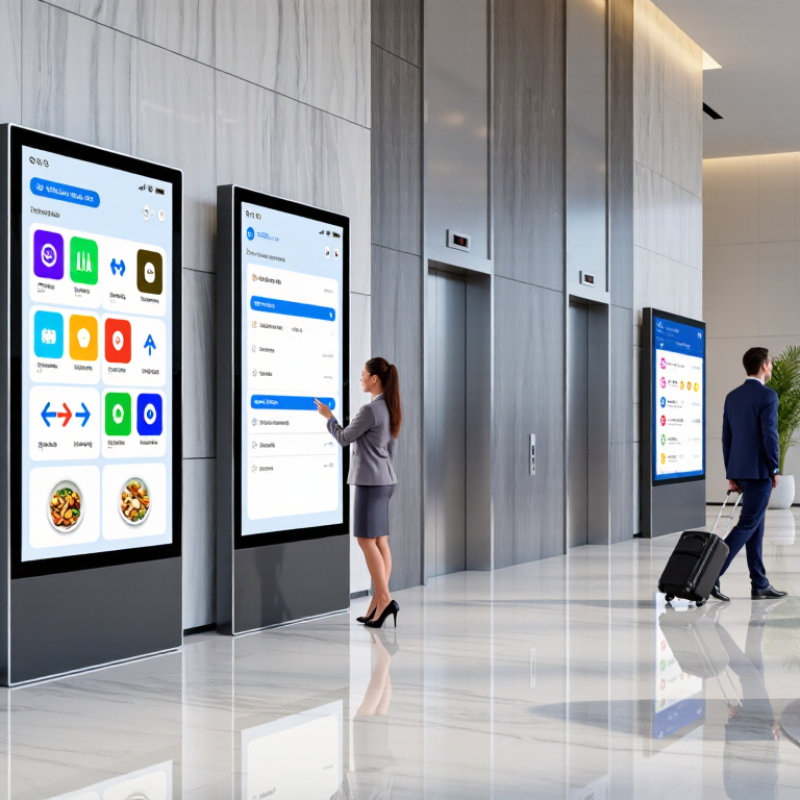
Top 10 Hotel Digital Signage Manufacturers in China

What Hotel Digital Signage Is and How Hotels Use It

Hotel digital signage uses connected screens to deliver timely information across a property. Displays in lobbies can show check-in guidance, event schedules, weather, and directions. Elevators and meeting areas can carry quieter, more targeted messages. Unlike printed notices, networked screens can be updated centrally, though outdated content can still undermine guest confidence.

Hotels also use signage to clarify practical details: breakfast hours, pool access, shuttle departures, or changes to a meeting room. The MarketsandMarkets 2024 Digital Signage Market report estimated the global market at USD 27.8 billion in 2024, with a forecast of USD 39.8 billion by 2029. This covers multiple industries, not hotels alone, but signals wider investment in screen-based communication. Still, more screens do not automatically mean a better guest experience. A bright display beside a quiet lounge may feel intrusive.

Tips: Keep text brief and readable from the expected viewing distance. Show useful, current details, and assign someone to check schedules and translations. Test glare at different times of day; a screen that looks clear at noon may fail after sunset.

Hotel Digital Signage: Common Display Resolutions

Digital signage helps hotels share welcome messages, wayfinding, event details, and menu information. The chart compares pixel counts for common display formats—not their popularity or market share.

Values are calculated from standard pixel dimensions: Full HD is 1920 × 1080, and 4K UHD is 3840 × 2160. Portrait Full HD uses the same pixel count as landscape Full HD.

How to Evaluate China’s Hotel Digital Signage Manufacturers

Evaluating China’s hotel digital signage manufacturers requires more than comparing screen prices. Grand View Research estimated the global digital signage market at US$28.83 billion in 2023, with an expected 8.1% compound annual growth rate from 2024 to 2030. MarketsandMarkets separately forecast growth from US$27.8 billion in 2024 to US$40.9 billion by 2029. These estimates use different methods, and neither guarantees demand for a hotel installation. Treat them as context, not proof of a supplier’s quality.

Ask for a production sample and test it under real lobby lighting. Check brightness, viewing angles, heat buildup, and whether small text stays readable from several metres away. Request a live demonstration of the content management system, including remote updates and failure alerts. Review burn-in testing, component traceability, spare-parts availability, and written repair response times. A polished showroom is not a factory audit. No checklist catches every glare problem. Visit the production site when possible, and ask how the manufacturer handles a delayed replacement panel. Their answer may matter more than a perfect presentation.

Top 10 Hotel Digital Signage Manufacturers in China - How to Evaluate China’s Hotel Digital Signage Manufacturers

Use these criteria to compare prospective suppliers. The suggested weights are an evaluation framework, not manufacturer-specific ratings or verified market rankings.

No. Evaluation Dimension Suggested Weight What to Verify Why It Matters for Hotels
1 Display Performance and Product Range 15% Check screen sizes, resolution, brightness, viewing angles, portrait or landscape options, and whether the proposed models suit indoor locations such as lobbies, meeting rooms, and corridors. Different hotel spaces have different viewing distances, ambient-light conditions, and information-display needs.
2 Reliability and Operating-Life Evidence 13% Request product specifications, test reports, warranty terms, and details about thermal management and the intended operating schedule. Confirm that claims apply to the exact model being quoted. Reliable equipment can reduce service interruptions and the effort required to replace or maintain displays in guest-facing areas.
3 Hotel-Specific Design and Customization 12% Review enclosure and mounting options, cable routing, screen orientation, finish choices, accessibility of service panels, and the supplier’s process for approving custom designs. Displays need to fit the building layout and interior design while remaining practical to install and service.
4 Content Management and Remote Administration 11% Request a live software demonstration. Check supported media formats, scheduling, multi-screen management, user permissions, monitoring, update procedures, and any recurring software fees. Centralized content control can help hotel teams keep schedules, event details, and guest information current across multiple screens.
5 Integration and Connectivity 10% Confirm available network and input options, supported operating systems, documented interfaces, and whether the system can work with the hotel’s intended content or information systems. Test key workflows before purchase. Compatibility affects installation complexity and how easily signage can fit into existing hotel technology operations.
6 Safety, Compliance, and Documentation 10% Identify the destination market and request applicable, current certificates and test reports for the exact product configuration. Verify the issuing body, validity, and scope rather than relying on logos or general claims. Requirements vary by market and product type; appropriate documentation supports procurement review and import or installation checks.
7 Manufacturing and Quality-Control Process 9% Ask about incoming-material checks, production inspections, final testing, serial-number traceability, defect handling, and whether an audit or pre-shipment inspection can be arranged. A documented quality process gives buyers clearer ways to assess consistency between samples and delivered units.
8 Installation, Warranty, and After-Sales Support 8% Get written details on warranty coverage, exclusions, response channels, spare-parts availability, troubleshooting, installation responsibilities, and support across the destination time zone. Clear support arrangements help hotel teams plan for faults, repairs, and ongoing operation after delivery.
9 Relevant Project Experience and References 7% Request references for comparable display deployments, with permission to contact the client. Verify project scope, delivered models, installation conditions, and ongoing support rather than relying only on promotional images. Comparable deployments can show whether the supplier has handled requirements similar to the hotel’s project.
10 Commercial Transparency and Delivery Planning 5% Compare itemized quotations, minimum order quantities, sample costs, payment terms, lead-time assumptions, packaging, shipping responsibilities, and procedures for delays or specification changes. Transparent terms make it easier to compare proposals and plan procurement, installation, and project budgets.

Profiles of Ten Leading Hotel Digital Signage Manufacturers in China

China’s hotel digital signage manufacturers differ in more than screen size. These ten profiles highlight practical strengths buyers can compare, without treating rank as proof of quality. A software-led producer may offer scheduling tools for lobby promotions and breakfast updates. A display specialist may focus on bright panels that remain readable beside sunlit windows. An enclosure maker may tailor slim housings to narrow corridors. Details matter.

Other profiles emphasize different needs. A kiosk integrator combines touchscreens, stands, and wayfinding interfaces for busy entrances. An OEM-focused factory supports custom dimensions and installation layouts. A project engineering team plans cable routes and wall mounts before delivery.

One manufacturer may prioritize room-directory displays, while another develops centralized content controls for multiple properties. A service-oriented supplier can help hotels manage replacements and routine maintenance. An energy-conscious producer may offer automatic brightness adjustment for changing light.

These distinctions are useful, but specifications need checking. Ask for operating-temperature ranges, warranty terms, software demonstrations, and references from comparable hotel installations. Request a sample interface, not only a polished brochure. A screen can look excellent in a showroom yet feel too small across a wide lobby. Claims about reliability also deserve evidence, such as documented testing or clear service procedures. Some comparisons remain imperfect when public data is limited; that limitation should be stated, not hidden.

Comparing Their Products, Services, and Industry Strengths

Comparing ten hotel digital signage manufacturers in China means looking beyond screen size and quoted price. Their product ranges may include lobby video walls, portrait displays, meeting-room panels, and compact screens for elevators. A useful comparison checks brightness, resolution, operating hours, and remote content control. These details matter when sunlight crosses a reception desk or staff need to update a room notice quickly.

Service can separate similar-looking offers. Ask whether installation guidance, content software, spare parts, and response times are included. Some manufacturers focus on flexible screen configurations and custom enclosures; others emphasize standardized products, faster production, or integrated software. Strong industrial capacity may support consistent output, but it does not guarantee smooth support after delivery. Check sample units, warranty terms, and compatibility with existing hotel systems. Get specifics.

A practical assessment should also consider the hotel’s daily workflow. Can front-desk staff change a breakfast time without calling a technician? Will the display remain readable from across a bright lobby? One detail is easy to miss: cable access and ventilation affect maintenance and reliability. Manufacturer claims deserve verification, and comparisons can feel less tidy than a ranking suggests. Specifications vary, and service quality may depend on the project team assigned.

Key Considerations When Choosing a Manufacturer for a Hotel Project

For a hotel project, the right manufacturer is not simply the one offering the largest screen. Grand View Research estimated the global digital-signage market at US$28.83 billion in 2023, with an 8.1% projected annual growth rate through 2030. AVIXA’s 2024 Industry Outlook projected professional AV revenue of US$325 billion in 2024. These figures show a growing sector, not guaranteed product quality.

Check performance where guests will actually see the displays. A bright screen beside a sunlit lobby window may need higher brightness than one in a dim corridor. Ask for measured brightness, viewing-angle details, and thermal test results. Request a sample unit or a site test. Small details matter.

Hotel operations need equal attention. Confirm whether the system supports scheduled content, remote updates, and the hotel’s required content formats. Ask for written service-response times, spare-part availability, warranty terms, and software-update policies. Clarify who handles troubleshooting after installation. A low purchase price can hide higher maintenance costs. I would compare total operating costs, not just the quoted screen price. Also, forecasts are broad market estimates; they cannot tell you whether a particular manufacturer will meet a project’s deadlines. Check references from completed hospitality installations and verify the details directly.