

TREND FOR

MINIATURIZATION

7 Tips for Choosing the Right Pallet Conveyor?

Choosing the right Pallet Conveyor can determine whether your warehouse flows smoothly or struggles with constant delays. A poorly matched system may create noise, product damage, unsafe manual handling, and expensive maintenance. The best choice begins with the pallet, not the equipment brochure.

Russell D. Meller, a respected material-handling systems researcher, offers a useful reminder: “Design the system around the work, not around the machine.” That principle matters when evaluating pallet size, load weight, throughput, transfers, accumulation, and available floor space. A steel pallet carrying 1,500 kilograms requires different support than a lightweight plastic pallet. A cold warehouse also creates different demands.

This guide presents seven practical tips for selecting a Pallet Conveyor that fits real operating conditions. It examines conveyor types, load capacity, speed control, safety features, layout flexibility, maintenance access, and total cost. Small details matter. Roller spacing can affect pallet stability. Transfer points can become hidden bottlenecks. Sensors can fail when dust covers their lenses.

Experience still has limits. A specification sheet cannot reveal every problem. Operators may describe delays that engineers overlook. Measurements may also change after installation. Therefore, review actual pallet samples, observe peak-hour traffic, and test the proposed design before approving it. The right solution should move loads reliably, protect workers, and leave room for future growth. Not merely move faster.
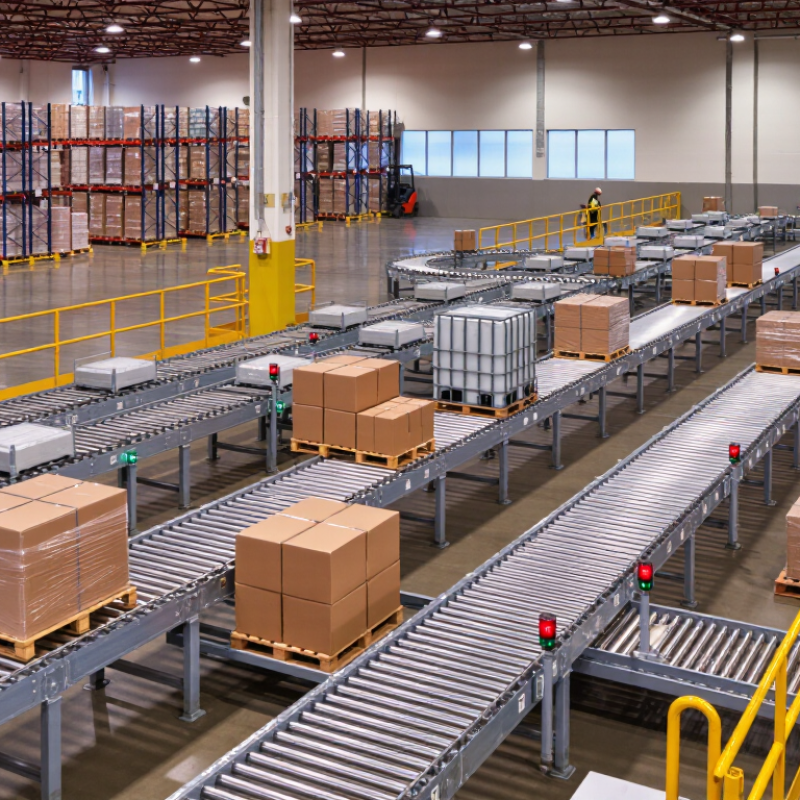
7 Tips for Choosing the Right Pallet Conveyor?

Define the Pallet Load and Throughput Requirements

Define the Pallet Load and Throughput Requirements

A reliable pallet conveyor starts with the load, not the conveyor frame. Record pallet length, width, height, total weight, and load overhang. Include the center of gravity. A tall, uneven pallet may need slower transfers and wider side guides. I have seen designs fail because only the average load was measured. Peak loads matter more.

Measure cartons per pallet, pallets per hour, and the busiest operating window. Add infeed gaps, accumulation time, transfers, and planned growth. The 2024 MHI Annual Industry Report states that 55% of respondents plan to increase supply-chain technology investment within two years. That investment still needs accurate operating data. A conveyor rated for 40 pallets per hour may struggle when a 15-minute surge demands 55.

Check the real constraints.

Use the heaviest pallet for motor sizing and the smallest pallet for stability testing. Confirm whether pallets are wood, plastic, damaged, or mixed. Their bottom boards can change roller contact and noise. Throughput calculations should include stops, inspections, and manual intervention. A practical target often uses 10% to 20% spare capacity, but the percentage should match demand variability. The 2023 MHI report also identifies labor availability as a major automation concern. That makes predictable flow valuable, yet I would still validate assumptions with a short production trial. Early estimates are rarely perfect.

Match Conveyor Design to Facility Layout and Workflow

7 Tips for Choosing the Right Pallet Conveyor

Start with the route. Draw the pallet path from receiving to storage, production, and shipping. Mark columns, doors, fire exits, and low ceilings. A conveyor that ignores these obstacles will create expensive detours. Keep it visible. Leave room.

Study the workflow, not just the floor plan. Observe pallet movement during the busiest hour. Note where operators wait, turn, scan, or repack loads. Straight conveyors suit predictable lanes, while transfers and curves help connect irregular work areas. However, every transfer adds controls, maintenance points, and possible delays. I have seen layouts look efficient on paper but fail when two forklifts share one narrow crossing.

Match conveyor width and load capacity to the actual pallets. Include damaged boards, uneven loads, and future product changes. Provide safe clearance around walkways and service zones. Accumulation sections can prevent one stopped station from blocking the entire line. Sensors should support the process, not confuse operators. Ask maintenance staff to inspect motors, rollers, guards, and access panels before approval. Their practical feedback often exposes weaknesses in early designs. Plan for cleaning and repairs without moving half the warehouse. Modular sections may cost more initially, but they can simplify later changes. One imperfect detail matters: allow space for mistakes, because real workflows rarely remain perfectly consistent.

7 Tips for Choosing the Right Pallet Conveyor? - Match Conveyor Design to Facility Layout and Workflow

Use these planning guidelines to compare pallet conveyor designs with load requirements, available space, material flow, and operating conditions.

Tip Design Factor Recommended Planning Criteria Typical Reference Range Facility Layout and Workflow Check
1 Confirm pallet size and load weight Specify the pallet footprint, total load weight, load overhang, and load-center position before selecting the conveyor frame and roller configuration. Common pallet footprints: 40 × 48 in and 42 × 48 in
Typical conveyor load rating: 500–4,000 lb
Allow clearance for the largest pallet and any unstable or irregular loads. Check that the conveyor can safely support the load during starts, stops, transfers, and accumulation.
2 Match conveyor width to the pallet Select roller bed width so the pallet is fully supported while maintaining side clearance for guides, sensors, and maintenance access. Minimum practical support: approximately 3 rollers beneath the pallet
Typical side clearance: 3–6 in per side
Measure aisle openings, rack locations, dock doors, and equipment interfaces. Avoid selecting a width that creates pinch points or reduces required pedestrian and forklift clearance.
3 Choose the correct conveyor type Use powered roller conveyor for controlled movement, accumulation, and transfers; use gravity roller conveyor where a simple downhill flow is acceptable and precise control is not required. Gravity conveyor slope: about 1–3%
Powered conveying: suitable for level or inclined sections and controlled routing
Map every origin, destination, merge, divert, and accumulation zone. Powered equipment is generally better for variable flow, long distances, frequent starts and stops, or automated interfaces.
4 Set speed and throughput targets Size the conveyor around required pallets per hour, transfer spacing, dwell time, and the maximum safe speed for the load. Typical pallet conveyor speed: 20–60 ft/min
Higher speeds may require enhanced guarding, braking, and load stabilization
Compare conveyor capacity with receiving, picking, packaging, and shipping rates. Include buffer capacity so short-term surges do not stop upstream or downstream operations.
5 Plan accumulation and controls Decide whether pallets will queue, release individually, or move in zones. Use sensors and zoned control when loads require controlled spacing. Recommended control approach: zero-pressure accumulation for sensitive or mixed loads
Common zone length: one pallet load plus operating clearance
Place accumulation before workstations, palletizers, wrappers, and shipping lanes. Confirm that sensors remain accessible and that queued pallets will not block emergency routes or fire equipment.
6 Account for transfers, curves, and elevation changes Identify 90-degree transfers, merges, turntables, lift tables, and inclines during the initial layout rather than adding them after the conveyor route is fixed. Typical transfer clearance: allow full pallet length and width at the handoff
Curve planning: verify load stability and inside-corner clearance
Maintain a continuous load path around columns, walls, racks, and doors. Check turning envelopes for forklifts and service personnel, especially at intersections and conveyor corners.
7 Design for safety, maintenance, and future growth Include guarding, emergency stops, lockout access, inspection points, spare capacity, and a clear maintenance path in the final design. Design allowance for future demand: approximately 15–25% capacity reserve
Emergency-stop coverage: accessible along the complete conveyor route
Keep controls, motors, sensors, and transfer mechanisms reachable without obstructing production. Reserve space for additional conveyor sections, scanners, sortation, or workstation changes.
Planning note: Final conveyor selection should be verified against the actual pallet condition, load distribution, duty cycle, local safety requirements, facility clearances, and the manufacturer's engineering calculations.

Evaluate Capacity, Speed, and Pallet Handling Features

7 Tips for Choosing the Right Pallet Conveyor?

A pallet conveyor should match your real workload, not an ideal estimate. Check the heaviest pallet, the average load, and daily volume. Leave capacity headroom for seasonal peaks. I once saw a line sized for average loads, then struggle during inventory week. That mistake was expensive.

Speed needs equal attention. Measure the required throughput in pallets per hour, then compare it with conveyor speed. Faster is not always better. Poor spacing can cause collisions, unstable cartons, and frequent stops. Ask whether the system supports accumulation, controlled release, and safe merging. Test these functions with loaded pallets, not empty ones. Empty tests can hide problems.

Pallet handling features often decide long-term performance. Confirm compatibility with pallet dimensions, deck boards, runners, and damaged edges. Transfer sections should move pallets smoothly without catching loose boards. Include sensors for position tracking and controls that stop a blocked zone. Inspect noise, vibration, and emergency stopping during acceptance testing. Maintenance access matters too. Technicians need clear space around motors, rollers, and sensors. Review load charts, speed limits, service intervals, and installation records from qualified suppliers. One detail is easy to miss: floor conditions. Uneven surfaces can reduce alignment and create repeated faults. Recheck your assumptions before signing off.

7 Tips for Choosing the Right Pallet Conveyor

Evaluate capacity, speed, and pallet-handling features before selecting a conveyor system.

How to Read the Chart

The chart uses typical industry planning benchmarks for standard pallet conveyor applications. Throughput is shown in pallets per hour, while conveyor speed is shown in metres per minute. Actual performance depends on pallet dimensions, load weight, product spacing, transfers, accumulation requirements, and control logic.

  1. Match the conveyor capacity to peak pallet flow, not average daily volume.
  2. Choose a speed that supports the required throughput without reducing load stability.
  3. Confirm pallet dimensions, bottom-board construction, and load distribution.
  4. Select accumulation capability when pallets must queue without product damage.
  5. Check transfer, merging, turning, and elevation requirements early.
  6. Verify the conveyor frame and drive system against the maximum pallet weight.
  7. Consider guarding, emergency stops, access for maintenance, and future expansion.

Compare Safety, Controls, Maintenance, and Energy Needs

7 Tips for Choosing the Right Pallet Conveyor

Compare Safety, Controls, Maintenance, and Energy Needs

Start with the heaviest pallet, not the average one. Confirm the conveyor frame, rollers, and drive can handle its weight safely. Add guarded pinch points and clearly visible emergency stops. Use sensors to prevent collisions at transfers and accumulation zones. Keep operator walkways open. Small layout mistakes can create serious hazards.

Check whether the controls provide real-time fault messages. A simple screen should identify a blocked sensor, motor overload, or stopped zone. Manual controls are useful during testing, but automatic recovery needs careful limits. Ask how the conveyor communicates with scanners, lifts, and warehouse software. Compatibility is often overlooked. It should not be.

Review maintenance access before approving the design. Technicians need space to replace rollers, belts, sensors, and motors without dismantling nearby equipment. Choose components with sealed bearings where dust is common. Request a preventive maintenance schedule and realistic spare-parts list. Energy use also matters. Zone control, variable-speed drives, and sleep modes can reduce idle consumption. Measure expected starts per hour, noise levels, and peak electrical demand. A cheaper conveyor may cost more when cleaning, troubleshooting, and downtime are included. One useful detail is often missed: ask who can safely reset a fault after a night-shift stoppage.

Assess Total Cost, Scalability, and Supplier Support

7 Tips for Choosing the Right Pallet Conveyor

Assess total cost before comparing purchase prices. A low-cost conveyor may require more labor, controls, maintenance, and floor space. MHI’s 2023 Annual Industry Report found that 83% of supply chain professionals planned to increase technology investment within five years. That investment should support measurable productivity, not impressive equipment alone.

Calculate energy use, spare parts, service visits, and lost production during repairs. Ask suppliers for documented uptime, response times, and commissioning requirements. The U.S. Census Bureau reported that U.S. retail e-commerce sales reached approximately $1.19 trillion in 2024. Growing order volumes can expose weak conveyor capacity quickly. Design for peak periods, but avoid paying for unused capacity every day.

Scalability matters.

Choose modular zones, adjustable controls, and accessible transfer points. Confirm whether future extensions need new software, electrical panels, or structural changes. Supplier support also deserves a written service-level agreement. It should define training, remote assistance, spare-parts availability, and emergency response. Site reviews often reveal one overlooked issue: operators cannot reach critical sensors safely. That small detail can create long delays. I would also challenge the forecast. Demand estimates are frequently optimistic, and a flexible conveyor layout may be more valuable than maximum speed.