Essential Tips for Choosing the Right Industrial Panel PC?
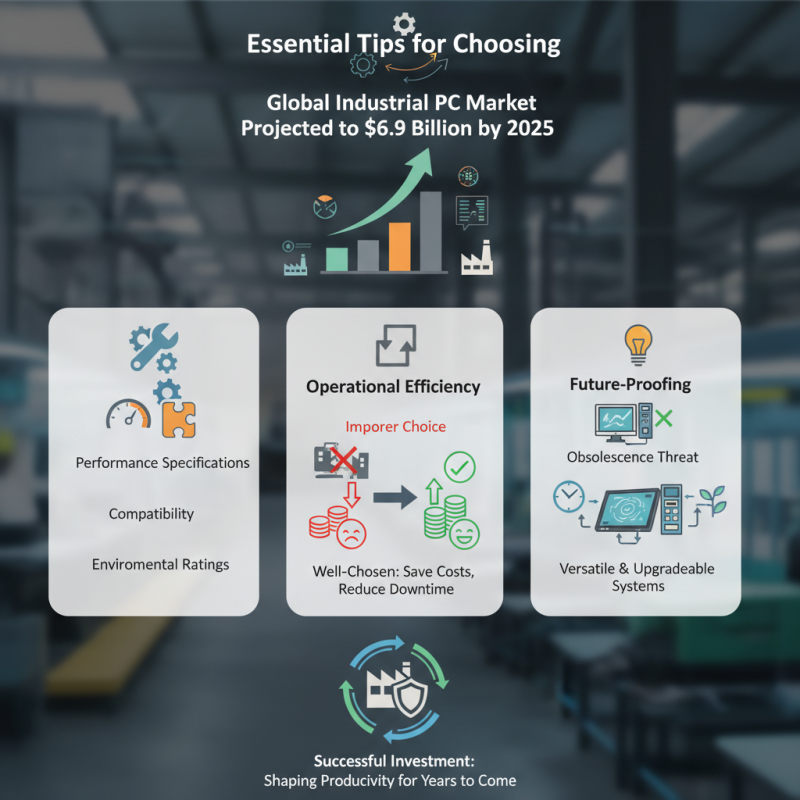
In today’s fast-paced manufacturing environment, choosing the right Industrial Panel PC is crucial. According to a recent report by MarketsandMarkets, the global Industrial PC market is projected to reach $6.9 billion by 2025. This growth signifies the increasing reliance on advanced technology in industrial settings. An effective Industrial Panel PC can enhance efficiency and streamline operations, making the selection process critical.
Selecting the right Industrial Panel PC involves multiple factors. Performance specifications, compatibility, and environmental ratings play crucial roles. However, many users often overlook these aspects, leading to operational inefficiencies. A well-chosen Industrial Panel PC can save costs and reduce downtime. An improper choice may lead to regrets and unplanned expenses.
Moreover, industry professionals should consider the future of their operations. As technology evolves, obsolescence is a real threat. Investing in versatile and upgradeable systems is essential. Collectively, these considerations form the foundation of a successful investment in an Industrial Panel PC, shaping productivity for years to come.
Key Factors to Consider When Selecting an Industrial Panel PC
When selecting an industrial panel PC, several key factors should be considered to ensure you make the right choice. The performance, durability, and usability of the device can significantly impact operational efficiency. According to a recent industry report, 70% of manufacturers prioritize processing power and display quality in their purchasing decisions.
Tips: Focus on the CPU and RAM specifications. Choose a processor that meets your application's demands. The right RAM can avoid slowdowns. A display size that matches your workspace is also crucial.
Consider environmental conditions. Some devices are designed to withstand extreme temperatures, dust, and humidity. In a survey, 65% of businesses cited ruggedness as a vital feature. Evaluate the materials and IP ratings of the panel PC. Ensure it aligns with your industry needs.
Tips: Analyze potential locations and usage scenarios for the device. Make sure you know where the panel PC will be installed. Anticipate maintenance challenges. Regular upkeep can extend the lifespan of the equipment.
Evaluating Performance Specifications for Industrial Panel PCs
When choosing an industrial panel PC, performance specifications are crucial. Focus on the processor type and speed. A fast processor can handle multiple tasks smoothly. Look at the RAM size too. More RAM allows for better multitasking without lag. These components directly affect overall performance in demanding industrial environments.
Consider storage options as well. Solid State Drives (SSD) are faster than traditional Hard Disk Drives (HDD). They improve boot times and data retrieval. Think about the operating temperature range too. Industrial PCs must endure harsh conditions. A reliable device should function well in extreme temperatures and humidity levels. Check for certifications that ensure durability and longevity.
Don’t overlook connectivity features. An ideal industrial panel PC should support various ports like USB, HDMI, and Ethernet. These enable easy integration with other devices. Yet, some users may find complicated setups. Always read the manual thoroughly and seek help if needed. Choosing the right specifications can greatly influence performance, but it’s a process that may require adjustments along the way.
Understanding Environmental Conditions and Their Impact on Panel PCs
When selecting an industrial panel PC, understanding environmental conditions is crucial. Different settings require different features. For instance, a factory with high humidity may need a PC with enhanced sealing. Dusty environments call for robust designs that can withstand heavy particulate exposure. Temperature extremes should also be considered; some systems function better in cold spaces, while others excel in heat.
Pay attention to the materials used in the panel PC. Metal housings can provide durability but may not always be the best for every situation. Some plastics, while seemingly less robust, can offer excellent resistance to chemicals. Knowing the specific environmental challenges can help with this choice. It’s not just about the specs; real-world conditions matter a lot.
Reflect on your environment regularly. Conditions can change over time. A panel PC that performed well in the past may not hold up to new challenges. Consider how these elements impact maintenance and longevity. Not all decisions will be perfect, but staying informed ensures better outcomes. Think carefully about your needs and the unique environment where the panel PC will operate.
Compatibility and Integration with Existing Systems and Software
When selecting an industrial panel PC, compatibility and integration with existing systems is crucial. Ensure the new PC supports your current hardware and software. This reduces potential disruptions. Investigate the operating systems your teams currently use. Compatibility issues can lead to delays and increased costs.
Consider the communication protocols of your existing equipment. Look for a panel PC that supports these protocols. This ensures that data flows smoothly between systems. If the new panel PC requires additional adapters or converters, this can complicate setup. Simplicity is often preferred.
Tip: Before purchase, consult with your IT department. They can provide insight into specific needs. This communication is vital. Sometimes, assumptions about compatibility can lead to costly mistakes. Another tip is to evaluate the scalability of the panel PC. Flexibility is important for future upgrades or changes in your operations. Ignoring this might restrict growth.
Essential Tips for Choosing the Right Industrial Panel PC
| Dimension | Recommendation | Considerations |
| Operating System | Choose Windows or Linux based on your software needs | Compatibility with existing applications |
| Screen Size | Select between 10" to 22" for optimal visibility | Space availability in the working environment |
| Processor Type | Intel i5 or i7 recommended for heavy workloads | Performance requirements of applications |
| RAM Size | Minimum 8 GB, 16 GB for high-performance tasks | Memory-intensive applications |
| Interface Options | USB, Serial, and Ethernet ports for connectivity | Compatibility with existing devices |
| Durability Rating | IP65 or higher for dust and water resistance | Environmental conditions of operation |
| Power Supply | Consider option between AC and DC supply | Compatibility with current power infrastructure |
Budgeting for Industrial Panel PC Purchase and Maintenance Costs
When budgeting for an industrial panel PC, consider initial costs and long-term expenses. The initial purchase price can vary widely. An overly cheap option might lack essential features. Investing more upfront could pay off in terms of performance and longevity.
Maintenance is another crucial aspect. Regular upkeep is necessary to avoid costly repairs. Check if your budget accommodates regular maintenance checks and updates. Setting aside a small percentage of the purchase price for annual maintenance is wise. However, many overlook this aspect until it's too late.
Consider energy consumption as part of your budget. Industrial PCs often run for extended periods. High energy usage can lead to unexpected costs. Evaluating the energy efficiency of the models can save money in the long run. It’s easy to focus solely on the price tag but neglect hidden costs. Being mindful of these factors will lead to a more sustainable investment.
Budgeting for Industrial Panel PC Purchase and Maintenance Costs