

A Solar Motion Flood Light can improve visibility around entrances, driveways, gardens, and work areas without a wired power connection. For global buyers, choosing one means looking beyond brightness claims. Panel placement, battery capacity, detection range, weather resistance, and installation method all affect everyday performance. A light facing open afternoon sun may behave differently from one mounted beneath a deep roof overhang. Shade matters.
This guide introduces ten options and highlights features buyers can compare across product listings. Published specifications are useful, but they do not tell the whole story. Motion sensors may respond differently to passing cars, pets, or nearby branches, and advertised battery performance can depend on sunlight and usage. Check whether the solar panel is separate or integrated, how the unit can be adjusted, and what protection rating the manufacturer provides. Also review warranty terms, replacement-part availability, and relevant requirements in your market.
There is no universal best choice. A compact fixture may suit a gate, while a broader beam may better cover a parking area. Some trade-offs are easy to miss. A powerful light can still disappoint if its panel receives little direct sun. Compare the details with your site conditions, and treat unclear specifications as a reason to ask the seller for clarification.
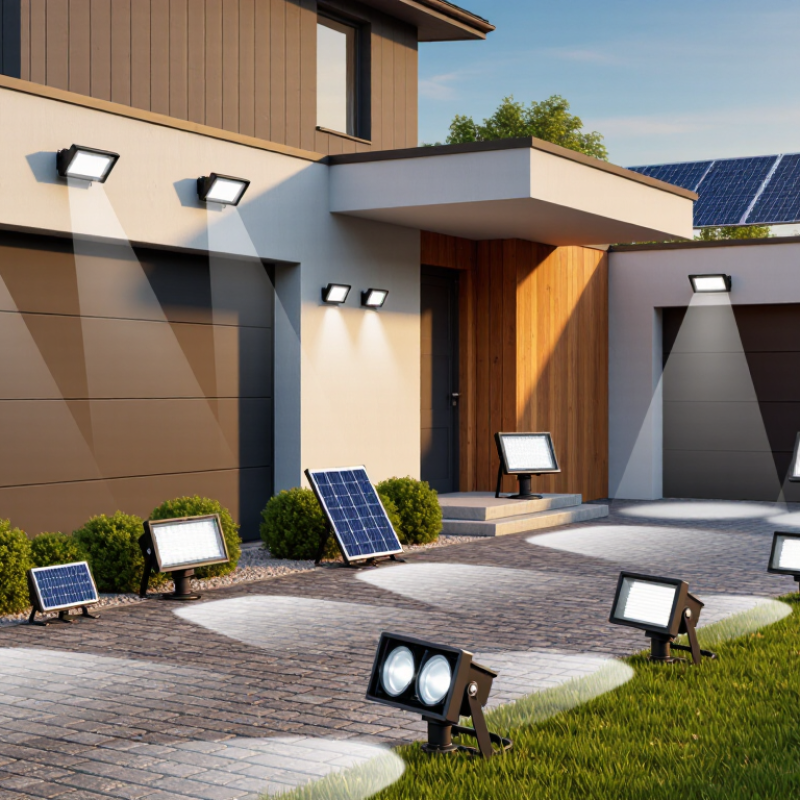
Solar motion flood lights pair a photovoltaic panel, rechargeable battery, motion sensor, and bright LED array. During daylight, the panel converts sunlight into electricity and stores it in the battery. After dark, a passive infrared sensor detects changes in heat patterns, such as a person crossing a driveway. The controller then switches on the LEDs, often for a set period. Simple idea. Useful at gates, sheds, and paths.
Brightness and runtime depend on panel exposure, battery capacity, temperature, and how often the sensor is triggered. A panel facing open sky usually charges more reliably than one shaded by eaves or branches. Cloudy days can leave less reserve, while repeated triggers may drain the battery sooner than expected. Many units offer adjustable sensitivity, light duration, and operating modes; these settings matter more than headline brightness alone. Still, placement is a compromise. Mounting high can widen coverage, but may make the sensor less responsive to smaller movement.
Tips: Aim the panel toward unobstructed daylight, then test the sensor after installation. Keep its lens clear of dust and leaves. Check the beam at night; a bright central spot can leave the edges dark. Specs help, but the site decides.
For global buyers, a solar motion flood light’s headline lumen figure is only part of the story. Check whether the output is measured in steady mode or brief boost mode, and compare the sensor’s stated range with your installation height. A driveway needs a different beam spread from a narrow side path. Look for adjustable sensitivity, lighting duration, and panel angle; these details affect nightly performance when winter days are short or the panel faces partial shade.
Battery capacity, weather sealing, and thermal control shape reliability. NREL’s review of photovoltaic systems reported a median module degradation rate of about 0.5% per year; this is useful context, not a lifespan guarantee for compact light panels. Ask suppliers for repeatable runtime tests after cloudy-day charging, plus clear IP protection ratings and battery-cycle information. One easy-to-miss weakness: a powerful lamp can drain a small battery before dawn. Specifications should be checked against actual operating conditions.
Tips: Test the sensor at night from the intended mounting height. Keep the panel clear of leaves and dust, and compare runtime after several low-sun days. Small details matter. Don’t treat a high IP rating as proof of long battery life.
Water resistance is a key outdoor-light reliability check. The chart compares IEC 60529 water-protection classifications; it does not rank products or represent test results for specific lights.
How to read it: The number is a protection-class code, not a linear performance score. IPX4 covers splashing water, IPX5 water jets, IPX6 powerful water jets, IPX7 temporary immersion, and IPX8 immersion under conditions specified for the product. The “X” means no dust-protection rating is stated here. Check the complete IP rating and test conditions before comparing lights.
Comparing the top 10 solar motion flood lights means looking beyond headline lumen figures. Check whether each listing reports measured output, beam angle, and sensor detection distance. A wide beam can illuminate a driveway, while a narrow beam may leave its edges dark. Compare battery capacity in watt-hours and panel output in watts, then ask how many hours the light can operate after a cloudy day. Small details matter. The U.S. Department of Energy’s 2022 LED energy-savings forecast estimated that wider LED use could save 569 terawatt-hours annually by 2035. That figure concerns U.S. lighting overall, not individual solar fixtures, but it reinforces why useful light per watt matters.
For fair comparisons, test lights at the same mounting height and note whether motion sensing changes brightness. Check the stated IP rating, warranty terms, and temperature range; these can matter more than an impressive maximum-lumen claim. The IEA’s Renewables 2023 report recorded about 507 gigawatts of new renewable capacity worldwide in 2023, with solar providing the largest share. That growth does not prove any flood light’s quality. It does make clear that local sun conditions vary widely. One overlooked weakness: product pages rarely show dependable runtime after several overcast days. Look for documented test conditions, not just a large battery number.
| Configuration | Typical LED Output | Solar Panel | Battery Capacity | Motion Sensor | Typical Coverage | Ingress Protection | Best Suited For | Key Trade-Off |
|---|---|---|---|---|---|---|---|---|
| Compact single-head light | 300–600 lm | 1–2 W | 4–8 Wh | PIR; about 3–5 m detection | Small entryway or path | IP44–IP54 | Low-traffic doors, sheds, and short walkways | Limited brightness and reserve for long cloudy periods |
| Standard two-head security light | 700–1,200 lm | 2–4 W | 8–15 Wh | PIR; about 5–8 m detection | Small to medium driveway or yard | IP54–IP65 | General residential security lighting | Coverage and runtime depend strongly on sunlight and settings |
| Wide-angle adjustable-head light | 900–1,500 lm | 3–5 W | 10–18 Wh | PIR; about 6–10 m detection | Broad area with adjustable beam direction | IP65 | Driveways, corners, and building entrances | More heads do not necessarily mean greater total brightness |
| Separate-panel flood light | 1,000–2,000 lm | 4–8 W, remotely mounted | 12–25 Wh | PIR; about 6–10 m detection | Areas where the light and panel need different positions | Typically IP65 | Shaded walls, covered entrances, or north-facing installations | Requires cable routing and a panel location with direct sun |
| High-output three-head light | 1,500–2,500 lm | 5–10 W | 18–35 Wh | PIR; about 8–12 m detection | Medium to large yard or parking area | IP65 | Buyers prioritizing brighter, wider security coverage | Needs a larger panel and battery to support frequent activation |
| Large-area security flood light | 2,000–3,500 lm | 8–15 W | 25–50 Wh | PIR; about 8–12 m detection | Large driveway, yard, or small work area | IP65–IP66 | Open sites with good daily solar exposure | Output may be reduced by low charge or energy-saving modes |
| Wide-beam wall-mounted light | 1,000–2,000 lm | 4–8 W | 15–30 Wh | PIR; typically 120°–180° sensing angle | Broad frontage or side passage | IP65 | Mounting points where a wide horizontal beam is useful | Sensor angle and light beam angle are different specifications |
| Motion-and-dusk security light | 500–1,500 lm in motion mode | 3–7 W | 12–25 Wh | PIR with selectable dusk-to-dawn or motion modes | Entrances and routes needing low-level night lighting | IP54–IP65 | Users who want a choice between standby and triggered lighting | Continuous low-level illumination reduces available energy |
| Cold-weather-oriented configuration | 700–1,500 lm | 4–8 W | 15–30 Wh | PIR; about 5–9 m detection | Small to medium exposed outdoor area | IP65; check stated operating temperature | Regions with cool nights and seasonal low sunlight | Battery chemistry and charging-temperature limits matter |
| Commercial-grade, separate-panel configuration | 2,000–4,000 lm | 10–20 W, remotely mounted | 30–60 Wh | PIR; commonly 8–12 m detection | Large outdoor area or perimeter section | IP65–IP66 | Remote sites with ample panel exposure and higher lighting needs | Check mounting strength, battery replacement, and verified test data |
Comparison note: Figures are representative ranges for common product configurations, not verified specifications for individual models. Actual brightness, runtime, detection distance, weather resistance, and cold-weather performance vary by design, settings, installation, and sunlight. Confirm test methods, battery chemistry, operating-temperature limits, and IP rating with the supplier before purchase.
Choosing a solar motion flood light starts with the local climate. In cloudy regions, prioritize a larger panel and a battery with enough reserve for several dim days. Cold weather can slow charging and reduce battery output, so check the stated operating range. In hot, dusty areas, a sealed housing and a panel that is easy to clean matter more. Snow, shade, and nearby walls can block sunlight, even when the product specifications look impressive. Small details count.
Match the light to the task. A driveway may need a wide beam and adjustable detection range, while a side gate benefits from a focused beam and a shorter trigger distance. For a large yard, compare coverage and mounting height, not just brightness claims. A very bright light can drain its battery quickly or cause glare near windows. It is tempting to pick the highest lumen figure, but that is not always the best trade-off. Test the sensor position after installation; passing cars or moving branches may trigger it too often.
Tips: Check the panel’s daily sun exposure before choosing a model. Look for replaceable batteries if long-term maintenance matters. After installation, observe the light for several nights and adjust its angle or sensitivity. Real conditions can expose a flaw that product descriptions miss.
Mount the light where its panel receives several hours of unobstructed daylight; a wall shaded by eaves can leave the battery short after cloudy days. Aim the motion sensor toward paths or gates, not moving branches. Set the detection angle and sensitivity after dusk, then walk through the area to check coverage. Use the supplied seals and cable entries carefully, especially in windy, wet locations. A secure bracket matters: a loose fixture can slowly change direction.
Maintenance is simple, but not optional. Wipe dust, pollen, and bird marks from the panel with a damp, soft cloth. Check for cracked seals, corrosion, and reduced battery runtime every few months. NREL’s review of nearly 2,000 photovoltaic degradation rates found a median module decline of about 0.5% per year; this is useful context, not a lifespan guarantee for a complete light. Global buyers can compare local solar exposure using the World Bank’s Global Solar Atlas, then verify battery chemistry, replacement availability, ingress protection, and operating-temperature range with the supplier. Labels can look impressive. Real winter performance may not.