2026 How to Choose the Best Meditation Drum for Your Needs
Choosing a Meditation Drum is less about finding the loudest or most beautiful instrument and more about matching its sound to your practice. A deep, steady tone may suit slow breathing, while a brighter note can help mark transitions between exercises. In a quiet room, even a small drum can feel surprisingly present. Try listening at a comfortable volume before deciding.
This guide explores the details that shape a useful choice: drum type, size, materials, tuning, playing style, and budget. It also considers where and how you plan to use the instrument. A portable frame drum may work well for travel, while a larger standing drum needs space and careful handling. Check the finish, seams, and included accessories, and ask sellers clear questions about construction and care. These practical checks cannot guarantee a perfect instrument, but they can help you make a more informed decision.
Sound remains personal. Two drums with similar specifications may feel different in the same room, and online recordings rarely reproduce tone exactly. That limitation matters. If possible, test several options in person, or choose a seller with a clear return policy. The following sections will help you compare features without treating price, tradition, or appearance as proof of quality. Your needs may change with practice, too. Let that be part of the choice.
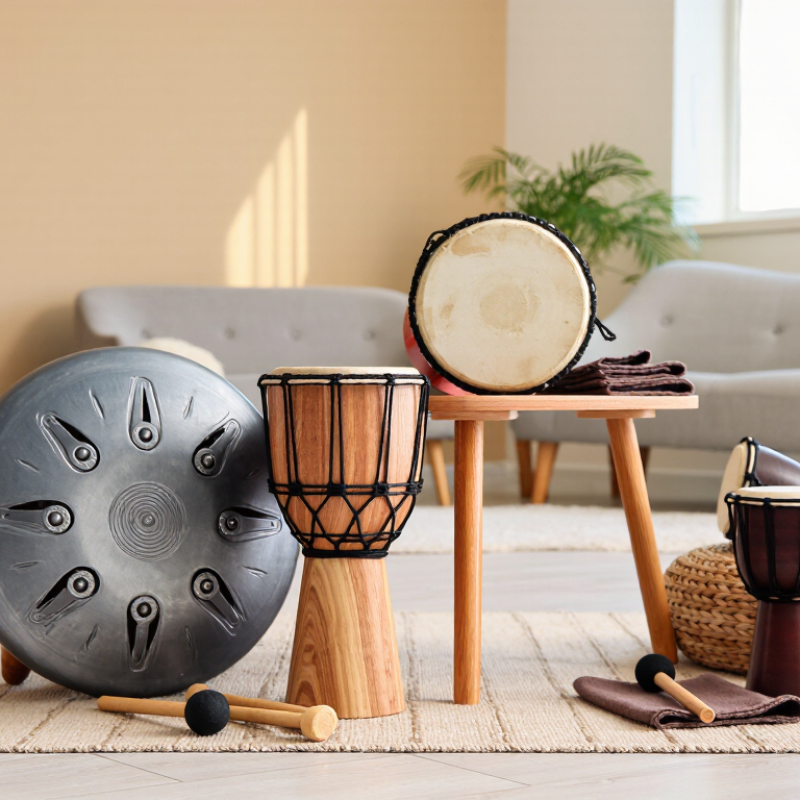
What a Meditation Drum Is and How Its Sound Supports Mindfulness
A meditation drum is a hand-played percussion instrument used to create steady, resonant tones during quiet practice. Depending on its shape and material, it may sound deep and soft or bright with a lingering ring. Some drums are played with a padded beater; others respond to gentle hand taps. The sound is not a requirement for meditation. It is one possible point of focus.
A slow pulse can help mark the breath without forcing it. Tap once as you breathe out, then leave a little space before the next beat. Listen for the tone’s beginning, its fading edge, and the silence afterward. That small sequence gives the mind something concrete to notice when thoughts wander. The drum does not make every session calm. Some days, its vibration may feel distracting, and that is useful information too.
In a quiet room, try a few light strokes and notice how far the sound carries. Does it feel warm, sharp, or slightly uneven? Let your shoulders settle, and keep the volume comfortable. A simple rhythm is usually easier to follow than a complicated pattern. Still, I find that silence between beats can matter more than the beat itself. Choose a drum whose tone feels inviting at low volume, rather than one that demands attention.
2026: How to Choose the Best Meditation Drum for Your Needs
What a meditation drum is—and how its sound can support mindfulness
Reading the chart: These bars show standard equal-tempered pitch reference frequencies, not measurements of particular drums. Meditation drums can produce different tones depending on their size, material, and construction. When choosing one, listen for a sound and volume that feel comfortable, and consider whether its resonance suits your mindfulness practice.
How to Match Drum Types, Sizes, and Materials to Your Practice
Choosing a meditation drum starts with the sound you want to support. A frame drum offers a broad, warm tone that can mark a slow breathing rhythm. A small tongue drum often produces clear, gentle notes with little technique. For quiet sitting, listen for a soft attack and a short sustain; ringing notes may distract in a small room. Try the sound at your usual practice volume. Louder is not always better.
Size affects comfort and resonance. A compact drum is easier to hold on your lap or carry to a group session, but its tone may feel thinner. A larger drum can produce deeper vibrations and may suit a spacious room. Check that you can reach the playing surface without lifting your shoulders. That detail matters after ten minutes, not just during a quick shop test. I sometimes overvalue a rich low note; comfort deserves equal weight.
Materials shape both sound and upkeep. Wood-bodied instruments can feel warm and resonant, while synthetic heads are often less sensitive to humidity changes. Natural skins may respond subtly to touch, though temperature and moisture can alter their tension. Ask how the instrument should be stored, and inspect the rim, head, and finish for even construction. If possible, play a few slow strokes and pauses. Notice whether the sound helps you settle, or makes you want to keep performing.
Which Sound, Tone, and Resonance Features Matter Most
A meditation drum should feel comfortable before it sounds impressive. Test it in a quiet room, then listen from your usual sitting distance. A low tone may feel grounding, while a brighter pitch can cut through background noise. Neither is automatically better. Choose a sound you can hear clearly without striking hard; forceful playing can make sessions tiring.
Pay attention to resonance: how long the tone lingers after one gentle strike. A short decay can suit steady rhythms, while a longer ring leaves more space between beats.
Listen for rattles, buzzing, or uneven notes, especially near the rim. Small flaws may not matter, but they can become distracting during repeated practice. I would not judge a drum from a brief shop demonstration alone.
Evidence on drums specifically is limited. A 2017 study in the Journal of Evidence-Based Complementary & Alternative Medicine observed 62 adults after a singing-bowl sound meditation and reported reductions in several self-reported mood measures. Singing bowls are not drums, so those results cannot prove that a drum has the same effects. Treat them as adjacent evidence, not a buying guarantee.
Try several tones at low volume, and notice whether the sound remains pleasant after five minutes. That part is personal.
How to Choose a Meditation Drum for Your Space and Routine
How to Choose a Meditation Drum for Your Space and Routine
Your room and routine should guide your drum choice. In a small apartment, a compact frame drum may be easier to store and play without overwhelming the space. In a larger room, a deeper drum can offer a fuller sound, but test its volume if possible. A drum that feels gentle in a shop may sound surprisingly loud beside bare walls. Consider where you will keep it, too. A shelf, floor cushion, or storage basket can make regular use easier.
Think about how you meditate. For a brief morning practice, a lightweight drum with a comfortable grip may suit a few steady beats. Longer sessions may call for a size you can hold without tiring your wrists. Try a simple rhythm before buying, and notice whether the sound helps you focus or pulls your attention away. Your preference may change.
Tips: Check the drum’s weight, playing surface, and care instructions. If you share walls or a room, ask someone nearby to listen from outside your practice area. Keep the drum dry and avoid placing it near direct heat. A soft case can help protect it, though I sometimes underestimate how much storage space even a small instrument needs.
2026 How to Choose the Best Meditation Drum for Your Needs - How to Choose a Meditation Drum for Your Space and Routine
| Drum Type | Typical Size and Storage | Sound and Playing Style | Space and Routine Fit | What to Consider |
| Steel tongue drum | Often about 6–14 inches across; compact models fit on a shelf or in a padded bag. | Rounded, sustained notes played with fingers or soft mallets. Many are tuned to a fixed scale. | A practical choice for apartments, desks, and short daily sessions. Can be played seated on a table or lap. | Check the instrument’s scale, note count, playing area, and whether mallets are included. Sound can carry through quiet rooms. |
| Frame drum | Commonly around 12–20 inches across; usually stored upright or in a protective cover. | Played by hand with taps, strokes, and finger rolls. Pitch and tone vary with the head material and playing technique. | Works well for seated rhythmic practice, breath pacing, or group sessions where a wider playing area is available. | Some models have a tunable head and may respond to humidity or temperature. Try the size and weight in a playing position before choosing. |
| Ocean drum | Often around 12–22 inches across; requires space to tilt and rotate safely. | Small beads move inside the drum to create a wave-like sound. Tilting and gentle motion control the effect. | Suitable for guided relaxation or occasional sound sessions, especially where slow movement feels comfortable. | It is less suited to precise pitched melodies. Check the drum’s diameter and weight, as larger models need more room to handle. |
| Handpan | Typically about 20–24 inches across; needs a stable lap or stand and protective storage. | A melodic steel instrument played with the hands. Its tuned tone fields allow repeating patterns and simple melodies. | Best for a dedicated practice spot and longer sessions; its size may be less convenient for small storage areas or frequent travel. | Compare tuning, note layout, weight, and care instructions. Handpan models differ in scale and are generally a larger investment than compact drums. |
| Small frame drum with a soft beater | Often around 8–12 inches across; easy to carry and store in a small bag. | Produces simple, focused pulses when tapped with a soft beater or fingers. | A compact option for brief rhythm-based routines, travel, or rooms with limited floor space. | A smaller head may feel different under the hands and offer less playing surface. Test the tone at the volume you plan to use. |
Choosing tip: Match the drum to your available space, preferred sound, storage needs, and usual session length. If possible, listen to the instrument in a quiet room and check whether its volume suits your household.
How to Compare Quality, Comfort, Price, and Long-Term Value
When comparing meditation drums, judge the sound in person if possible. Strike the same area gently, then listen for a clear tone that fades without an unwanted rattle. Check the rim for rough edges and the playing surface for dents. A low price can be tempting. Still, ask whether the drum includes a suitable mallet, a protective case, and a clear care guide. These details affect daily comfort and replacement costs. A drum that feels awkward after ten minutes may stay on the shelf.
Sound level matters, too. The U.S. National Institute for Occupational Safety and Health recommends limiting occupational noise exposure to 85 decibels over eight hours, using a 3-decibel exchange rate. That is workplace guidance, not a drum-quality rating or a personal safety guarantee. Yet it supports a practical habit: play at a comfortable volume, especially in a small room, and take breaks. A phone meter can offer a rough comparison, but it is not a calibrated instrument. Imperfect, but useful.
For long-term value, compare construction, repair options, and warranty terms—not just the checkout price. Ask whether the surface or frame can be serviced if it loosens, and whether care instructions suit your climate. Keep the drum away from damp floors and direct heat; temperature swings may affect materials. If possible, test its weight while seated and standing. Comfort is personal, and a beautiful tone alone may not be enough. Industry reports rarely measure that lived experience, so your own repeated listening should guide the final choice.