

Choosing among China’s top Commercial Fan manufacturers requires more than comparing catalog prices. A reliable supplier should prove airflow performance, motor efficiency, noise control, material quality, and after-sales support. These details become practical inside a warehouse, where dust settles on blades and workers stand beneath fans for eight-hour shifts.
Commercial ventilation engineer Michael Chen explains, “A commercial fan is not selected by airflow alone; it must match the building’s real operating conditions.” This principle deserves attention. A large fan may look powerful, yet perform poorly when ceiling height, duct resistance, temperature, or humidity changes. The right manufacturer should provide tested performance curves, motor data, installation guidance, and clear warranty terms.
Experience also matters. Ask whether the factory has produced fans for warehouses, workshops, retail spaces, or agricultural buildings similar to yours. Request sample reports, inspection records, and references from comparable projects. Check how the company handles balancing, vibration, replacement parts, and delivery delays. Small details often reveal operational maturity.
However, no supplier is perfect. Marketing language can sound stronger than engineering evidence. Some buyers, including experienced ones, focus too heavily on price and regret it after installation. A quieter motor, stronger housing, or better control system may cost more initially. It can also reduce maintenance and energy waste over time.
This guide examines how to compare leading Chinese Commercial Fan manufacturers with practical judgment. The goal is not to select the cheapest product. It is to select a dependable solution for the actual space, workload, climate, and service expectations.
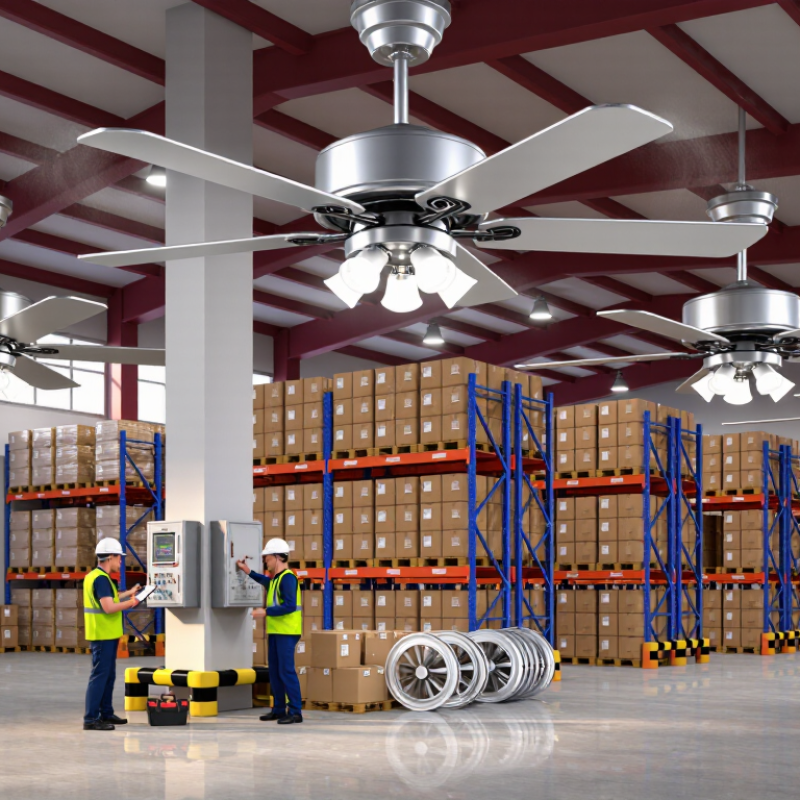
A top commercial fan manufacturer in China is defined by more than factory size or export volume. It should understand airflow, static pressure, motor efficiency, corrosion resistance, and each project’s working conditions. In a warehouse, a fan may run for long shifts above dusty floors. In a restaurant, grease and heat create different demands. A reliable manufacturer asks about these details before suggesting a model. That detail matters.
Professional capability appears in engineering records, test procedures, and controlled production. Look for measured airflow data, noise readings, motor protection information, and clear tolerances. Independent testing or recognized quality systems can strengthen confidence, but paperwork alone is not proof. Ask for evidence. Factory audits, sample inspections, and traceable components reveal more than polished brochures. Practical inspections often show attractive samples performing differently after installation conditions change. This is where many buyers become too confident.
Trust also depends on communication after purchase. A serious supplier provides installation guidance, maintenance instructions, spare-part planning, and responsive technical support. It should explain limitations instead of promising perfect results for every building. Small details matter: secure packaging, readable wiring labels, balanced blades, and consistent delivery records. A manufacturer with documented corrective actions may be more credible than one claiming zero defects. The strongest evaluation combines factory evidence with field feedback and honest technical revision.
| Evaluation Dimension | Suggested Weight | What a Top Manufacturer Should Demonstrate | Practical Benchmark or Requirement | Evidence to Request | Questions for Supplier Evaluation |
|---|---|---|---|---|---|
| Product Compliance and Safety | 15% | A structured compliance process covering electrical safety, mechanical protection, materials, labeling, and the regulations of the destination market. | Product documentation should match the target market. For applicable products, check conformity with standards such as IEC 60335-1 and relevant appliance-specific requirements. | Declaration of conformity, test reports from recognized laboratories, technical file, rating label samples, wiring diagrams, and user manuals. | Which standards apply to this model and destination country? Are the reports for the exact model, motor, and control system being quoted? |
| Airflow and Performance Data | 15% | Performance claims supported by consistent test methods rather than marketing descriptions alone. | The quotation should state airflow, static pressure, power input, rotational speed, sound level, voltage, frequency, and operating conditions. Airflow should be reported in a clearly identified unit such as m³/h or CFM. | Product datasheet, performance curve, laboratory test record, operating-point data, and sample inspection results. | How was airflow measured? Is the value free-air airflow or measured at a stated static pressure? What tolerance applies to production units? |
| Motor and Electrical Efficiency | 12% | Appropriate motor selection, stable electrical performance, overload protection, and transparent energy-consumption data. | The motor specification should identify motor type, rated output, insulation class, protection rating, duty rating, voltage range, and efficiency information where applicable. | Motor datasheet, efficiency test data, protection details, capacitor or controller specifications, and electrical safety test results. | Is the motor suitable for continuous operation? What protection is provided against overheating, overload, voltage variation, and locked-rotor conditions? |
| Manufacturing and Quality Control | 15% | Controlled incoming inspection, documented assembly procedures, traceability, final testing, and corrective-action processes. | Every production batch should have defined inspection records for key components, electrical safety, vibration, noise, rotation direction, and basic operating performance. | Quality manual, process flow chart, inspection plan, sample quality records, calibration certificates, nonconformance procedure, and factory audit report. | Which tests are performed on every unit and which are performed by sampling? How are defective components and repeated quality issues handled? |
| Product Range and Engineering Capability | 10% | Capability to adapt airflow, pressure, mounting, controls, materials, and protection features to different commercial applications. | The manufacturer should provide engineering drawings, selection guidance, load calculations, control compatibility information, and documented design-change procedures. | Technical drawings, selection charts, application examples without confidential customer information, prototype records, and engineering change notices. | Can the supplier provide a solution for the required airflow and pressure point? What changes require a new test or approval? |
| Materials and Environmental Durability | 10% | Materials selected for the installation environment, including humidity, dust, corrosion, temperature, and cleaning conditions. | The specification should identify housing material, coating or surface treatment, impeller material, bearing type, operating-temperature range, and relevant ingress or corrosion protection. | Material declarations, coating specifications, ingress-protection documentation where applicable, corrosion-resistance test results, and environmental operating limits. | Is the proposed construction suitable for kitchens, warehouses, factories, coastal areas, outdoor use, or high-humidity locations? |
| Customization and OEM/ODM Support | 8% | Ability to manage customized labels, packaging, colors, mounting arrangements, controls, documentation, and product revisions without losing quality consistency. | Customization should be documented through approved drawings, samples, revision control, and written acceptance criteria before mass production. | Customization workflow, sample approval form, packaging specification, artwork-control procedure, and change-management records. | What is the minimum order quantity for customization? Who owns the drawings and tooling? How are unauthorized design changes prevented? |
| Delivery Capacity and Supply-Chain Control | 7% | Reliable sourcing of motors, bearings, controls, sheet metal, castings, and other critical components, with realistic production planning. | The supplier should provide a documented lead-time range, production capacity information, critical-component alternatives, and a plan for demand fluctuations. | Production schedule sample, capacity statement, supplier qualification process, approved-vendor list for critical parts, and shipment records with sensitive details removed. | Which components have the longest lead time? What is the contingency plan if a critical motor, controller, or bearing becomes unavailable? |
| After-Sales Service and Spare Parts | 5% | Clear warranty terms, technical support, spare-parts availability, troubleshooting instructions, and a defined response process for field problems. | Warranty conditions should state coverage period, exclusions, claim procedure, required evidence, response time, and spare-parts support period. | Warranty document, spare-parts list, troubleshooting guide, service contact process, and anonymized corrective-action examples. | Which parts are considered wear items? How quickly can replacement motors, controllers, bearings, or impellers be supplied? |
| Commercial Transparency and Total Cost | 3% | Transparent quotations that distinguish product price from tooling, packaging, testing, freight, taxes, installation, and lifecycle costs. | Compare suppliers using the same airflow, pressure, duty cycle, noise, control, compliance, warranty, and delivery requirements—not unit price alone. | Itemized quotation, Incoterms, payment terms, tooling charges, packaging details, warranty costs, and energy-consumption information. | What costs are excluded from the quoted price? How does the proposed fan’s energy use and maintenance requirement affect total cost of ownership? |