

Choosing a Three Phase Diesel Generator is not simply a matter of comparing kilowatts and prices. The right decision begins with the actual load. Motors, pumps, compressors, heaters, and sensitive electronics behave differently during startup. A generator that looks powerful on paper may still struggle when several motors start together. That detail matters.
“Generator sizing must reflect the load profile, not only the connected load,” says Mike Maro, a power-generation applications specialist. His point is practical. A factory may list 400 kW of equipment, yet its starting demand can rise sharply for several seconds. That brief surge can trip protection systems or cause damaging voltage dips.
A reliable evaluation should examine prime or standby rating, voltage, frequency, phase balance, fuel consumption, ambient temperature, altitude, and maintenance access. Do not ignore the control panel. Clear alarms, automatic transfer compatibility, and remote monitoring can reduce confusion during an outage. Enclosure design also matters when the unit operates beside a dusty workshop or in heavy rain.
Measure the real conditions.
Sound level deserves attention, too. A unit placed near offices can create daily complaints, even when it performs correctly. Service intervals, filter availability, warranty support, and local technician coverage often matter more than a small purchase-price difference. This is where many comparisons become incomplete.
There is no perfect specification sheet. A careful buyer may still revise the choice after checking future expansion, uneven loads, and emergency operating procedures. The best Three Phase Diesel Generator is not necessarily the largest model. It is the one that starts confidently, carries the real load, and remains supportable for years.
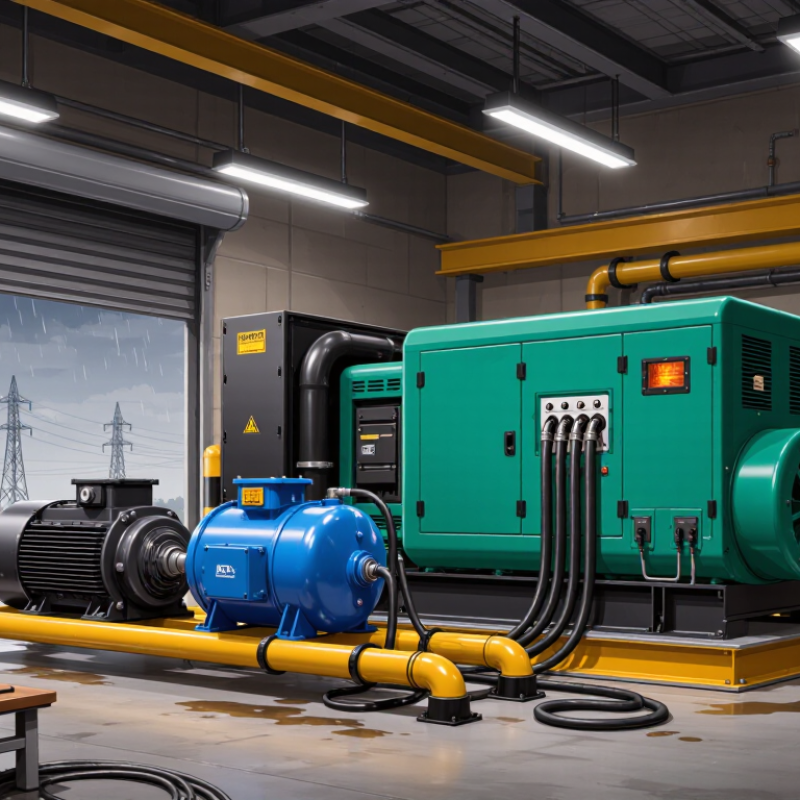
Before choosing a three-phase diesel generator, define every load it must support. Create a load schedule with motors, pumps, lighting, heating equipment, and control systems. Record each item’s running power in kilowatts and starting current. Motor-driven equipment may briefly demand three times its normal power. That surge can trip an undersized generator within seconds. Small details matter.
Convert the total load into kVA using the expected power factor. A system operating at 0.8 power factor needs more kVA than its kW rating suggests. Separate continuous loads from standby loads, because their operating limits may differ. Check whether the generator will carry single-phase equipment across three phases. Uneven phase loading can cause overheating and unstable voltage. Measure real demand with a power analyzer when possible. Estimates are useful, but they can be wrong.
Allow practical headroom for future equipment, high ambient temperatures, and installation altitude. A generator rated for 400 kW at sea level may deliver less power in hot, thin air. Avoid adding excessive reserve, however, because a lightly loaded diesel engine can run inefficiently and develop maintenance problems. I have seen projects focus on peak wattage while ignoring motor starting current. That mistake looked inexpensive at first. It was not. Review the load calculation with a qualified electrical professional, then confirm cable size, breaker settings, and phase balance before final selection.
Choosing generator capacity begins with the real load profile, not the largest nameplate value. Record each three-phase load in kilowatts, voltage, power factor, and operating hours. Pumps, compressors, elevators, and large fans can demand several times their running current during startup. That brief surge may cause voltage dips, nuisance trips, or stalled motors.
Calculate the highest starting combination, especially when several motors start together. A generator may support the running load but fail during a sudden inrush. Staggered starting, soft starters, or variable frequency drives can reduce this demand. However, these devices also create harmonics and may need specialist review. Leave practical headroom, often around 15 to 25 percent, for temperature, altitude, and future expansion.
Field measurements are more reliable than assumptions. Use a power analyzer during peak operation, then confirm motor starting current with an electrician or qualified engineer. Check both kW and kVA ratings, because poor power factor increases current without increasing useful output.
A load bank test can reveal weak voltage recovery before installation. Do not oversize carelessly. A lightly loaded diesel generator can suffer from inefficient combustion, carbon buildup, and wet stacking.
I have seen neat calculations miss seasonal heaters and unexpected pump starts. The worksheet looked correct. The site did not. Review the load sequence, emergency priorities, and actual operating conditions before selecting the final rating.
How to Choose a Three Phase Diesel Generator?
Choosing a three phase diesel generator starts with the connected load, not the engine size. List every motor, heater, pump, and control panel before selecting voltage. A measured load profile is more reliable than a rough estimate. Check the load.
Voltage must match the equipment nameplates and the site distribution system. Common systems include 400/230 volts at 50 Hz and 480/277 volts at 60 Hz. The first number usually represents line-to-line voltage. The second commonly serves line-to-neutral loads. Confirm whether the installation needs a neutral conductor. Some facilities use three phase loads only, while others supply lighting and outlets from one phase. A mismatch can damage equipment or cause unstable operation.
Frequency affects motors, pumps, transformers, and sensitive controls. Equipment designed for 50 Hz may perform poorly at 60 Hz, even when voltage appears correct. Phase sequence also matters because it determines motor rotation. An incorrect sequence can reverse a pump or fan. This detail is easy to miss during a rushed installation. Technicians should verify rotation before connecting critical machinery.
Generator capacity should cover running demand and motor starting current. Large compressors may need several times their normal current briefly. Voltage dips can reveal an undersized alternator, weak connections, or an inaccurate load estimate. I have seen specifications look correct until multiple motors started together. Leave practical capacity margin, but avoid excessive oversizing, which can reduce efficiency and create wet-stacking concerns. A qualified electrical professional should confirm grounding, protection, and local code requirements before commissioning.
When choosing a three-phase diesel generator, fuel efficiency deserves more than a brochure figure. Ask for fuel consumption at 25%, 50%, 75%, and 100% load. Many sites operate below capacity, where inefficient running quietly increases costs. Match the generator’s rated output to measured demand, including motor-starting surges. Keep a load profile for several days. Real data beats guesses.
Emissions depend on engine design, maintenance, fuel quality, and operating temperature. Request verified emissions data and check local requirements before installation. Black smoke, strong odors, or unstable speed should trigger inspection, not acceptance. Noise also matters near offices, homes, or hospitals. Consider sound levels at the property boundary, not only beside the generator. At high altitude or in hot, dusty rooms, available power can fall. Ventilation and cooling need a practical site assessment. I have seen noise estimates fail because nearby walls were ignored. That mistake is avoidable, but not always.
Tips: Record fuel use with a calibrated meter during real operations. Test both emergency and normal loads. Inspect filters, exhaust paths, and cooling airflow regularly. Leave space for maintenance access. Review service records before trusting performance claims. A perfect calculation is rarely possible. Recheck assumptions when seasons, loads, or site conditions change.
How to Choose a Three Phase Diesel Generator?
A three-phase generator should match the site’s real electrical behavior, not only its rated output. The IEA’s Electricity 2024 report estimates data centers consumed 415 TWh in 2024. Demand may exceed 945 TWh by 2030. That growth increases the cost of unstable backup power. Choose a controller that records voltage, frequency, load, fuel level, and fault history. Automatic transfer and remote alarms matter during an empty night shift. Paralleling control is useful when loads expand gradually. A bright screen is not enough.
Safety needs practical testing. Select protection for overspeed, low oil pressure, high coolant temperature, short circuit, and emergency stop conditions. ISO 8528-4 provides guidance for generator control and switching equipment. NFPA 110 also defines performance requirements for emergency power systems. Ask for documented shutdown tests. Do not accept only factory screenshots. Small details matter, such as guarded terminals, proper exhaust routing, battery isolation, and safe access around hot surfaces.
Maintenance plans should state service intervals, load-bank testing, battery checks, coolant analysis, and fuel-quality inspections. Uptime Institute’s outage research continues to identify power problems as a major source of serious interruptions. Support quality can decide the outcome. Check technician response times, local parts availability, remote diagnostics, and escalation procedures. A cheaper contract may exclude travel or overnight work. That weakness is easy to miss. I would also question vague promises; real support should show test records, named contacts, and clear maintenance responsibilities.
| Evaluation Dimension | Basic Manual Control | Automatic Mains Failure Control | Paralleling and Load-Sharing Control | Remote-Monitoring-Ready Control |
|---|---|---|---|---|
| Typical Application | Portable, standby, agricultural, or non-critical loads where an operator is available. | Buildings and facilities requiring automatic backup when the utility supply fails. | Critical facilities or large installations that need capacity expansion, redundancy, or load sharing. | Unattended or distributed sites requiring alarms, operating data, and remote service coordination. |
| Starting and Transfer | Manual start/stop; load connection and disconnection are normally performed by an operator. | Automatic engine start and transfer through a properly rated automatic transfer switch; utility-return transfer can also be automatic when configured. | Automatic start, synchronization, breaker control, and load sharing among generator sets; engineering coordination is required. | Automatic operation similar to an AMF system, with communications added for status, alarms, and commands. |
| Control and Measurement | Local start/stop, emergency stop, engine speed or frequency indication, voltage, current, and basic operating hours. | Adds utility sensing, automatic start logic, cooldown, event records, and configurable voltage/frequency protection. | Adds synchronization, real-power and reactive-power sharing, dead-bus closing, and system-level breaker sequencing. | Adds Ethernet, cellular, or other approved communications for operating values, event logs, alarms, and remote access. |
| Voltage and Frequency Protection | Usually includes basic over/under-voltage and over/under-frequency indication or shutdown, depending on the controller. | Normally includes configurable voltage and frequency limits, overspeed shutdown, failed-start detection, and low-battery warnings. | Adds synchronism-check protection and coordinated generator, bus, and breaker protection; settings must be engineered and tested. | Provides the same local protections as the selected controller and reports protective trips remotely; remote monitoring does not replace local protection. |
| Safety Features to Verify | Emergency-stop button, guards, exhaust routing, battery isolation, grounding, and clearly labeled circuit protection. | All basic features plus automatic shutdown for low oil pressure, high coolant temperature, overspeed, and failed start. | All AMF protections plus breaker interlocking, synchronization checks, reverse-power protection, and safe maintenance isolation. | All local safety protections plus cybersecurity controls, user permissions, alarm acknowledgement, and secure communications. |
| Maintenance Requirements | Simple inspection and scheduled servicing; the operator must record hours, fluid levels, alarms, and test results. | Requires periodic automatic-start tests, battery and charger checks, transfer-switch testing, and routine engine servicing. | Requires all standard engine maintenance plus breaker, synchronization, protection-relay, and load-sharing inspections. | Simplifies condition tracking through alerts and logs, but sensors, communications equipment, and software access also require periodic checks. |
| Recommended Test Routine | Follow the engine manual; inspect before use and exercise the set under an appropriate load at the interval specified by the manufacturer or site policy. | Test automatic start and transfer regularly, verify alarms, and conduct periodic load testing in accordance with local requirements and the maintenance plan. | Test each set individually and as a synchronized system, including load sharing, breaker operation, protection trips, and emergency procedures. | Combine the selected operating test with communication-failure tests, alarm-delivery checks, data review, and cybersecurity verification. |
| Technical Skill Required | Basic trained operator for routine checks; qualified electrical personnel are still required for wiring and service work. | Trained generator and transfer-switch technician for commissioning, troubleshooting, and periodic testing. | Specialist commissioning and protection expertise, including electrical studies, synchronization, and system testing. | Generator expertise plus networking, access-control, data-security, and remote-diagnostics capability. |
| Support to Request Before Purchase | Installation manual, wiring diagrams, spare-parts list, service intervals, and local technician availability. | AMF and transfer-switch diagrams, commissioning procedure, battery-sizing information, alarm list, and response arrangements. | System design review, protection settings, synchronization study, commissioning plan, training, and critical spare-parts strategy. | Communication architecture, data-ownership terms, software-update policy, cybersecurity responsibilities, technical support hours, and remote-response procedures. |
| Main Advantages | Lowest control complexity, straightforward operation, and generally simpler troubleshooting. | Automatic backup operation, improved response to utility failure, and better event visibility than manual control. | High availability, scalable capacity, redundancy, and efficient operation across multiple generator sets. | Faster fault awareness, easier maintenance planning, and improved visibility for sites without continuous on-site staffing. |
| Main Limitations | Dependence on operator availability; it may not meet the continuity requirements of unattended critical loads. | Higher installation complexity and cost; transfer-switch coordination and periodic testing are essential. | Highest engineering, commissioning, protection, and maintenance demands. | Requires reliable communications, proper cybersecurity, recurring connectivity costs in some installations, and a plan for remote alarms. |
| Best Selection Criteria | Choose when loads are non-critical, an operator is present, and the installation must remain simple. | Choose when the generator must start automatically after utility failure and the site has one primary generator set. | Choose when uptime, redundancy, expansion, or large and varying three-phase loads justify a coordinated multi-set system. | Choose when the site is remote, staffing is limited, or operational data and alarm notification are important. |