

TREND FOR

MINIATURIZATION

How to Find a Reliable Hair Dryer Factory in China

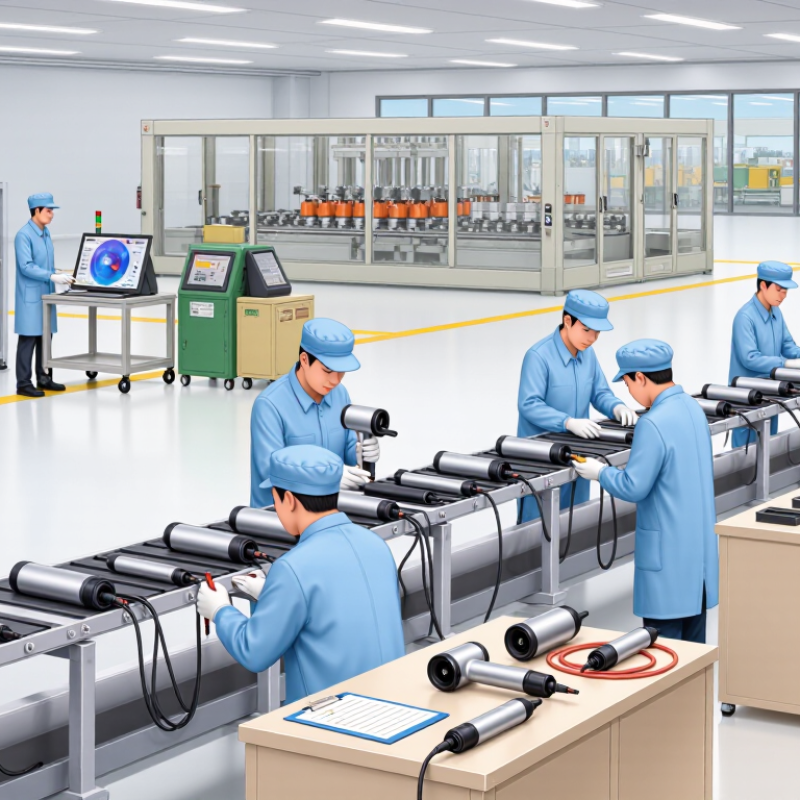
Finding a reliable hair dryer factory from china takes more than comparing prices or browsing polished product photos. A capable partner should explain its production process clearly, show consistent quality records, and answer specific questions without hesitation. Details matter. Ask to see how incoming motors, heating elements, cords, and housings are checked before assembly. Then review sample testing, defect handling, and production consistency.

Quality expert W. Edwards Deming is widely associated with the principle, “Quality comes not from inspection, but from improvement of the production process.” Applied to hair dryer sourcing, that means looking beyond a final inspection report. Ask how the factory controls assembly, tracks recurring faults, and verifies airflow and temperature performance across batches. A genuine supplier should be able to describe these steps and support its claims with records, not just assurances.

This guide outlines practical ways to assess a factory, verify its capabilities, and compare samples before making a commitment. It also considers communication, production capacity, and the questions worth asking during a factory audit. A neat showroom is not proof of reliable manufacturing. Even a careful audit has blind spots, and no checklist can replace ongoing checks. The goal is not to find a perfect supplier; it is to identify a transparent manufacturer whose process and evidence hold up under scrutiny.
How to Find a Reliable Hair Dryer Factory in China

Define Your Hair Dryer Specifications and Sourcing Requirements

Before contacting a hair dryer factory in China, translate your product idea into a written specification. “Powerful” is not a measurable requirement. State the intended voltage, frequency, plug type, and wattage for each target market. Set preferred airflow levels, heat settings, temperature control, and motor type. Include practical details, too: cord length, handle weight, noise limits, filter access, and included attachments.

Be specific about appearance and use. Note housing material, finish, color references, button placement, and packaging needs. If you want a compact travel model, define its folded dimensions and acceptable weight. Share expected order volume, target unit cost, sample quantity, and delivery window. These figures help a factory assess feasibility instead of guessing. Some requirements may change after testing. That is normal.

Ask how the factory will verify key specifications on samples and production units. Request relevant test records for the markets where you plan to sell, and confirm which tests are included in the quoted price. Check a working sample for heat consistency, airflow, grip comfort, and attachment fit. Keep notes and compare the sample against your written requirements. A first draft often misses small details, such as filter cleaning or cord storage. Better to catch those early.

Research and Shortlist Hair Dryer Factories in China

Research and shortlist factories by product fit, not by the first attractive quotation. Grand View Research estimated the global hair dryer market at USD 10.9 billion in 2023 and projected 5.1% annual growth from 2024 to 2030. This market estimate signals competition, not factory quality. Ask each candidate for its main product categories, monthly capacity, minimum order quantity, and recent export experience. Request a current business licence and a live video tour of the production floor. Look closely at motor assembly, cord inspection, and finished-goods testing. Small details matter.

Compare at least three factories using the same specification sheet. Include wattage, voltage, plug type, noise level, materials, packaging, and required test documents. Ask for sample units and record drying performance, heat consistency, weight, and cord flexibility. Check whether the supplier’s test reports match the exact model and production site. A polished catalogue is not proof. A spreadsheet can still mislead if sample costs, tooling, or inspection fees are missing.

Tips: Use HS code 851631 in ITC Trade Map to review hair-dryer trade flows, then verify supplier claims directly. Ask for recent third-party audit records, but confirm the issuing body and date. I would not shortlist on price alone; that is easy to regret. Keep notes after each call, including unanswered questions and promised document dates.

How to Find a Reliable Hair Dryer Factory in China - Research and Shortlist Hair Dryer Factories in China

Evaluation Area What to Check Evidence to Request Shortlist Decision
Factory Identity Confirm that the business is a manufacturer, a trading company, or a combination of both. Check that its registered business scope is relevant to electrical appliances or hair-care products. Business license, factory address, product catalog, and a live video walkthrough showing production or assembly areas. Shortlist only after the legal entity and operating location are clear.
Product Experience Review experience with hair dryers comparable to the intended product in motor type, power range, features, and target market. Current product specifications, anonymized project examples, sample units, and explanations of the factory’s role in design, assembly, and testing. Prioritize relevant technical experience over a broad but unrelated product catalog.
Safety and Compliance Identify the regulations and conformity requirements that apply in the destination market. Requirements depend on the product design and where it will be sold. Applicable test reports and certificates for the exact model, with model numbers and issuing laboratory details that can be checked. Do not treat a certificate for a different model as proof that the proposed product complies.
Electrical Design Check rated voltage, frequency, wattage, plug type, overheating protection, insulation, and suitability for the intended market. Product specification sheet, wiring or component information where available, and test documentation for the quoted configuration. Confirm all electrical details in writing before approving a sample or quotation.
Quality Control Ask how incoming components, in-process assembly, and finished products are inspected. Check how defects and corrective actions are recorded. Quality-control procedure, sample inspection records, functional test checklist, and a description of product traceability. Favor factories that can explain a repeatable process, not just a final visual inspection.
Motor and Component Sourcing Clarify the motor type and the sourcing and approval process for key components such as heating elements, switches, cords, and thermal protectors. Bill of materials or component list, approved-supplier process, and written notice requirements for component substitutions. Require approval before any change to a safety-critical or agreed component.
Sample and Testing Process Establish how samples are made, what features are included, and whether the sample matches the production specification. Approved sample, dated specification, sample evaluation record, and a written process for handling revisions. Approve a defined “golden sample” before mass production.
Production Capacity Assess whether the factory can meet the order quantity and delivery schedule while maintaining its stated production and inspection processes. Current production plan, stated lead time, capacity explanation, and confirmation of peak-season scheduling assumptions. Compare capacity claims with the proposed order size and delivery dates; avoid relying on an unsupported maximum-capacity figure.
Minimum Order and Pricing Compare minimum order quantity, unit price, tooling or customization costs, packaging costs, and payment terms on the same product specification. Itemized quotation with currency, validity period, Incoterm, included packaging, sample charges, and any one-time fees. Compare like-for-like quotations rather than choosing solely by the lowest unit price.
Packaging and Labeling Check retail packaging, shipping protection, user instructions, language requirements, and any market-specific labeling needs. Packaging artwork or dieline, carton specifications, label draft, and confirmation of who reviews and approves final artwork. Approve final packaging and labels before production; confirm they match the destination-market requirements.
Communication and Contracts Evaluate response clarity and confirm that specifications, quality criteria, delivery terms, and remedies are documented. Written quotation, product specification, purchase agreement, inspection criteria, and named contacts for production and quality issues. Prefer written, specific commitments over informal assurances in messages or calls.
Independent Verification Verify key claims before placing a large order. Consider an independent factory audit, pre-shipment inspection, or laboratory testing as appropriate. Audit or inspection report, shipment inspection results, and test results tied to the final production model or batch. Use independent checks when order value, compliance risk, or product complexity justifies them.

Verify Factory Credentials, Expertise, and Production Capacity

A reliable hair dryer factory should prove its identity before discussing price. Check its Chinese business license, registered address, and business scope. Confirm that the certificates belong to the actual production site, not a trading office. ISO’s 2022 Survey recorded 1,265,216 valid ISO 9001 certificates worldwide. That figure covers many industries, so certification alone says little about a factory’s hair dryer expertise. Ask to verify the certificate’s validity, issuing body, and scope. Paperwork can look convincing.

Look for relevant production experience. Ask to see motor assembly, heater installation, and finished-product testing on the factory floor. Request recent test records for airflow, temperature stability, electrical safety, and aging checks. Then compare those records with a sample from the same production line. One caution: a neat showroom is not the factory. If key processes are outsourced, ask which ones, and how incoming parts are inspected.

Capacity needs evidence, too. UNIDO’s International Yearbook of Industrial Statistics 2024 reported that China accounted for roughly 31% of global manufacturing value added in 2022. That broad figure describes scale, not any supplier’s capability. Request monthly output records, shift schedules, machine lists, defect rates, and current order commitments. A small pilot run can expose bottlenecks before a large order. I would still leave room for doubt: quoted capacity may assume overtime or outsourced work. Ask the factory to explain its calculation and show recent production records.

Evaluate Product Samples, Quality Controls, and Compliance

When assessing a hair dryer factory in China, request several samples from the model you plan to order. Test them at different heat and airflow settings, not just for a few minutes. Check whether the handle stays comfortable, the cord bends smoothly, and the controls respond reliably. Listen for rattling, and inspect the grille for rough edges. Small details matter. Record any differences between units; a polished sample may not represent everyday production.

Ask how the factory checks incoming parts, monitors assembly, and inspects finished dryers. Useful evidence includes inspection records, defect tracking, and batch identification. If possible, observe workers checking temperature, airflow, and electrical functions on the line. Compare those checks with your sample results. A checklist can look impressive, but it means little if workers skip steps during busy shifts. That is easy to overlook.

For compliance, request test reports and supporting documents for the exact model and intended sales market. Confirm that model numbers and revisions match, and check whether testing came from a qualified independent laboratory. Requirements vary by destination, so verify them with a competent local specialist. Ask what triggers retesting, such as a changed motor, cord, or housing material. Paperwork helps, but it is not a guarantee. Factory explanations deserve follow-up questions.

Compare Quotations, Terms, and Communication Before Choosing a Factory

When comparing quotations from hair dryer factories, put every offer into one table. Match the same model, motor type, wattage, plug, packaging, order quantity, and testing scope. Check whether mold fees, sample charges, spare parts, and freight are included. A lower unit price may simply leave more costs outside the quote. Ask for prices at two or three order volumes, then confirm how long each price remains valid.

Terms matter. Record the deposit, balance-payment trigger, production lead time, inspection arrangements, warranty coverage, and process for handling defects. Confirm the shipping term in writing; vague phrases such as “delivery included” can mean different things.

McKinsey’s 2024 supply-chain survey found that about nine in ten respondents faced supply-chain challenges, while 73% reported progress on dual sourcing. That broad finding is a reason to ask whether a factory can document backup capacity and realistic lead times—not proof that any supplier is reliable.

A quotation can look complete. It may not be. Send the same technical questions to each candidate, then compare the clarity and consistency of their replies. Ask for a dated sample plan, a named contact, and written answers on specifications. If replies skip details or keep changing, pause and clarify before paying.

I would still treat a polished spreadsheet cautiously; clear communication is useful, but it cannot replace sample checks and production records.