How to Choose the Right Electrical Sockets for Your Project
Choosing the right Electrical Sockets is about more than matching a finish to a wall. The socket must suit the circuit, the connected equipment, and the room where it will be installed. A kitchen counter, a workshop bench, and a bedroom present different practical demands. A poor match can mean inconvenient adapters, loose plugs, or equipment that cannot be used as intended. Small details matter.
Electrical educator Mike Holt is known for teaching practical electrical safety. As a paraphrase of his safety-focused guidance, consider this principle: “Choose each socket for its circuit, load, and location.” This is not a verbatim quotation. It captures a useful idea: selection should begin with the electrical requirements, not appearance alone. Check the device’s voltage and current ratings, the circuit capacity, the plug type, and any protection needed for the installation environment. When the details are unclear, pause and ask a qualified electrician to assess them.
This guide explains how to compare socket types, ratings, mounting styles, and useful features before choosing a product. It also considers how moisture, dust, frequent use, and accessibility can affect the decision. A socket beside a sink may need different protection from one in a dry living area. Product labels deserve a close look. They are easy to skim, and that is where I would slow down. The right choice depends on the actual project and applicable local requirements; one recommendation cannot fit every room or installation.
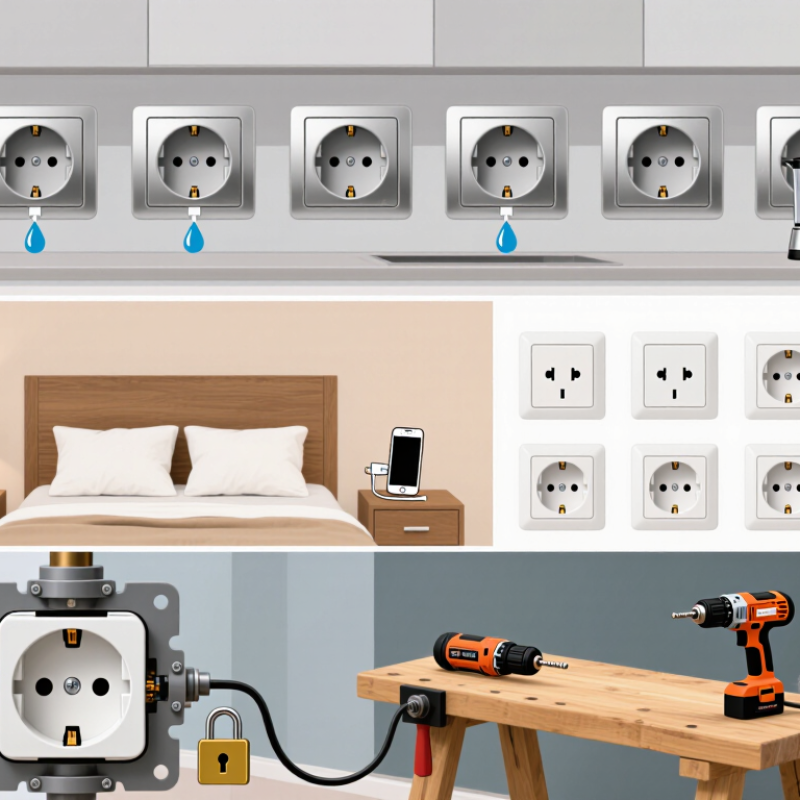
Define the Project’s Electrical Requirements
Before choosing a socket, define what the project will power. List each appliance or tool, its voltage and current requirements, and whether several devices may run at once. A workshop bench with a heater and saw has different demands from a bedside lamp. Check the equipment labels and instructions; do not estimate from appearance. Small details matter.
Also consider the installation location. Kitchens, garages, and outdoor areas may need sockets with specific protection against moisture, dust, or impact. Confirm the required socket type, mounting position, and available circuit capacity with a qualified electrician. Local electrical rules vary, so verify them before buying. A tidy plan can still miss a future appliance; leave room for realistic changes, but avoid oversizing without a reason.
Tips: Sketch the room and mark each socket location beside likely loads. Note plug shape, cord reach, and furniture clearance. Do not guess. If a label is unclear, ask an electrician to check it rather than relying on a quick online search. Recheck the list before ordering; I would not treat the first draft as final.
Compare Socket Types, Formats, and Configurations
Choosing an electrical socket starts with the plug and the load, not its appearance. Match the socket format to the equipment’s plug, voltage, and current rating. A single outlet suits one fixed appliance, while a duplex format serves two plugs in a compact space. Some modular sockets combine power outlets with USB charging ports, but check their ratings and installation requirements. Small details matter.
Tips: Check the appliance nameplate and the socket specifications before buying. Consider whether the outlet will sit flush in a wall box or mount on a surface. Kitchens, garages, and damp areas may need sockets designed for their environment. Ask a qualified electrician to confirm compatibility and safe installation, especially when wiring or circuit capacity is uncertain.
Think about how the room is actually used. A socket hidden behind a cabinet may be technically suitable but awkward every day. Spacing outlets along a workbench can reduce stretched cords; it does not increase the circuit’s capacity. A common oversight is choosing a format before measuring the box and checking available space. Not always obvious. If several high-load appliances may run together, get the circuit assessed rather than relying on outlet count alone.
How to Choose the Right Electrical Sockets for Your Project
Compare socket types, formats, and configurations by checking the electrical rating required for your location and equipment. The chart shows typical nominal current ratings for selected socket systems.
Ratings shown are typical system values, not a substitute for checking the exact socket, circuit, appliance, and local electrical code. Voltage, grounding, and compatibility also matter when selecting a socket.
Match Socket Ratings to the Circuit and Devices
Choose a socket rated for the circuit’s voltage and maximum current, not just the device’s plug shape. Check the circuit breaker, cable rating, and socket label; the lowest rating sets the safe limit. Add the loads of devices that may run together. For example, a kettle and toaster on one circuit can draw far more current than either appliance alone. A matching plug does not guarantee a suitable rating.
NFPA’s Home Structure Fires report found that electrical distribution and lighting equipment was involved in about 7% of reported U.S. home structure fires from 2015 to 2019. That figure does not mean a mismatched socket caused every fire, but it is a reason to check ratings carefully. Standards also differ by region, so use local requirements and the device’s nameplate values. I would still recheck the circuit details; they are easy to misread.
Tips: Read the socket and appliance labels before installation. Keep the combined load within the circuit rating. If the circuit capacity is unclear, ask a qualified electrician rather than guessing.
How to Choose the Right Electrical Sockets for Your Project - Match Socket Ratings to the Circuit and Devices
| Typical Application | Nominal Supply | Branch-Circuit Breaker | Socket Rating | Typical Continuous-Load Limit* | Selection Guidance |
| General-purpose household outlets | 120 V | 15 A | 15 A | 12 A (about 1,440 VA) | Choose a socket rated for the circuit and suitable for the intended plug. Add together loads on the same circuit when checking capacity. |
| Higher-capacity household branch circuit | 120 V | 20 A | 20 A | 16 A (about 1,920 VA) | Use a 20 A socket for equipment with a 20 A plug. Confirm the circuit wiring, breaker, socket, and device requirements are compatible. |
| Dedicated higher-voltage appliance circuit | 240 V | 30 A, two-pole | 30 A | 24 A (about 5,760 VA) | Match the socket configuration to the appliance plug and nameplate. This type of circuit is commonly used for certain large appliances; verify the appliance instructions. |
Important: These are illustrative examples for common North American circuits, not universal specifications. In the United States, a continuous load is generally one expected to run for three hours or more; circuit sizing rules commonly limit it to 80% of the circuit rating. Local electrical codes, device instructions, conductor sizing, grounding, and installation conditions may impose different requirements. A socket does not increase the capacity of its circuit. Have a qualified electrician verify the design, especially for dedicated circuits or unfamiliar supply systems.
Check Safety Standards and Installation Conditions
Before choosing an electrical socket, check that its ratings and safety markings match the requirements where the project is installed. Standards differ by region, so confirm local guidance rather than relying on a familiar-looking label. Match the socket’s voltage and current rating to the circuit and intended load. A socket with a higher rating does not make an undersized circuit safe. For fixed wiring, ask a qualified electrician to verify compatibility and any required protective devices.
Installation conditions matter just as much. A dry bedroom, a workshop, and a splash-prone utility area need different levels of protection. Check the enclosure’s stated protection rating against likely moisture, dust, and physical contact. Measure the wall box before buying; shallow boxes can leave little room for safe, tidy connections. Also confirm the mounting style, cable type, grounding arrangement, and available circuit capacity. A neat fit is not proof. I still find it easy to underestimate how much space wiring needs behind the faceplate. Isolate the circuit before work, and have uncertain or damaged wiring assessed by a professional.
Choose the Socket and Verify Its Compatibility
Choosing a socket starts with the equipment, not its appearance. Check the plug shape, rated voltage, and current listed on the appliance or its documentation. A socket’s current rating must meet or exceed the connected load, while its voltage rating must suit the supply. Grounding matters too. If the device requires an earth connection, choose a compatible grounded socket rather than relying on an adapter.
Compatibility involves more than matching pin patterns. Confirm the socket fits the mounting box, wiring method, and available space. Check whether the installation is indoors, outdoors, or exposed to dust or moisture; the enclosure’s protection rating should match those conditions. Read the socket’s technical sheet and compare it with the circuit specifications. If the wiring, grounding, or circuit rating is unclear, have a qualified electrician verify it before installation. A small mismatch can cause overheating or unreliable contact. It is easy to overlook one detail.
Tips: Compare the plug and socket dimensions, not just their names. Check ratings against the appliance label and circuit documentation. Keep the product sheet for reference. If any specification is missing, pause and confirm it with a qualified professional; guessing is not a compatibility check.