How to Choose the Right Absorbent Core for Your Product?
Choosing the right Absorbent Core is not simply a matter of selecting the material with the highest capacity. Product performance depends on fluid speed, retention, rewet control, comfort, thickness, and manufacturing stability. A diaper, incontinence pad, wound dressing, and absorbent mattress may all require different core structures. One design cannot serve every application well.
As absorbent-hygiene researcher Dr. S. K. Batra explains, “Absorbency is not only about holding liquid; it is about managing liquid where and when it matters.” This principle should guide every product decision. A core combining fluff pulp and superabsorbent polymer may provide strong retention, while an airlaid structure can offer better shape control. Yet higher SAP content may slow acquisition if the design lacks suitable distribution channels. Small details matter. Liquid must move away from the skin.
Practical evaluation should begin with the intended use environment. Measure acquisition time, rewet, retention under pressure, leakage resistance, and performance after repeated loading. Test samples at realistic temperatures and pressures. A laboratory result may look excellent, but real users move, sit, sleep, and apply uneven force. That difference is easy to underestimate.
Cost also deserves attention. A thinner core may reduce shipping volume, but it can create handling problems or lower user confidence. Sustainability claims require evidence, not attractive wording. Review fiber sources, material efficiency, and production waste carefully. No selection is perfect. The right Absorbent Core balances performance, comfort, reliability, and manufacturability for one clearly defined product.
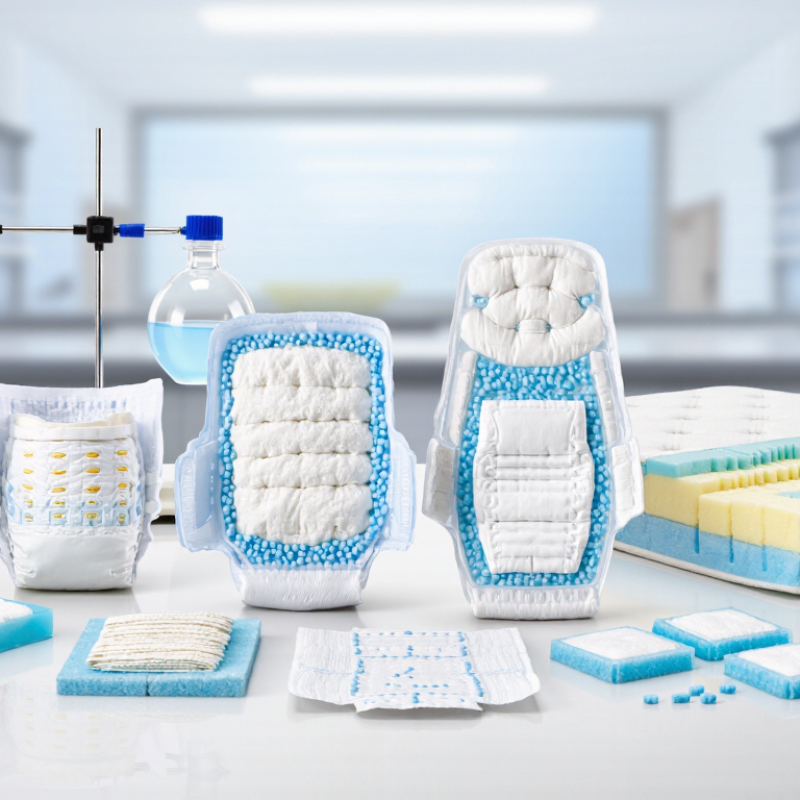
Identify Your Product’s Absorption Requirements
Choosing the right absorbent core starts with the user’s real liquid load, not a catalog capacity. Measure volume, flow rate, viscosity, contact time, and expected movement. A light, fast pulse needs different materials than repeated, slow wetting. The WHO and UNICEF Joint Monitoring Programme’s 2023 report estimates that 1.8 billion people menstruate globally. It also reports that hundreds of millions lack adequate menstrual health services. That gap makes leakage control, dryness, and fit practical requirements, not cosmetic claims.
Build a simple test profile. Record intake per event, peak flow, rewet pressure, retention after compression, and core thickness. Then test under temperature, bending, and realistic body pressure. EDANA’s absorbent hygiene testing methods distinguish acquisition, retention, and rewet performance. These measures should be read together. A core can hold a large volume yet feel wet during movement. Conversely, a thin core may acquire fluid quickly but fail after compression. Select pulp, superabsorbent polymer, airlaid, or layered combinations according to the failure risk.
Do not rely on one “maximum capacity” number. It often comes from ideal laboratory conditions. In production trials, seam placement and uneven distribution can change results. That is where specifications need humility. Validate at the intended dose, use duration, and disposal condition. Document sample age, fluid formulation, and test temperature for repeatability. If the requirement is unclear, start with the worst credible use case, then reduce material carefully.
How to Choose the Right Absorbent Core for Your Product? – Identify Your Product’s Absorption Requirements
Reference ranges are typical design guidelines. Final absorbent-core specifications should be confirmed through product testing under realistic use conditions. | Product Category | Typical Fluid Load | Recommended Absorption Capacity1 | Key Performance Requirement | Suggested Core Structure | Typical Core Thickness | Design Considerations |
| Panty Liner | Light daily discharge and spotting | 1–5 g | Fast intake for small, intermittent fluid releases | Airlaid cellulose or a thin cellulose/SAP blend | 1–3 mm | Prioritize flexibility, discretion, and low bulk over maximum retention. |
| Light Menstrual Pad | Light menstrual flow | 5–10 g | Balanced acquisition, distribution, and fluid retention | Fluffed cellulose with a moderate SAP component and acquisition layer | 3–6 mm | Use embossed or channeled structures to improve fluid distribution and reduce leakage risk. |
| Regular Menstrual Pad | Moderate menstrual flow | 10–20 g | Rapid intake with reliable retention during movement | Airlaid or fluff pulp/SAP composite with a dedicated acquisition-distribution layer | 5–9 mm | Core width, side leakage protection, and fluid distribution are as important as total capacity. |
| Heavy or Overnight Menstrual Pad | Heavy flow and extended wear | 20–40 g | High retention, leakage control, and stable performance under pressure | Multi-layer fluff/SAP core with transfer layer and shaped end zones | 7–12 mm | Test horizontal and compression performance because overnight use often involves body pressure and position changes. |
| Adult Incontinence Insert | Urine leakage or repeated small voids | 100–300 mL2 | Very fast acquisition, rewet control, and retention under pressure | High-loft cellulose/SAP core with acquisition layer and fluid-locking channels | 5–12 mm | Evaluate strike-through, rewet, repeated insult performance, and fit with the supporting garment. |
| Adult Brief or Pull-On | Moderate to heavy urine leakage | 300–800 mL2 | High total capacity, fast intake, and pressure-resistant retention | Contoured multi-zone fluff/SAP core with higher-capacity central zone | 8–18 mm | Balance capacity with ergonomics; excessive core thickness can reduce comfort and fit. |
| Baby Diaper | Urine from repeated wettings | 250–600 mL2 | Rapid acquisition, repeated-wetting performance, and low rewet | Thin, zoned fluff/SAP core with acquisition layer and longitudinal distribution channels | 4–12 mm | Use a stable core that remains intact during bending, crawling, and frequent movement. |
| Pet Training Pad | One or more urine events on a flat surface | 200–600 mL2 | Rapid spreading across a large area and prevention of pooling | Fluff/SAP absorbent sheet with tissue wrap and a liquid-impermeable backsheet | 2–8 mm | Increase lateral distribution and edge coverage when the product is intended for large, concentrated fluid loads. |
| Wound Dressing | Serous exudate or light-to-moderate wound drainage | Product-specific; commonly 5–50 g per dressing | Exudate management, low-adherence contact, and maintenance of a suitable wound environment | Absorbent nonwoven or superabsorbent composite with a wound-contact layer | 2–8 mm | Material selection must be validated for biocompatibility, sterility requirements, extractables, and clinical use. |
How to interpret the data:
1 Absorption capacity refers to a practical target range for product development, not a universal laboratory rating. Capacity can vary with fluid composition, pressure, test method, core shape, and distribution.
2 Urine-handling products should be evaluated using relevant intake, retention, rewet, repeated-insult, and compression tests rather than total free-swell capacity alone.
Compare Absorbent Core Materials and Structures
Choosing an absorbent core starts with the liquid, not the marketing claim. A core for light moisture needs different materials from one facing repeated, heavier discharge.
Fluff pulp provides bulk, softness, and quick initial uptake. Superabsorbent polymer stores more liquid in a smaller space. Too much polymer can slow distribution, however. Too little may cause leakage under pressure. I have seen laboratory samples perform well, then fail during movement because fluid stayed near one area.
Airlaid structures offer a more uniform fiber network and can improve liquid distribution. Layered cores separate acquisition, storage, and transfer functions. Tissue wraps can reduce loose particles and support handling. Foam-based structures may improve resilience, but their cost and recovery performance require careful testing. No structure wins every application.
Compare absorption speed, retention, rewet, thickness, and compression recovery. Test with realistic liquid volumes and repeated pressure. Check performance after bending, folding, and storage. Small differences matter. Measure the core after use, not only before it. A thinner design may look efficient but become unstable when overloaded. This is where development teams often need to revise their assumptions. Supplier data is useful, but independent testing gives stronger evidence. Record temperature, pressure, sample size, and test duration for reliable comparisons.
Match Core Capacity with Fluid Volume and Release Speed
How to Choose the Right Absorbent Core for Your Product?
Choosing an absorbent core starts with measuring the product’s real fluid volume. Do not depend only on general capacity figures. A core may hold a large amount in testing, yet perform poorly during repeated release. Consider the fluid’s viscosity, temperature, and flow pattern. A sudden release needs fast intake and strong distribution. A slow, continuous flow needs stable retention over time. Capacity matters, but speed matters too.
Tips: Test with realistic fluid volumes and release intervals. Record intake time, leakage, swelling, and dryness. Compare results after pressure is applied. Small details matter.
In practical development, I test the core under several conditions. I may use a low-volume release first, followed by a heavier one. This reveals whether the structure absorbs evenly or forms a saturated center. Layer thickness, fiber density, and distribution channels can change performance significantly. A thicker core is not always better. It may improve capacity but slow fluid movement. A thinner design may feel comfortable but reach saturation quickly. I have seen promising lab results fail during repeated-use testing. That is why sample evaluation should include realistic movement, pressure, and storage conditions. No test is perfect. Product decisions should remain open to revision when field feedback disagrees.
Assess Comfort, Safety, Sustainability, and Production Needs
How to Choose the Right Absorbent Core for Your Product?
Comfort and safety should guide absorbent core selection from the earliest design stage. A core must manage fluid quickly without feeling bulky, stiff, or clammy. In product trials, I check softness after repeated wetting. I also inspect leakage points during movement, not only under laboratory pressure. Skin-contact materials need documented specifications and appropriate safety testing. Odor control deserves care, because added chemicals may create new irritation concerns.
Sustainability also affects the core’s real value. Consider renewable fibers, material weight, transport volume, and disposal conditions. A thinner core can reduce packaging, but it may sacrifice capacity or increase leakage. That trade-off is easy to underestimate. Production teams should review forming speed, cutting accuracy, dust levels, and storage stability. A technically excellent core may still fail when machinery runs continuously. Pilot batches reveal problems that samples hide.
Tips: Compare cores using the same fluid volume and pressure. Record rewet, thickness, absorption speed, and comfort feedback. Ask suppliers for test methods, traceability records, and consistent batch data. Check performance after aging and compression. Leave room for adjustment. Real users move unpredictably, and factory conditions are rarely perfect.
How to Choose the Right Absorbent Core for Your Product?
Assess comfort, safety, sustainability, and production needs with a balanced decision framework.
The chart uses an example 100-point evaluation model: absorption performance and user comfort receive the highest weighting, while safety, sustainability, and production efficiency remain essential for product development. Actual priorities should be validated through standardized testing, including absorption capacity, acquisition time, rewet, skin-safety assessment, and manufacturing trials.
Validate the Selected Core Through Performance Testing
Choosing an absorbent core starts with product use, not maximum capacity. A baby diaper, incontinence pad, and menstrual product face different fluid volumes, pressures, and wearing times. Validate the selected core with recognized methods, such as ISO 11948-1 for whole-product absorption and EDANA/INDA procedures for acquisition time and rewet. These methods help separate total capacity from practical dryness.
Use a controlled test matrix. Measure intake under light and heavy flow, then repeat after compression. Record fluid volume, load pressure, temperature, and time. A core may absorb 500 milliliters in a static test yet leak during movement. Rewet data matters because residual surface moisture can affect comfort and skin health. Independent laboratory guidance commonly recommends testing several production lots, not one ideal sample. This is where many development teams become overconfident.
Tips: Test at least three lots and five units per condition. Map acquisition time, rewet, retention, and leakage risk. Compare dry weight before and after testing. Keep the data visible.
The 2023 WHO and UNICEF JMP report estimated that 2.3 billion people lacked safely managed sanitation services. That context reinforces the need for dependable hygiene products, especially where changing conditions are difficult. Still, laboratory performance is not the whole truth. User trials may reveal bunching, stiffness, or poor fit. A selected core should pass both controlled testing and realistic-use evaluation. Some “failed” prototypes deserve another review; a small structural change can improve comfort without adding unnecessary material.