

Choosing the right Magnetic Snap is a small hardware decision with a visible effect. It can change how a bag closes, how a flap sits, and how confidently a customer uses the product. A weak snap may pop open when a tote is full. An overly strong one can make a soft leather flap awkward to pull apart. The best choice depends on the product, not simply the magnet’s advertised strength.
Magnetism researcher Dr. David Jiles’s work offers a useful technical lens, though the following line is a practical paraphrase, not a direct quotation: “A reliable magnetic closure must balance holding force with easy release.” That balance starts with real details: fabric thickness, reinforcement layers, snap diameter, and the weight pulling against the closure. A sample may feel secure on a bare workbench, then shift when sewn beneath padded canvas. Test it in the actual material.
There are trade-offs. A larger snap may hold more firmly, yet its visible profile can spoil a clean design. A smaller one may look discreet, but struggle with a heavy flap or repeated use. Test the closure with one hand. Listen for a clean click. Check whether the fabric puckers around the hardware. Small flaws matter.
This guide will compare snap types, materials, sizes, and holding strength, then explain practical fit and durability checks. No single specification tells the whole story. Your product’s construction does.
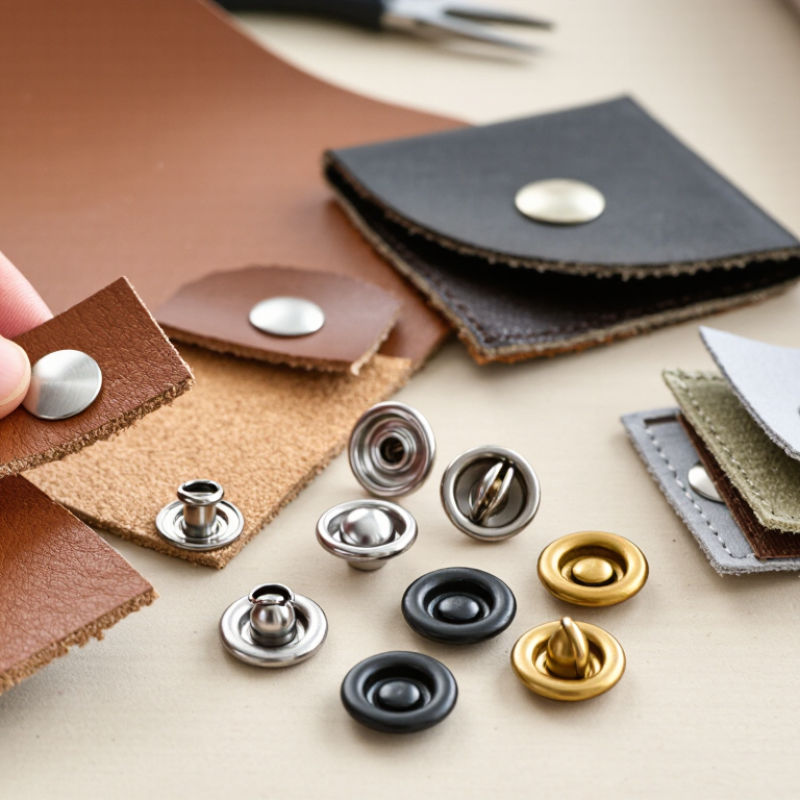
A magnetic snap is a two-part closure: one half contains a magnet, while the other holds a magnet or a steel plate. When the parts approach, magnetic attraction draws them together and keeps a flap closed. Pull them apart to open it. Simple, but not foolproof.
The force drops quickly when fabric, padding, or a gap separates the halves. A snap that closes firmly on a sample may feel weak in a padded handbag. In product testing, check both direct pull and sideways movement, then repeat after opening and closing the closure many times. A Grand View Research report valued the global handbag market at USD 73.32 billion in 2022, reflecting the scale of products where closures affect daily use. That figure describes the handbag market, not magnetic snaps specifically.
Choose the snap around the product’s weight, fabric thickness, and opening direction. A small snap may suit a light pocket; a larger flap may need a stronger closure and reinforced backing. Test it on the actual fabric, not just a bare sample. One missed detail: stronger is not always better. If opening takes two hands, the design may frustrate users, even when the snap holds securely.
| Selection Dimension | What to Know | How It Affects Performance | Practical Selection Guide |
|---|---|---|---|
| What a magnetic snap is | A magnetic snap is a closure that uses magnetic attraction to bring two sides of a product together. Common designs pair a permanent magnet with a ferromagnetic keeper plate; some designs use magnets on both sides. | The magnetic attraction holds the closure shut while allowing it to be opened without a conventional mechanical latch. | Choose a design that fits the product’s construction and the way the user will open and close it. |
| How it works | As the two closure parts approach and align, the magnetic field attracts the keeper or opposing magnet. Pulling the parts apart overcomes that attraction and opens the closure. | Holding performance is affected by the distance between the magnetic parts, their alignment, the materials between them, and the magnet’s strength. | Test the snap in the finished product, including all fabric, lining, padding, and reinforcement layers. |
| Holding strength | Available holding strength varies by magnet size and grade, mating-part design, installation, and material thickness. A stronger snap is not automatically the best choice. | A snap that is too weak may open during use; one that is too strong may be difficult to open or may strain the surrounding material. | Match the closure to the product’s weight and use. Check opening effort and retention with representative product samples. |
| Snap size and profile | Magnetic snaps are made in different face sizes and thicknesses. Larger or thicker components may occupy more space and can be more noticeable on lightweight products. | The snap’s footprint and profile affect appearance, comfort, available installation space, and how securely it can be mounted. | Check the finished closure area, material thickness, edge distance, and clearance before selecting a size. |
| Magnet and keeper materials | Many compact closures use permanent magnets with a steel keeper. Metal parts may have protective finishes; the appropriate finish depends on exposure and product requirements. | Corrosion or damage to a finish can affect appearance and service life, particularly when a product is exposed to moisture or frequent handling. | Consider the intended environment and care instructions. Request material and finish details from the supplier and evaluate them in use. |
| Mounting method | Common options include prong-and-washer installations, sewn-in designs, and other product-specific fittings. Each method requires compatible materials and assembly steps. | Secure installation helps prevent the snap from shifting, pulling through, or damaging the product material during repeated use. | Choose a mounting method that suits the material and production process; use suitable reinforcement where the base material is thin or soft. |
| Product material and layers | Fabric, leather, foam, lining, and reinforcement can change the distance between the magnetic parts and the way installation loads are distributed. | Extra thickness or misalignment can reduce magnetic attraction. Weak or stretch-prone materials may need additional support. | Assess the complete material stack rather than selecting a snap based only on the outer fabric or shell. |
| Product application | Magnetic snaps are commonly used on bags, wallets, cases, garments, and other products that need a quick, low-profile closure. | Different products call for different balances of holding strength, ease of opening, appearance, and durability. | For frequently accessed openings, prioritize smooth operation. For heavier contents, verify retention and mounting strength under realistic use. |
| Testing and quality checks | Useful checks include repeated opening and closing, alignment, retention, mounting security, finish condition, and performance after the product’s expected care or exposure. | Testing reveals problems that may not be apparent from the snap component alone, such as fabric pull-through or reduced attraction across thick layers. | Evaluate production-representative samples and define acceptance criteria for the finished product. Performance depends on the specific snap and product construction. |