

TREND FOR

MINIATURIZATION

What Is the Best Keys Locator to Buy?

Losing your keys can turn an ordinary morning into a search through coat pockets, sofa cushions, and yesterday’s bag. A Keys Locator can make that search easier, but the best choice depends on where and how you tend to lose things. A loud alert may help inside the house. A wide finding network may matter more when keys disappear outside.

Tile’s former CEO, CJ Prober, has described the company’s mission as making it easier to find things. That idea offers a useful starting point, though it is not a buying recommendation by itself. Check whether a locator works with your phone, how reliably it connects, and whether its app provides clear directions. Battery type, water resistance, replacement options, and subscription costs deserve attention too. Small details matter.

No tracker is perfect. Bluetooth range can shrink behind walls, and a community-based network depends on nearby compatible devices. A locator may also need setup before it can help. That part is easy to overlook. Think about the last time your keys went missing: were they under a chair, in a crowded place, or somewhere in between? In this guide, we’ll compare the features that affect everyday use and explain which trade-offs are worth considering. The goal is a practical fit, not a promise that your keys can never be lost.
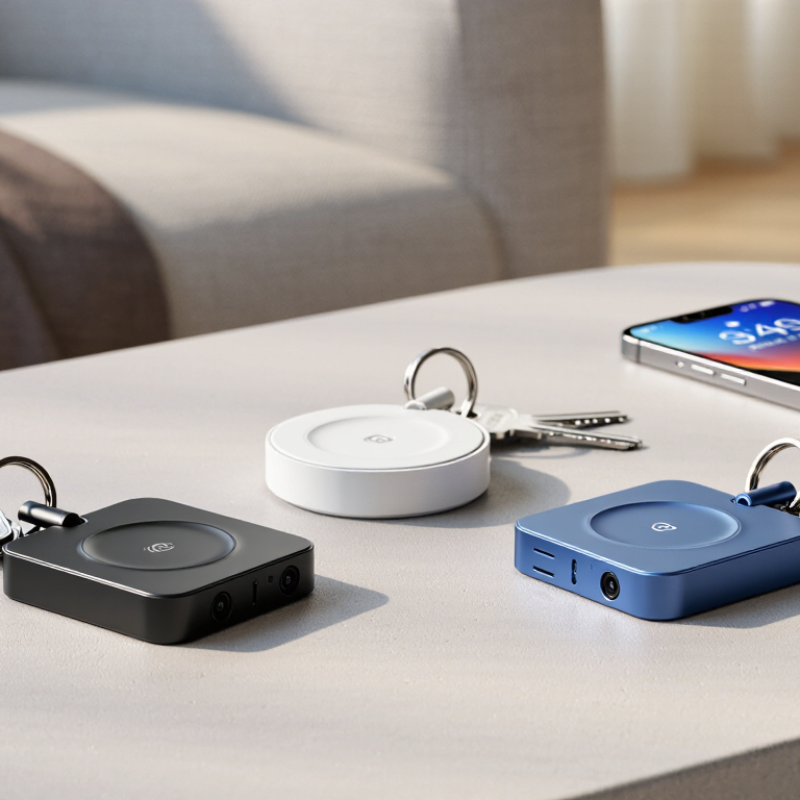
What Is the Best Keys Locator to Buy?

How Key Locators Work

A key locator is a small transmitter attached to a keyring. When you tap a button on its companion receiver or phone app, the locator plays a sound. Follow the beeps to the keys beneath a coat or between sofa cushions. Some models also let you press the locator to make your phone ring.

Many compact locators use Bluetooth, which works best nearby. Thick walls, metal cabinets, and radio interference can weaken the connection. Outside that range, certain systems may show the last place your phone detected the locator. Some also use nearby participating phones to update its approximate location. This is not the same as continuous GPS tracking; most small key tags do not independently report their position by satellite.

Check the stated range, battery type, and alert volume before buying. A loud beep helps in a quiet room, but it may disappear under running water or street noise. Test the locator in your own home, since advertised range rarely reflects every wall and doorway. It can still fail. A misplaced phone, a depleted battery, or a weak signal can leave you searching by hand. That limitation is easy to overlook.

Main Types of Key Locators and Their Tracking Methods

What Is the Best Keys Locator to Buy?

Main Types of Key Locators and Their Tracking Methods

Key locators generally use Bluetooth, radio frequency, or GPS with a cellular connection. Bluetooth models pair with a phone and show a nearby key’s last known location. Some can use a wider finding network, but that depends on other compatible phones passing nearby. A quiet hallway may offer no help. Bluetooth suits everyday searches around a home or office.

Radio-frequency locators use a separate transmitter and receiver. Press a button, and the attached tag sounds or flashes. They do not need a phone app or internet connection, which keeps operation simple. Simple, but limited. Their range is usually shorter, and walls, appliances, and floors can weaken the signal. A receiver may work well across a small apartment but disappoint in a large building.

GPS and cellular trackers can report locations over greater distances, since they communicate through satellites and mobile networks. They are often larger than basic key tags, need regular charging, and may require a service plan. For keys that usually stay near the front door, that extra reach can be unnecessary. Check the stated range, battery type, alert settings, and app requirements before buying. Printed range figures can feel optimistic in a crowded house, so think about where you actually lose your keys.

Key Features to Compare Before Buying

A useful key locator should fit your routine, not just promise impressive range. Check whether it uses Bluetooth, a crowdsourced finding network, or ultra-wideband (UWB). Bluetooth SIG’s 2024 Market Update forecasts 5.4 billion annual Bluetooth device shipments by 2028, showing how widely the technology is used. That figure does not guarantee a locator will work everywhere, though. Walls, parked cars, and an empty phone battery can all limit a search. Compare the stated range with real conditions, and look for a loud alert you can hear beneath a sofa cushion.

Battery life, phone compatibility, and privacy deserve equal attention. Some locators use replaceable coin cells; others need charging or full replacement when depleted. Check the app’s operating-system requirements and whether nearby phones can help locate an out-of-range tag. That network can be useful. It can also depend on how many compatible users pass nearby. UWB models may offer more precise, directional searches, but only with compatible phones and nearby conditions. Read the privacy settings carefully, including how unknown trackers are detected. A locator that works well in a quiet kitchen may be less helpful in a crowded station. Small detail, big difference. I would still compare battery costs and alert volume before buying; advertised range is easy to overvalue.

How to Match a Key Locator to Your Needs

What Is the Best Keys Locator to Buy?
How to Match a Key Locator to Your Needs

Start with where your keys usually disappear. If they slip between sofa cushions or sit under a coat, a nearby-finding sound may matter more than long-distance tracking. Choose a locator with a clear alert you can hear from another room. Test how easily its button works, too. Tiny controls can be frustrating when you are in a hurry.

If you often leave keys at work, a wider finding range and a phone app may be more useful. Check that the app works with your phone and explain how it handles location data. Battery details matter as well: a replaceable battery is convenient, while a rechargeable one avoids buying spares. Neither is perfect. Think about which routine you will actually maintain.

Consider the shape and weight before buying. A bulky locator can make a crowded key ring awkward, while a small one may be harder to hear or handle. Check the stated range in open space, but remember that walls and metal doors can reduce it. A locator can help you find misplaced keys; it cannot prevent every loss. I would favor dependable alerts and easy upkeep over extra features I might rarely use. That trade-off is personal.

What Is the Best Keys Locator to Buy? - How to Match a Key Locator to Your Needs

Locator type How it finds keys Typical range or finding method Best suited to Main advantages Limitations to consider Buying guidance
Basic Bluetooth locator A phone app connects directly to a small tag attached to the keys. Often around 30–60 m (100–200 ft) in open conditions; walls and interference can reduce the range. Finding keys at home, in an office, or nearby. Compact, simple to use, and usually suited to everyday local searches. Direct connection generally depends on the phone being within Bluetooth range. It may not show a live location when the keys are far away. Choose this type if you mainly misplace keys inside familiar places and want a straightforward option.
Bluetooth locator with a shared-finding network The tag broadcasts a Bluetooth signal that compatible nearby devices can detect and report to its owner. Direct Bluetooth range is typically tens of metres; a reported location from a shared network depends on nearby participating devices. Keys that may be left behind outside the home, such as at work or in public places. May help locate keys beyond the owner's direct Bluetooth range without a cellular connection in the tag. Remote updates are not guaranteed; coverage depends on the network, nearby devices, and privacy settings. Check that the locator works with your phone and that its finding network has useful coverage where you live and travel.
Ultra-wideband (UWB) locator Supported devices use short-range radio measurements to guide a person toward the tag. Typically intended for close-range, directional finding; usable distance is generally tens of metres and varies by device and surroundings. People who need more precise guidance to keys hidden nearby, such as under cushions or in a bag. Can provide direction and distance cues that are more helpful for close searches than a basic Bluetooth signal alone. Requires compatible hardware and software on the phone; walls and other obstructions can affect performance. Choose UWB only after confirming your phone supports the locator's precision-finding features.
Radio-frequency (RF) key finder with a dedicated remote A handheld remote sends a signal to a receiver attached to the keys, which sounds or flashes. Commonly tens of metres in open conditions; walls and interference can shorten the effective range. People who prefer a physical button and do not want to use a phone app. Quick to operate and can work without phone pairing, mobile data, or a shared-finding network. The dedicated remote must be kept accessible; it usually cannot provide a map location when the keys are out of range. Look for a remote that is easy to keep in a consistent place and a receiver loud enough for your home.
GPS and cellular tracker A tracker uses satellite positioning and a cellular connection to send location information to an app. Location reporting can work over large areas where satellite reception and cellular service are available. Vehicles, equipment, or other larger items that need longer-distance tracking. Can report locations well beyond the short range of Bluetooth or RF devices. Usually larger and more power-hungry than key tags; cellular service may require a recurring plan. Indoor positioning can be unreliable. For ordinary keys, this is generally an impractical choice unless the tracker is small enough and its power and service requirements suit your use.

Note: Ranges are approximate, not guaranteed. Actual performance depends on the device, phone compatibility, walls, radio interference, battery condition, and whether a shared-finding network is available.

Range, Battery Life, and Setup Considerations

What Is the Best Keys Locator to Buy?

Range is useful, but advertised distance rarely matches every home. Walls, metal doors, and crowded apartment corridors can weaken a Bluetooth signal. Think about where your keys usually go missing: under a sofa, in a coat pocket, or somewhere outside. A locator that works reliably through your usual rooms may be more helpful than one with an impressive maximum range. That matters.

Battery life deserves the same attention. Check whether the device uses a replaceable coin cell or needs recharging, and look for a clear low-battery warning. A long-lasting battery is convenient, but only if you remember when it needs attention. Small detail, easily missed. I still find battery replacement plans easy to overlook when comparing gadgets.

Setup should be simple enough to finish before you lose your keys. Check that the companion app works with your phone, and review its location and notification permissions. Pairing usually takes only a few minutes, but sharing access with another household member may require extra steps. Test the alert from a nearby room, then try it with a closed door between you and the keys. The sound can seem loud in a quiet kitchen and surprisingly faint beside a running tap. A quick real-world test is more informative than relying on the box.

Article Source: