

TREND FOR

MINIATURIZATION

How to Choose a Top Snap Button Kit Supplier in China?

Choosing a reliable Snap Button Kit supplier in China takes more than comparing prices. A kit may look complete online, yet small differences can affect installation and finished-garment quality. Check the button material, finish, cap diameter, post length, and included setting tools. Ask whether the components are matched for the fabric thickness you plan to use. Small details matter.

Request a sample before placing a large order. Test it on your actual fabric, using the intended press or hand tool, and inspect whether the buttons close securely without tearing or marking the material. Ask for clear product specifications, inspection procedures, packaging details, minimum order quantities, and realistic production and shipping timelines. A responsive supplier should answer technical questions directly and explain any limits. A polished catalog is helpful, but it cannot prove consistent quality between batches.

Compare suppliers on evidence, not confident claims alone. Look for clear factory or product information, traceable order communication, and sample results that match the written specifications. Discuss what happens if components are missing, finishes vary, or a delivery is delayed. These checks do not remove every risk. Even a careful checklist can miss a production issue, so keep approved samples and confirm important details in writing. The right Snap Button Kit supplier is not always the cheapest; it is the one whose product, process, and communication fit your project.
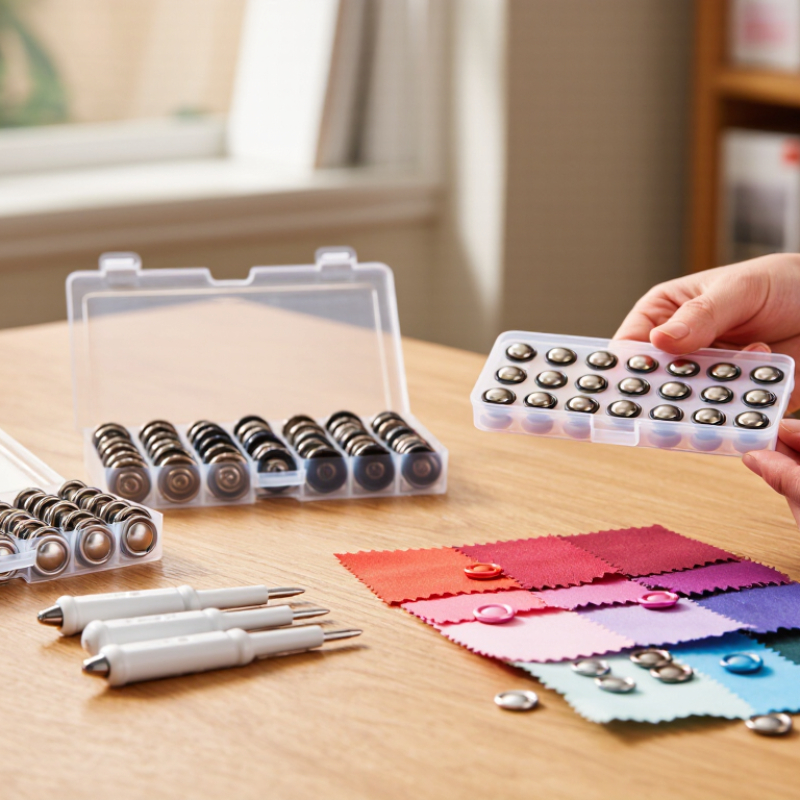
How to Choose a Top Snap Button Kit Supplier in China?

Define Your Snap Button Kit Requirements

How to Choose a Top Snap Button Kit Supplier in China?

Define Your Snap Button Kit Requirements

Before requesting quotes, write down what each kit must contain. Specify snap diameter, post length, metal type, finish, and the fabric thickness it should secure. A 10 mm cap with a short post may suit lightweight cotton, but fail on a padded jacket. Include the setting tool, replacement parts, and packaging requirements. Small details matter.

Material choices deserve careful checking. Textile Exchange’s Materials Market Report 2024 estimates global fiber production reached 124 million tonnes in 2023, with further growth projected. That scale makes clear material documentation matters across apparel supply chains. Ask suppliers to identify component materials and provide consistent specifications. Request samples, then check dimensions, finish, and fastening performance on your actual fabric. A neat sample is useful, but it cannot prove every bulk batch will match.

Tips: Send a fabric swatch and a simple measurement sheet with your inquiry. Ask how the supplier checks post length and kit completeness before shipment. Keep one approved sample for comparison. I have seen specifications that looked complete but missed the tool size; that is an easy oversight, and worth revisiting before production.

Assess Button Materials, Quality, and Safety Standards

When choosing a snap button kit supplier in China, examine the metal or resin, not just the finish. Ask for material specifications, coating details, and batch-level test reports. Textile Exchange’s 2024 Materials Market Report estimates that global fiber production reached 124 million tonnes in 2023, with polyester representing about 57 percent. This is useful supply-chain context, but it does not verify a snap’s recycled content or safety. Request evidence specific to the components. A polished sample is not enough.

Check corrosion resistance, coating adhesion, sharp edges, and snap-opening force. Ask whether tests were performed by an ISO/IEC 17025-accredited laboratory, and confirm the report covers the exact material and finish being quoted. For prolonged skin contact, EU REACH sets a nickel-release limit of 0.5 μg/cm² per week; pierced components have a stricter 0.2 limit. Requirements depend on the product and destination market. For children’s products, verify applicable lead limits and small-parts requirements, too. Keep samples from each production batch. A test report can look complete, yet describe a different coating. I would still check several buttons by hand; that quick check cannot replace lab testing.

Verify the Supplier’s Manufacturing and Customization Capabilities

A polished catalog cannot prove a snap button will fasten consistently after repeated use. Ask suppliers to show the production line, press settings, inspection records, and batch traceability. Check whether they control cap diameter, post length, spring tension, and surface finish. Details matter. Request samples in your intended fabric, then test opening force and attachment after repeated fastening. A button that works on a desk may behave differently on thick denim.

Customization needs evidence, not promises. Ask which parts can change, whether custom molds are available, who owns the tooling, and what minimum order applies to each finish or color. The ISO Survey 2022 reported about 1.27 million valid ISO 9001 certificates across 189 countries. Certification signals a quality-management system, but it does not guarantee uniform snap-button performance. Compare a pilot batch with the approved sample, and ask how defects are recorded and corrected. One detail is easy to miss: a supplier may match the color yet alter the spring feel. Record both in the specification, and review a production sample before approving a larger order.

Compare Minimum Orders, Pricing, Lead Times, and Shipping

How to Choose a Top Snap Button Kit Supplier in China?

For a snap button kit, compare minimum orders by finish and component, not just total kits. A 500-kit MOQ may conceal separate color or socket requirements. Ask whether samples count toward the order. Request a quote split into tooling, buttons, setting tools, packaging, and inspection. Cheap unit prices can rise when custom finishes create excess stock. The lowest quote is not always the best one.

Lead times need the same detail. Ask for sample approval, production, inspection, and dispatch dates separately. Confirm what happens if a plating shade or spring test fails. A clear schedule beats a quick promise. Some suppliers may quote production days but exclude weekends or sample revisions; that distinction is easy to miss. It matters.

Shipping should be compared by route, method, chargeable weight, and delivery term. The World Bank’s 2023 Logistics Performance Index ranked China 19th, with a score of 3.7 out of 5. This reflects national logistics, not any supplier’s delivery record. Ask for recent shipment records or a trial order, and compare air and sea costs against your deadline. I would keep a buffer, even when the quoted date looks convincing. Small delays happen.

How to Choose a Top Snap Button Kit Supplier in China? - Compare Minimum Orders, Pricing, Lead Times, and Shipping

The figures below are indicative planning ranges for common hand-operated snap button kits, not verified quotes from individual suppliers. Actual terms depend on kit contents, snap material, finish, packaging, order quantity, and shipping destination. Request a current quotation and confirm specifications before ordering.

Supplier / Kit Type Typical Minimum Order Indicative Unit Price (USD) Typical Production Lead Time Shipping Options and Transit Estimates Best Fit What to Confirm
Standard stock kit
Hand tool, matching dies, and assorted snap fasteners in standard sizes
Often 50–200 kits for wholesale orders; sample orders may be available in smaller quantities Approximately $3–$10 per kit, depending on tool construction, snap quantity, and packaging About 3–10 working days if the complete kit is in stock Express air: about 3–7 business days; air freight: about 5–12 business days; sea freight: about 20–40 days Trial orders, craft retailers, and buyers prioritizing shorter lead times Included snap sizes and counts, tool compatibility, spare parts, packaging, and whether quoted stock is ready to ship
Factory-made standard kit
Regular production kit with a selected assortment or packaging configuration
Commonly 200–500 kits, subject to the supplier’s production schedule Approximately $2–$8 per kit at larger order quantities; specifications can change the price About 10–25 working days after specifications and deposit are confirmed Express air: about 3–7 business days; air freight: about 5–12 business days; sea freight: about 20–40 days Repeat orders and buyers seeking a balance of cost and customization Whether the quoted price includes all dies and fasteners, acceptable tolerances, inspection criteria, and carton details
Customized assortment kit
Selected snap sizes, colors, materials, or quantities packed together
Often 500–1,000 kits; individual components may have separate minimums Approximately $3–$12 per kit, depending on assortment complexity and component materials About 15–30 working days after sample or artwork approval Express air: about 3–7 business days; air freight: about 5–12 business days; sea freight: about 20–40 days Product lines that need a specific assortment for a defined use Component-level minimums, color matching, sample approval, labeling requirements, and how substitutions are handled
Private-label kit
Standard or customized kit with buyer-supplied branding or packaging artwork
Often 500–2,000 kits; printed packaging can require a separate minimum Approximately $3–$15 per kit, excluding one-time artwork, tooling, or setup charges where applicable About 20–35 working days after artwork and pre-production samples are approved Express air: about 3–7 business days; air freight: about 5–12 business days; sea freight: about 20–40 days Retail or e-commerce buyers building a branded product range Artwork ownership, print proof approval, setup fees, packaging durability, and final inspection standards
Custom tool or die configuration
Kit requiring non-standard dies, tool changes, or specially specified components
Usually 500–2,000 kits, with tooling or component minimums possible Approximately $5–$20+ per kit; any tooling or development charge should be quoted separately About 25–45 working days, including development or sample approval where needed Express air: about 3–7 business days; air freight: about 5–12 business days; sea freight: about 20–40 days Buyers with a technical requirement not met by standard kits Tool compatibility, ownership and maintenance of custom tooling, sample performance, and production approval criteria

Check Supplier Credentials, Samples, and Customer Support

A reliable snap button kit supplier should make its credentials easy to verify. Request business registration details, factory location, quality-control procedures, and recent inspection records. Ask who checks metal composition, snap dimensions, and plating consistency. McKinsey and the Business of Fashion’s The State of Fashion 2024 reported that 71% of fashion executives expected costs to rise in 2024. That pressure makes clear quotations and stable specifications important. Confirm what the quoted price includes, such as tooling, packaging, and replacement parts. Ask for proof, not promises.

Samples reveal details that certificates cannot. Test several kits by fastening and opening each snap repeatedly. Check whether caps sit evenly, prongs bend, or finishes scratch under normal handling. If the buttons will be washed, request a wash-test method and results relevant to your fabric. One sample is not enough to prove consistency; that is an easy point to overlook. Compare samples from more than one production batch when possible. Customer support matters after approval, too. Ask how quickly staff answer technical questions, share production updates, and resolve defects. Get response times and replacement terms in writing. A clear, practical reply is more useful than a polished catalogue.

How to Choose a Top Snap Button Kit Supplier in China?

Suggested Supplier Evaluation Priorities

Use these suggested weights to compare suppliers: verify business credentials and relevant quality documentation, assess samples for materials and workmanship, and evaluate how promptly and clearly the supplier responds. The percentages are a practical scoring framework, not measured industry statistics.