

Smartwatches may track a workout, but the band touches your skin all day. That small detail matters. In 2026, the best Smart Watch Bands are not simply the most stylish ones. They should feel comfortable after hours of wear, stay secure during movement, and fit the watch case correctly.
Industry data helps explain why choices keep expanding. IDC reported that worldwide wearable-device shipments reached 537.9 million units in 2024, up 6.1% from the previous year. Counterpoint Research, however, reported a 7% decline in global smartwatch shipments that year. These figures measure different market activity, not band sales. Still, they suggest a large installed base and a market where shoppers may weigh upgrades carefully. A replacement band can refresh a familiar watch without replacing the device.
This guide compares common materials, fastening systems, comfort, durability, and value. Silicone can suit sweaty runs, while woven nylon often feels softer against the wrist. Leather may look polished, but frequent moisture can shorten its useful life. Small details count: a buckle that presses into your desk, an edge that rubs after a long walk, or a connector that feels loose. Compatibility matters, too; a band can look right online and still miss your watch’s lug size. Not every recommendation fits every wrist. The right choice depends on your routine, skin sensitivity, and how often you switch bands.
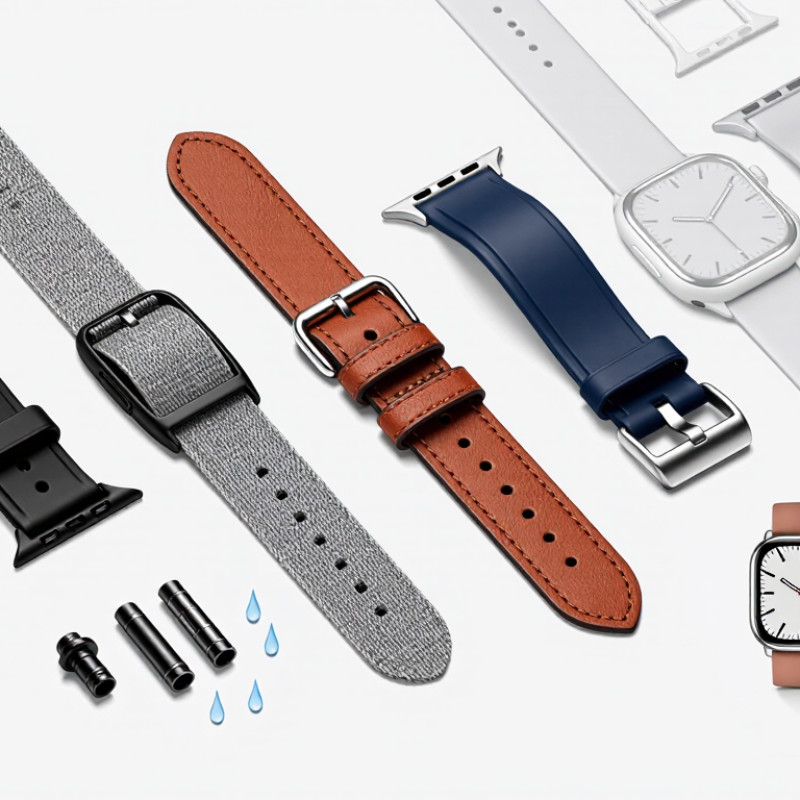
Smartwatch bands differ most in material, fit, and how they attach to a device. Silicone and fluoroelastomer feel smooth, resist sweat, and rinse clean, making them practical for workouts. They can feel warm during long, humid days. Leather has a softer, more formal look, but repeated exposure to water may stain or stiffen it. Metal links offer a structured fit and airflow between links, though they can feel heavy during exercise. Woven nylon is light and flexible; its texture may hold moisture or dirt.
Trade-offs matter.
Fit affects comfort and sensor contact. A band should feel secure without leaving deep marks, and the watch should not slide when you move.
Small detail. Big difference.
Before buying, check the attachment style, lug or connector width, and stated device compatibility. Two watches with similar case sizes may use different fittings. Adjustable straps help accommodate wrist changes throughout the day, while a buckle or clasp should stay closed during ordinary movement. If possible, check sizing against your wrist measurement rather than relying on a general “small” or “large” label. A band can look right online and still feel awkward after an hour; that part is easy to overlook.
What Are the Best Smart Watch Bands in 2026?
Compare Silicone with ASTM D2240 Shore A Hardness Test Data
Silicone watch bands vary in firmness, even when they look nearly identical. ASTM D2240 Shore A testing measures resistance to indentation with a durometer. A lower reading generally indicates softer material; a higher reading indicates firmer material. For comparison, 50A, 60A, and 70A can serve as illustrative levels, not verified results for any specific band. Feel matters. A softer strap may flex easily around a wrist, while a firmer one may hold its shape better.
Useful test data should include the Shore A reading and the test conditions. Sample thickness, temperature, dwell time, and instrument calibration can affect results. Ask whether readings came from the finished band or a separate material sample. A hardness number alone cannot establish comfort, tear resistance, or long-term durability. That is an easy detail to overlook. Even a carefully measured sample may not match how a strap feels after hours of wear.
Tips: Compare bands tested under the same conditions, and treat small differences cautiously. If possible, bend the strap and check its edges in person. ASTM hardness data helps narrow choices; wrist fit still needs a real-world check.
A Shore A hardness comparison for silicone band design. The ranges below are illustrative design targets, not measured product results.
ASTM D2240 specifies a method for measuring indentation hardness; it does not assign a hardness value to a watch band. Actual results depend on the silicone formulation, specimen, and test conditions. Compare bands using documented tests performed under consistent conditions.
A smart watch band can look swim-ready, but ISO 22810:2010 evaluates the watch’s water resistance—not the band’s. The standard sets requirements and test methods for water-resistant watches under controlled conditions. It does not certify every strap, buckle, or coating attached to them. Counterpoint Research reported that global smartwatch shipments fell 7% in 2024, making clear specifications useful as shoppers compare features. Still, a tested watch is not a promise that every band will withstand repeated pool use, soap, or saltwater.
Check the watch’s rating and the band maker’s care instructions separately. Silicone and fluoroelastomer often tolerate moisture better than leather, but clasps and pins can still corrode or loosen. I still find water-resistance labels easy to overread. A laboratory test cannot fully reproduce hot showers, sudden impacts, aging seals, or years of wear. ISO 22810:2010 is a useful benchmark, not a guarantee for every real-world situation.
Tips: Rinse bands with fresh water after swimming, dry the underside, and inspect pins for rust or looseness. Avoid wearing leather in water. If a listing says “waterproof” but gives no test standard, rating, or care guidance, ask the seller for specifics.
A comfortable band starts with two checks: wrist range and connector fit. Measure your wrist where the watch will sit, using a flexible tape or a strip of paper. Keep it snug, not tight. Compare that measurement with the manufacturer’s stated range, rather than relying on labels such as “small” or “large.” A listed range is a guide, not a promise; wrist shape and preferred looseness can change the feel. I have found that a band near the edge of its range may need frequent adjustment.
Tips: Check the connector width and shape before ordering. Confirm that the band suits your watch’s case size and connector generation. A similar-looking attachment may not lock securely. If specifications are unclear, ask the seller to confirm compatibility.
After fitting, move your wrist through a normal day: bend it, type, and fasten a coat cuff. The band should stay put without pinching or leaving deep marks. Check that the clasp closes fully and that no connector gap appears when you gently tug the band. A soft material can feel comfortable at first yet stretch over time. That part is easy to overlook. Recheck the fit after several days, especially if the band feels loose or catches on sleeves.
Use the wrist ranges below as practical selection guides, not universal manufacturer specifications. Check the exact watch and band documentation before ordering: connector designs and stated fit ranges vary by model.
| Band style | Practical wrist range | Connector specification to check | Best suited for | Fit and compatibility notes |
|---|---|---|---|---|
| Adjustable silicone sport band | About 130–200 mm, depending on hole spacing and band length | Exact watch-side connector; for a standard spring-bar watch, match the lug width, commonly 18, 20, or 22 mm | Exercise, everyday wear, and easy cleaning | Choose a stated manufacturer fit range that includes your measured wrist circumference. Leave room for a comfortable, secure fit. |
| Nylon hook-and-loop band | Often broadly adjustable; confirm the listed minimum and maximum circumference | Model-specific slide-in or quick-release connector; standard lug versions must match lug width | Fine adjustment, casual wear, and variable wrist swelling | Check that the closure can secure the strap at both ends of your measured range and does not overlap uncomfortably. |
| Leather or synthetic-leather strap | Commonly offered in short, regular, and long lengths; hole positions determine the usable range | Measure the watch attachment width; standard spring-bar straps are sold in matching widths such as 18, 20, or 22 mm | Office and everyday use | Compare your wrist circumference with the maker’s size chart. Leather may soften or wear over time; it is generally less suitable for repeated water exposure. |
| Stainless-steel link bracelet | Depends on bracelet length and removable links; use the manufacturer’s stated fit range | Exact case connector and bracelet width; integrated smartwatch connectors are not interchangeable by width alone | Dressier wear and a more structured fit | Confirm that links can be removed or added as needed. A bracelet that is too short or too long may not be adjustable enough. |
| Stretch metal mesh band | Varies by clasp adjustment and total band length; verify the published minimum and maximum | Connector must match the watch case; standard lug versions require the correct lug width | Lightweight daily wear and a close-fitting appearance | Check clasp security and the adjustment method. Mesh width alone does not confirm that the watch-side connector will fit. |
| Rugged textured rubber band | Often available in multiple lengths; select by the stated wrist-circumference range | Confirm connector shape, locking method, and compatibility with the exact watch case | Outdoor activities and users who prefer a durable, wipe-clean strap | A rugged appearance does not establish water resistance or impact protection; check the watch and band specifications separately. |
| Magnetic clasp band | Varies by design; verify the maker’s listed fit range and minimum strap length | Use only the connector specified for the exact watch model; magnetic closure style does not determine connector compatibility | Quick adjustment and frequent on-and-off use | Check clasp strength and security during movement. Users with implanted medical devices should follow the device maker’s guidance about magnets. |
How to measure: Wrap a flexible tape snugly around the wrist where the watch will sit, or mark a non-stretch string and measure it with a ruler. Compare that circumference with the band maker’s stated wrist range. For standard spring-bar watches, measure the inside distance between the lugs in millimeters; for watches with integrated or proprietary connectors, match the exact case/model compatibility listing rather than relying on width alone.
For 2026, breathable woven bands earn the top spot for everyday comfort. Their soft texture sits lightly on the wrist, especially during warm walks or long desk sessions. Check the edge stitching and closure: loose threads can shorten a band’s life. Small details matter.
Flexible silicone-style bands rank second for durability and easy cleaning. They handle sweat and rain well, though some feel sticky against skin in hot weather. Metal mesh bands take third place: they can feel sturdy and look polished, but heavier links may press uncomfortably during sleep. These rankings reflect practical trade-offs, not laboratory testing.
Verified user ratings help separate attractive product photos from dependable daily wear. Give more weight to recent reviews marked as verified purchases, especially comments describing months of use, clasp failures, skin irritation, or fading. Compare several reviews rather than trusting one glowing score. I would avoid publishing exact star averages without a consistent, independently checked sample; that detail is easy to get wrong. Also confirm the band fits your watch case and wrist size before ordering. A comfortable strap is personal, and even a well-rated pick may need adjustment.