TREND FOR

MINIATURIZATION

China Best 2.5 Mm Microneedling Device Supplier?

Choosing a China-based supplier for a Microneedling 2.5 Mm device requires more than comparing prices. Buyers should examine the device’s intended use, needle-cartridge design, manufacturing consistency, and available quality documentation. Ask for clear specifications, batch traceability, and written warranty terms. Details matter.

Dermal-needling educator Dr. Lance Setterfield’s work offers a useful principle: “Match needle depth to the treatment area and objective, not to marketing claims.” This is a paraphrase, not a verbatim quotation. It reflects an important procurement question: can the supplier explain how the stated 2.5 mm depth relates to the device’s design and intended application? A number on a product page is not enough.

Look closely at sample units and documentation. Check how cartridges attach, whether the handpiece feels balanced, and whether the supplier explains inspection and quality-control steps. Request product records and ask how reported faults are handled. A responsive sales contact helps, but it does not replace verifiable evidence. Not just price.

This introduction will help buyers compare suppliers with practical questions rather than broad promises. It will also consider communication, production capability, and after-sales support. No single supplier suits every buyer. Specifications and documentation should be reviewed carefully, and clinical decisions belong with qualified professionals. Even a polished brochure can leave gaps. Ask for evidence.

China Best 2.5 Mm Microneedling Device Supplier?

What Defines a Reliable 2.5 mm Microneedling Device Supplier in China?

China Best 2.5 Mm Microneedling Device Supplier?

What Defines a Reliable 2.5 mm Microneedling Device Supplier in China?

A reliable supplier explains what “2.5 mm” means for its device. Actual needle projection, depth adjustment, and operating tolerances can vary by design. Ask for technical specifications, test methods, and clear instructions for checking the setting. Details matter. A brochure alone is not evidence.

Review the device’s quality records, production controls, and batch traceability. If cartridges are supplied as sterile, request the relevant sterilization and packaging documentation. Confirm that components fit securely and that the supplier can explain replacement schedules and maintenance. Ask how complaints, defects, and product changes are documented. Vague answers deserve a second look.

A dependable supplier also discusses intended use and training without promising identical results for every person. A 2.5 mm setting requires careful professional judgment; it is not a casual, one-size-fits-all choice. Check that instructions match the device and the requirements of your market. A factory visit or sample evaluation may reveal useful details, though neither guarantees long-term performance. I would not treat a low price or quick reply as proof of reliability. Sometimes the paperwork is imperfect, too; ask for clarification before placing an order.

What Defines a Reliable 2.5 mm Microneedling Device Supplier in China?

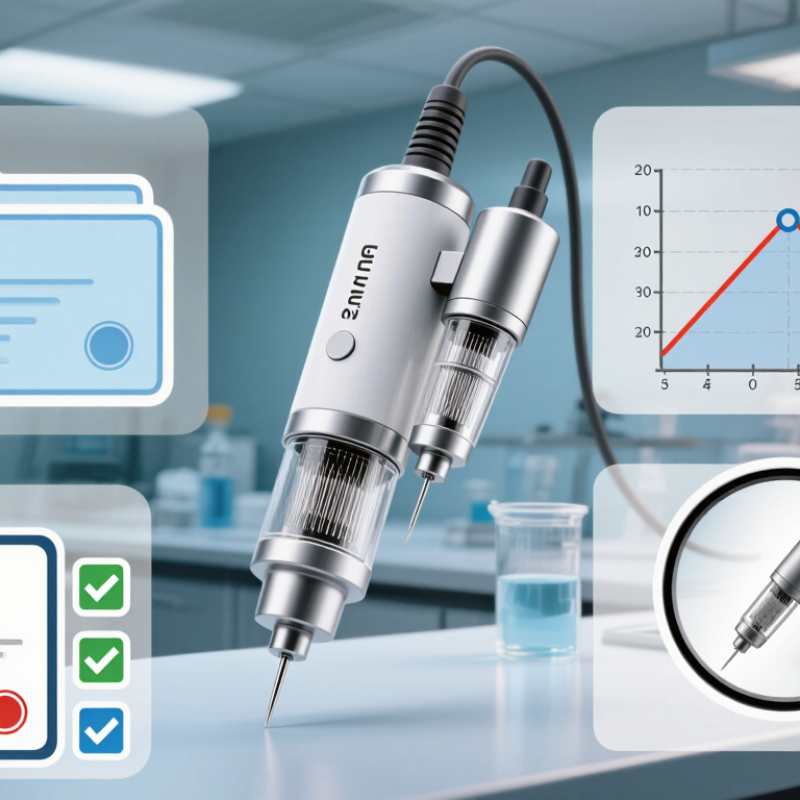
The 2.5 mm bar represents the device’s nominal needle extension, not a guarantee of actual skin penetration. When assessing a supplier, request product specifications and test documentation to verify the stated depth and confirm that the device is suitable for its intended use.

How 2.5 mm Microneedling Devices Work and Where They Are Used

China Best 2.5 Mm Microneedling Device Supplier?

How 2.5 mm Microneedling Devices Work and Where They Are Used

A 2.5 mm microneedling device uses fine needles to create controlled channels in the skin. This activates a wound-healing response, including collagen remodeling. The selected needle length is not always the exact depth reached; pressure, skin thickness, and device design can change penetration. Depth matters. Thinner facial areas may need a different approach than thicker scar tissue. The treatment is commonly considered for atrophic acne scars and uneven texture, but suitability depends on an individual assessment. It is not a shortcut.

Clinical evidence offers useful context, not a guarantee. A systematic review of nine randomized trials involving 341 patients reported improvement in atrophic acne scars after microneedling, while also noting variation in treatment methods and study quality. Results can differ. A 2.5 mm setting is relatively deep and should be used only by appropriately trained professionals, with sterile, single-use needle cartridges and careful skin assessment. The U.S. Food and Drug Administration also advises consumers to discuss device risks and expected benefits with a qualified health professional. Redness and pinpoint bleeding may occur; infection and pigment changes are possible risks. Some claims about “dramatic” results deserve skepticism. Proper depth selection, hygiene, and follow-up matter as much as the device itself.

Which Safety, Quality, and Regulatory Standards Should Buyers Check?

For a 2.5 mm microneedling device, verify the intended use and depth claims before comparing prices. Ask for current quality-system certificates and confirm that their scope covers the actual manufacturing site and device. ISO 13485 supports medical-device quality management, while ISO 14971 describes risk-management processes. Neither certificate alone proves that a particular device is safe. Check design records, needle-material specifications, depth accuracy, and documented testing.

Sterility needs evidence, not just a “sterile” label. Request the sterilization validation, packaging integrity tests, expiry basis, and lot-level traceability. Needles should be protected from contact before use, and single-use components should be clearly identified. For materials that contact skin, ask for relevant biocompatibility assessments under the ISO 10993 series. If the unit is powered, review applicable electrical-safety and electromagnetic-compatibility test reports. Small details matter.

A supplier should also provide clear instructions, contraindications, cleaning guidance for reusable parts, complaint handling, and a procedure for reporting incidents. Confirm regulatory status in the destination market using official records; a certificate from one region does not automatically establish approval elsewhere. The World Health Organization’s 2024 Global Patient Safety Report estimates that about 1 in 10 patients experiences harm in health care, and over half of that harm is preventable. This is not a microneedling-specific rate, but it underscores why buyers should inspect evidence and post-market controls. Paperwork can still miss real-world handling. Check a sample unit, packaging, and instructions before placing a large order.

China Best 2.5 Mm Microneedling Device Supplier? - Which Safety, Quality, and Regulatory Standards Should Buyers Check?

Buyer Check What to Verify Evidence to Request Why It Matters
Intended use and permitted claims Check the device’s intended purpose, user type, treatment areas, and claims. Confirm whether the stated use includes a 2.5 mm needle setting and whether it is for professional or home use. Product label, instructions for use (IFU), technical specifications, and the applicable market authorization or clearance record. Regulatory status depends on the device’s intended purpose and claims; a particular needle depth alone does not establish authorization or suitability.
Market-specific regulatory status For the United States, verify the exact model and intended use in the applicable FDA records; determine whether a 510(k), De Novo, or another pathway applies. In the EU, confirm MDR classification, conformity assessment, and CE documentation as applicable. Authorization or clearance details, Declaration of Conformity where applicable, certificate details where required, and labeling for the target market. Regulatory pathways and requirements vary by jurisdiction and intended use. A general registration, establishment listing, or certificate should not be treated as proof that every model or claim is authorized.
Quality management system Check for a maintained medical-device quality system, such as ISO 13485:2016 certification, and verify its scope, sites, and validity. For the U.S. market, check compliance with the FDA Quality Management System Regulation (QMSR), effective February 2, 2026. Current certificate and scope, recent audit information, corrective-action process, and records showing control of production and suppliers. A quality-system certificate supports confidence in manufacturing controls but does not, by itself, authorize a product for sale or use.
Risk management Review a risk-management process based on ISO 14971, including hazards such as excessive penetration, bleeding, infection, allergic reaction, electrical injury, and foreseeable misuse. Risk-management summary, hazard controls, residual-risk information, and evidence that risk controls are verified. Microneedling intentionally punctures skin. Risks should be assessed across the device, cartridges, instructions, and intended users.
Needle depth and mechanical performance Confirm how the device defines and adjusts the 2.5 mm setting. Ask for measured needle protrusion, adjustment accuracy, repeatability, and performance testing across the stated range. Test methods and results, calibration records, inspection criteria, and clear depth-setting instructions. Displayed settings and actual needle protrusion may differ. Buyers should not assume that a nominal 2.5 mm setting guarantees a specific penetration depth in skin.
Needle and cartridge safety Check needle material, tip and edge inspection, secure cartridge attachment, leakage or detachment controls, and compatibility between the handpiece and cartridge. Material specifications, dimensional inspection results, design verification, and compatibility testing. Defective, loose, or incompatible components can increase injury, contamination, or inconsistent-treatment risks.
Biological safety of patient-contacting materials Request a biological evaluation based on ISO 10993-1 for materials that contact the patient, with evaluation appropriate to the contact type and duration. Biological evaluation plan and report, material declarations, and relevant test reports. Evaluation should reflect the actual materials and exposure conditions; a generic claim of “biocompatible” is not sufficient evidence.
Sterility and single-use controls If cartridges are labeled sterile, verify the validated sterilization method and sterile-barrier controls. Check that single-use cartridges are clearly labeled and that reuse is addressed in the IFU. Sterilization validation, routine monitoring records, sterility or bioburden testing as applicable, and packaging validation. Standards commonly relevant to these processes include ISO 11135 for ethylene oxide sterilization, ISO 11137 for radiation sterilization, ISO 11737 for microbiological methods, and ISO 11607 for sterile-barrier packaging. Applicability depends on the chosen process and product.
Electrical and electromagnetic safety For electrically powered devices, check whether applicable testing has been completed for electrical safety and electromagnetic compatibility, including IEC 60601-1 and IEC 60601-1-2 where relevant. Test reports for the exact model and configuration, power-supply information, and instructions covering charging and use. Applicability depends on the device design and regulatory pathway. A report for a different model or power configuration may not cover the product being purchased.
Software and usability If the device uses software, firmware, or a digital interface, review relevant software lifecycle controls such as IEC 62304. For user-interface and use-related risks, check usability engineering based on IEC 62366-1. Software version and change-control records, verification and validation summaries, usability documentation, and user-training materials. Controls can help reduce errors such as selecting the wrong setting, using the wrong cartridge, or failing to follow cleaning and safety instructions.
Cleaning, disinfection, and maintenance Confirm which parts are reusable, the validated cleaning or disinfection instructions, maintenance intervals, and procedures for handling a malfunctioning device. IFU procedures, validation records where applicable, maintenance schedule, and service or repair records. Unclear or impractical reprocessing instructions can create cross-contamination and performance risks.
Traceability and post-market support Check for lot or serial-number traceability, complaint handling, adverse-event escalation, recall procedures, and access to replacement parts and technical support. Sample labels showing lot or serial identification, traceability procedures, complaint and recall process, and written warranty terms. Traceability and responsive post-market systems help identify affected products and address safety issues efficiently.

How to Compare Chinese Suppliers by Manufacturing and After-Sales Support

When evaluating a Chinese supplier of a 2.5 mm microneedling device, look beyond catalogue claims. Ask how production batches are controlled and whether the stated needle travel is checked with calibrated equipment. Request sample inspection records, component traceability, and documentation showing how defects are handled. A video tour helps, but it cannot replace verifiable records. Details matter.

Compare after-sales support before signing. Ask for written response times, warranty terms, spare-part availability, and a clear process for technical complaints. Test the support channel with specific questions: who handles calibration issues, and what evidence is needed for a replacement? PwC’s 2018 Future of Customer Experience report found that 32% of consumers would stop doing business with a brand they valued after one poor experience. That survey is not specific to device procurement, but it highlights why service failures deserve attention.

Check any quality-system certificate directly with its issuing body, including its scope and expiry date. Then ask whether staff can explain service records and corrective actions in plain language. A polished showroom is reassuring, but not enough. I would also compare actual response quality across several emails; one fast reply may be luck. No supplier’s brochure can prove consistent support.

What Questions Should Buyers Ask Before Choosing a Supplier?

China Best 2.5 Mm Microneedling Device Supplier?

What Questions Should Buyers Ask Before Choosing a Supplier?

A 2.5 mm specification alone says little about build quality or suitability. Ask how the supplier verifies needle depth, cartridge fit, motor consistency, and production-batch traceability. Request test records, not just a polished brochure. Small details matter. For example, does the stated depth describe needle extension or actual penetration? Ask how the supplier checks that measurement and handles out-of-tolerance units.

Grand View Research estimated the global microneedling market at USD 560.3 million in 2023 and projected a 7.8% compound annual growth rate from 2024 to 2030. That market estimate signals growing interest, not product quality.

Also ask for the quality-management certificate and confirm its scope covers the relevant manufacturing site and product category. Request cartridge material specifications, packaging details, and evidence supporting any sterility claims. If a supplier cannot explain these clearly, pause.

Ask for a sample unit and inspect the handpiece balance, vibration, cable connection, and depth adjustment under realistic working conditions. Get written answers on defect handling, replacement parts, lead times, and technical support after delivery.

I would compare the answers across suppliers; honestly, a neat sample can still hide weak batch controls. Ask what changes when components or production processes change, and whether buyers receive notice. Make the evidence part of the purchasing decision.