

TREND FOR

MINIATURIZATION

2026 Best Capacitor Bank Types for Global Buyers?

In 2026, global buyers need more than a low purchase price when selecting a Capacitor Bank. Power quality, operating voltage, enclosure design, and service support can change the real cost. A unit that performs well in a dry warehouse may struggle in a humid coastal plant. Heat, dust, switching frequency, and harmonic distortion all deserve attention. Small details matter.

This guide compares fixed, automatic, detuned, and harmonic-filter capacitor bank types for commercial, industrial, and utility applications. It considers reactive power correction, transient control, maintenance access, protection, and expected service life. Manufacturer experience is useful, but independent test data and clear technical documentation matter more. Buyers should check rated kvar, voltage class, discharge time, temperature limits, and compliance with applicable IEC or local requirements. Compatibility with transformers, variable-frequency drives, and backup generators should also be reviewed before ordering. Real installations rarely match brochures. Field measurements often expose assumptions. That is why practical project records, factory inspection, and credible after-sales support deserve equal weight. Budget forecasts can be wrong. The best choice depends on the load profile, not a universal ranking. Some recommendations may need revision when measurements reveal unexpected harmonics. Good engineering stays cautious. This article offers a careful starting point for comparing reliable options in 2026.
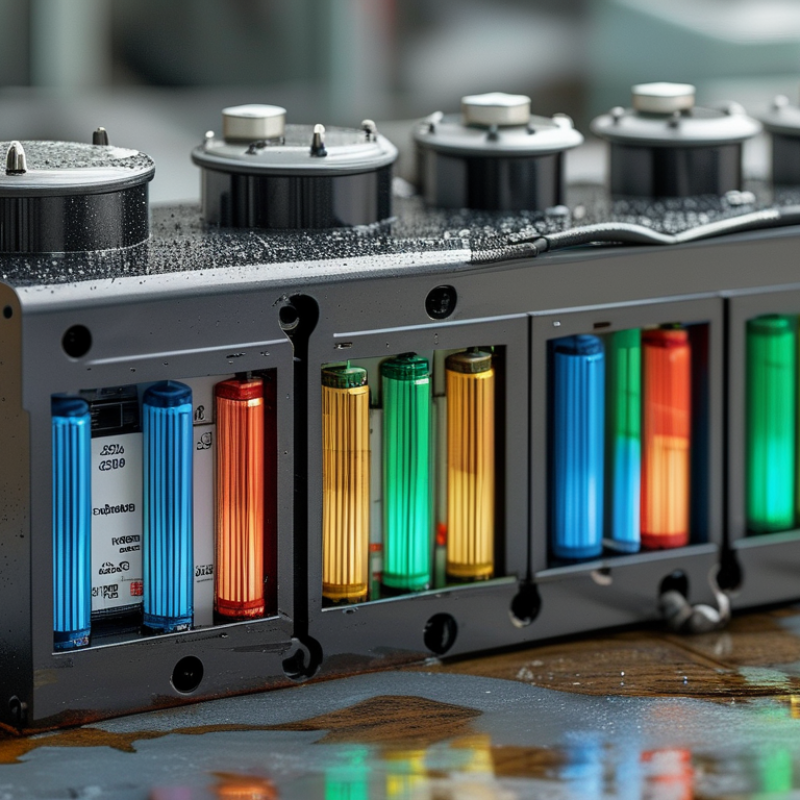
2026 Best Capacitor Bank Types for Global Buyers?

Capacitor Bank Fundamentals and Their Role in Power Systems

Capacitor banks are assemblies of capacitors that support voltage and reactive power control in electrical systems. They supply reactive power near inductive loads, improving power factor and reducing current in cables. This can release transformer capacity and reduce voltage drop. In commissioning work, I treat them as system equipment, not simple correction boxes. A bank changes the network.

Fixed capacitor banks suit steady loads with predictable demand. Automatic banks switch capacitor steps as demand changes, using controllers and switching devices. Detuned banks add reactors to reduce harmonic amplification from drives, rectifiers, and other nonlinear loads. Engineers should check voltage, frequency, short-circuit strength, and harmonic distortion before selecting a configuration. Nameplate kvar is not enough. Measurements matter.

During site checks, I compare load profiles with actual switching behavior. I also inspect ventilation, discharge resistors, fuses, contact wear, and enclosure clearance. A bank may overcorrect during light load, causing voltage rise or resonance. Protection settings need coordination with upstream breakers and applicable utility requirements. Field data is often incomplete. That uncertainty deserves a margin. Thermal cycling, dust, and loose connections can shorten service life, even when calculations appear correct. Where harmonic readings remain unclear, temporary monitoring can prevent an expensive assumption.

2026 Best Capacitor Bank Types for Global Buyers

Capacitor Bank Fundamentals and Their Role in Power Systems

How to read this chart: The bars show the reactive power compensation required to improve the power factor of a 1 MW load from 0.80 to three common target levels. The calculation uses Qc = P × (tan cos−1PFinitial − tan cos−1PFtarget).

Type selection: Fixed shunt capacitor banks suit steady loads; automatically switched banks suit varying loads; detuned banks are preferred where harmonic resonance is a concern; and harmonic-filter banks combine power-factor correction with harmonic mitigation.

Main Capacitor Bank Types Available to Global Buyers in 2026

2026 Best Capacitor Bank Types for Global Buyers?

Main Capacitor Bank Types Available to Global Buyers in 2026

Global buyers can choose fixed, automatic, detuned, tuned, or fast-switched capacitor banks. Each type suits a different load profile, voltage level, and harmonic environment.

Fixed banks fit steady motors and pumps with predictable demand. They cost less, but overcorrection can raise voltage during light loading. That mistake is common.

Automatic power factor correction banks use contactors or thyristors to add stages as demand changes. A typical panel may include several 25 kvar steps, a controller, fuses, and discharge resistors.

Detuned banks add reactors to limit harmonic amplification from drives, rectifiers, and data equipment. They are often safer where current distortion already exists.

Tuned filter banks target selected harmonic orders and can reduce distortion while supplying reactive power. Their design needs measured harmonic data, not assumptions.

Fast-switched banks use thyristors for loads that change within seconds, such as welding lines and cranes. They reduce switching transients, although their controls require careful commissioning.

Medium-voltage buyers may specify outdoor banks, metal-enclosed units, or internally fused capacitor assemblies.

Indoor low-voltage panels usually prioritize ventilation, touch protection, and easy maintenance access. Check system voltage, kvar demand, short-circuit rating, ambient temperature, and local grid rules before ordering.

Buyers should request routine test records and verify applicable IEC or IEEE requirements. A bank selected from a utility bill alone may disappoint. Site measurements remain essential.

Reviewing the choice after installation is wise, because operating patterns often change.

How to Match Capacitor Banks with Voltage, Load, and Grid Conditions

2026 Best Capacitor Bank Types for Global Buyers?

Matching a capacitor bank starts with voltage, load behavior, and grid quality. The wrong match can create overheating, nuisance trips, or poor power-factor correction. Measure the operating voltage, frequency, peak demand, and load profile before selecting equipment.

A fixed bank suits steady motors. An automatic stepped bank responds better to changing factory loads.

The IEA Electricity 2024 report recorded 2.2% global electricity-demand growth in 2023 and forecast about 4% growth for 2024. More demand increases pressure on existing networks.

Buyers should check whether the bank supports low-voltage or medium-voltage systems, then verify insulation levels and switching duties. IEC 60831 covers low-voltage self-healing shunt capacitors. IEC 61921 addresses power capacitor installations. These standards help, but they do not replace site testing.

Harmonics change the decision. Variable-speed drives, rectifiers, and data-center supplies can amplify resonance. IEEE 519-2022 provides planning guidance for harmonic control at the point of common coupling. Detuned reactors may be necessary when background distortion is significant.

Do not trust a single daytime reading. Capture production peaks, night operation, and generator conditions. Field measurements are often messier than design sheets.

That is where many “correct” selections fail. Temperature, ventilation, altitude, and frequent switching also affect service life.

A practical review should compare measured kvar demand with the bank’s switching steps, not simply choose the largest available rating.

Global Standards, Safety Requirements, and Certification Checks

2026 Best Capacitor Bank Types for Global Buyers?

Global buyers should treat compliance as a design requirement, not a paperwork task. The IEA’s Electricity 2024 report expects global electricity demand to grow by about 4% annually through 2026. More electrical loads mean greater pressure on power factor, harmonics, and switching safety. Fixed banks suit stable loads, while automatic banks respond to changing demand. Detuned banks are safer where harmonic currents may overheat capacitors. Selection must follow the site’s voltage, frequency, load profile, and harmonic survey.

IEC 60831-1 and IEC 60831-2 address low-voltage shunt power capacitors and their testing. IEC 61921 covers power capacitor installations, while IEC 61439 is relevant to low-voltage assemblies.

Buyers should verify the exact certificate, not just a supplier’s logo. Check rated voltage, temperature class, discharge performance, short-circuit rating, enclosure protection, and test-report numbers.

Certification must match the delivered configuration. A certificate for the capacitor element may not cover the complete bank. That mistake remains common.

Tips: Request a factory test report and a traceable serial number. Confirm local acceptance rules before shipment. Inspect ventilation, fuses, contactors, and harmonic reactors as one system. I have seen projects pass document review but fail commissioning because field wiring differed from the tested design. Do not assume one international certificate satisfies every market. Recheck assumptions.

How to Compare Suppliers, Performance, and Total Ownership Costs

2026 Best Capacitor Bank Types for Global Buyers?

How to Compare Suppliers, Performance, and Total Ownership Costs

Choosing a capacitor bank is not only a price exercise. It affects power quality, equipment life, and monthly demand charges. Buyers should match the bank type to load behavior, site voltage, harmonic levels, and switching frequency. Fixed banks suit stable loads, while automatic banks respond better to changing production schedules. Detuned designs may be necessary where variable-speed drives create harmonic stress. The cheapest option can become expensive.

Supplier comparison should begin with verifiable engineering details. Request test reports, protection settings, discharge times, enclosure ratings, and thermal limits. Check whether the supplier explains component tolerances and expected aging. A serious supplier also provides wiring diagrams, commissioning guidance, spare-part availability, and clear warranty conditions. Site references can reveal practical issues that brochures often hide. Ask how the bank performed after twelve months, not only after installation.

Total ownership cost includes purchase, freight, installation, energy losses, inspections, replacement parts, and unplanned downtime. Calculate capacitor losses over the expected service life. Include relay replacement and cooling requirements. Maintenance access matters too. A difficult enclosure can increase labor costs every year. My early comparisons focused too heavily on the purchase invoice. That was a mistake. Field conditions changed the result. Even a well-designed bank may underperform when measurements are incomplete. Require a site survey, independent electrical checks, and documented acceptance tests before approving the final design.

2026 Best Capacitor Bank Types for Global Buyers? - How to Compare Suppliers, Performance, and Total Ownership Costs

Capacitor Bank Type Typical Application Typical Voltage Range Typical Capacity Range Switching Method Harmonic Suitability Typical Response Time Expected Service Life Relative Initial Cost Maintenance Requirement Best-Fit Buyer Profile
Fixed Capacitor Bank Stable loads with predictable reactive-power demand 230 V to 24 kV 5 to 1,000 kvar per bank Direct connection or circuit breaker Limited; detuned design may be required Immediate after energization 15 to 20 years under suitable operating conditions Low Low; periodic inspection and capacitance checks Buyers prioritizing low purchase cost and simple installation
Automatic Switched Capacitor Bank Commercial buildings, factories, and variable-load distribution systems 400 V to 24 kV 25 to 5,000 kvar per system Contactors, circuit breakers, or thyristor switches Moderate; harmonic study recommended 1 to 60 seconds, depending on controller settings 12 to 20 years; switching components may require earlier replacement Medium Medium; controller, contactor, ventilation, and capacitor checks Global buyers needing automatic power-factor correction over changing loads
Detuned Reactor Capacitor Bank Facilities with variable-speed drives, rectifiers, UPS systems, or other nonlinear loads 400 V to 1 kV low voltage; medium-voltage versions also available 25 to 3,000 kvar per system Automatic contactor or breaker switching Good; commonly tuned below dominant harmonic orders 1 to 60 seconds 12 to 20 years, subject to temperature and harmonic loading Medium to High Medium; reactor temperature, airflow, harmonic current, and capacitor condition must be checked Industrial buyers seeking power-factor correction with reduced resonance risk
Thyristor-Switched Capacitor Bank Rapidly fluctuating loads such as welding, cranes, presses, and rolling equipment 400 V to 1 kV 50 to 2,000 kvar per system Solid-state thyristor switching Good when combined with detuned reactors and correct filtering Less than one electrical cycle to a few cycles 10 to 15 years for power electronics; capacitors may last 12 to 20 years High Medium to High; thermal management and semiconductor inspection are important Buyers requiring fast correction and reduced switching transients
Harmonic Filter Bank Sites requiring both reactive-power compensation and targeted harmonic reduction 400 V to 36 kV 50 to 10,000 kvar per system Fixed or automatically switched steps Very good when engineered from a measured harmonic study 1 to 60 seconds; faster switching is possible 12 to 20 years, depending on harmonic and thermal stress High Medium to High; requires periodic harmonic, temperature, and detuning verification Buyers with strict power-quality limits or significant nonlinear loads
Active Power Factor Correction System Dynamic industrial networks where load changes are too rapid for conventional banks 400 V to 690 V, with higher-voltage solutions available through system integration 30 to 1,000 kvar per module or system Power-electronic converter Very good for dynamic compensation; exact performance depends on design Sub-cycle to a few milliseconds 10 to 15 years for power electronics, subject to temperature and duty cycle Very High High; cooling, firmware, sensors, and power modules require specialist support Buyers prioritizing fast response, power quality, and process stability over lowest CAPEX
Supplier and Total Ownership Cost Comparison Checklist
Evaluation Dimension What Global Buyers Should Verify Why It Affects TCO
Electrical Performance Rated kvar, voltage, frequency, temperature class, overload capability, discharge time, and power-factor target Incorrect sizing can cause under-correction, overvoltage, overheating, or premature failure
Harmonic Compatibility Measured THD, dominant harmonic orders, reactor detuning percentage, resonance analysis, and filter design method Harmonic stress can shorten capacitor life and increase energy losses and downtime
Safety and Compliance Applicable IEC or equivalent national standards, enclosure rating, short-circuit withstand, clearances, discharge resistors, and protection coordination Compliance reduces approval delays, safety risks, and retrofit expenses
Efficiency and Heat Management Capacitor losses, reactor losses, ventilation design, ambient operating range, and derating requirements Higher losses increase electricity consumption and cooling requirements throughout the service life
Service and Spare Parts Warranty period, local technical support, replacement capacitor availability, controller compatibility, and response time Long lead times can create production losses that exceed the original equipment price difference
Lifecycle Cost Purchase price, engineering, installation, commissioning, energy losses, inspections, component replacement, disposal, and downtime exposure The lowest initial price does not always provide the lowest total cost of ownership

Note: Values shown are typical engineering ranges for comparison only. Final selection should be based on the site voltage, frequency, load profile, measured power factor, harmonic spectrum, ambient conditions, fault level, applicable local standards, and the supplier’s verified test documentation.