2026 Best GRP Storage Tank Manufacturers for Global Buyers
For global buyers, choosing a GRP Storage Tank manufacturer means looking beyond capacity and price. Resin quality, glass-fiber reinforcement, joint design, and installation support all affect long-term performance. A tank holding process water in a shaded plant has different demands from one exposed to strong sun, changing temperatures, and frequent cleaning. Details matter.
A practical selection rule is: “Match the tank to the stored medium, site conditions, and duty cycle—not capacity alone.” No source quotation or verified expert name was provided for this guide, so attributing those words to a named specialist would be misleading. That restraint matters. Buyers should ask manufacturers for material specifications, project references, inspection procedures, and clear guidance on foundations and maintenance. A polished brochure is not proof.
This 2026 overview compares manufacturers serving international projects, with attention to engineering capability, customization, certifications, delivery experience, and after-sales support. Look for evidence: documented test results, traceable materials, and references for tanks used in similar conditions. A small detail, like access for inspection, can matter years later. Rankings can help narrow the field, but they cannot replace project-specific checks. Even a reputable supplier may not fit every site. That is worth remembering.
Define GRP Tank Types and EN 13280:2001 Cold-Water Scope
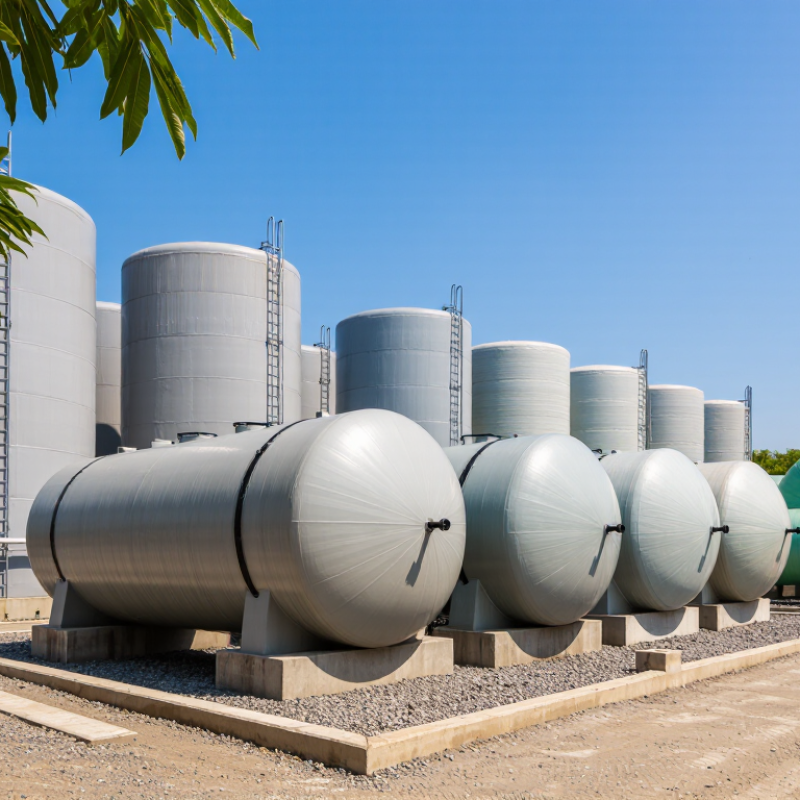
GRP means glass-reinforced polyester, but it does not describe one tank shape. Buyers commonly compare molded, one-piece tanks with sectional panel tanks assembled on site. Vertical and horizontal configurations also suit different footprints, access routes, and support arrangements. Small plant rooms may favor compact molded units; large facilities often need modular panels carried through narrow doorways. The distinction matters. A “GRP” label alone is not a complete specification.
EN 13280:2001 addresses GRP tanks intended for cold-water storage. It provides a relevant product specification, not a universal approval for every tank or use. Buyers should confirm the proposed design, installation conditions, water temperature, and maintenance requirements against the standard’s scope. Cold-water storage does not automatically mean approval for drinking-water contact. Check applicable hygiene requirements separately. This point is easy to miss when comparing quotations.
The United Nations World Water Development Report 2024 states that global water demand has risen by about 1% annually over the past 40 years, with further growth expected through 2050. That trend makes dependable storage planning more important, but it does not determine tank size. Estimate peak demand, refill time, usable capacity, and available floor loading. Ask for test records and installation guidance, too. I would still treat any capacity figure as provisional until site conditions are checked.
Compare ASTM D3299 Wound Tanks with D4097 Molded Tanks
For global buyers, the key difference is how the laminate is built. ASTM D3299 covers filament-wound, glass-fiber-reinforced thermoset tanks; ASTM D4097 covers contact-molded tanks. Winding places continuous reinforcement around the shell, making it well suited to cylindrical designs and hoop loads. Contact molding allows more varied shapes, but laminate quality depends heavily on careful lay-up and curing. Neither method is automatically stronger in every service condition. Not quite that simple.
Compare the actual resin, laminate thickness, nozzle details, temperature, and chemical concentration—not just the standard number. ASTM specifications define construction and testing requirements; they do not replace project-specific engineering or prove suitability for every chemical. The U.S. EPA’s 2023 Drinking Water Infrastructure Needs Survey estimates $625 billion in U.S. drinking-water infrastructure needs over 20 years. That figure is not a GRP-tank market forecast, but it highlights why long-term inspection and maintenance deserve attention. Ask for documented laminate records, test results, and inspection access. A small detail, such as a poorly supported nozzle, can matter more than the tank’s headline construction method. Sources: ASTM D3299 and D4097; U.S. EPA, 2023 Drinking Water Infrastructure Needs Survey.
Screen Potable-Water Suppliers Against NSF/ANSI/CAN 61
2026 Best GRP Storage Tank Manufacturers for Global Buyers
Screen Potable-Water Suppliers Against NSF/ANSI/CAN 61
For a GRP tank intended for drinking water, ask for evidence tied to the exact product configuration. NSF/ANSI/CAN 61 evaluates the health effects of materials and components that contact drinking water. A certificate for a resin or fitting alone may not cover the finished tank. Check the certifier’s current listing, model, liner, fittings, and approved use conditions.
This check is easy to rush. Don’t.
At bid review, match the documents to the tank you will install: the same panel material, sealant, internal coating, and outlet fittings. Ask whether certification covers the finished assembly and the intended water temperature. NSF/ANSI/CAN 61 addresses health effects, not a tank’s structural capacity or resistance to leakage. Review those separately against the project’s engineering requirements.
The U.S. EPA’s 2023 Drinking Water Infrastructure Needs Survey and Assessment estimated $625 billion in drinking-water infrastructure needs over 20 years. That figure underscores the scale of investment, but it does not verify any supplier. Keep the distinction clear.
Record certificate numbers, scope, and expiry or renewal details, then confirm them with the certifier. If documents conflict, pause procurement and request clarification in writing.
Compare 2026 Global Manufacturers by Capacity, QA, and Export Reach
For 2026 sourcing, compare GRP storage tank manufacturers by usable capacity, quality controls, and export experience—not headline volume alone. A supplier may offer large tanks but lack clear data on panel dimensions, reinforcement, or roof loads. Ask for drawings that show the proposed configuration, access points, and foundation requirements. Details matter on site.
Review quality assurance records alongside production capacity. Useful evidence includes inspection procedures, material traceability, dimensional checks, and documented leak testing. Ask how defects are recorded and corrected. A polished certificate is not the whole story. Export reach also involves practical support: packing plans, shipping experience, spare-panel availability, and installation guidance in your working language. Request references for projects with similar tank sizes and climates, while remembering that one successful project does not guarantee another.
Tips: Request a sample inspection report and a packing list. Confirm stated capacity against the actual tank layout. Compare delivery estimates, but leave room for delays. Even experienced buyers can overlook small fittings.
Verify Design Loads, Corrosion Duty, and ISO 9001:2015 Quality Systems
2026 Best GRP Storage Tank Manufacturers for Global Buyers
Selecting a GRP tank starts with its actual service conditions, not a catalogue capacity. Ask for design calculations covering liquid density, operating temperature, wind, seismic loads, and site-specific supports. A tank holding treated water may face different demands from one storing process chemicals. Check nozzle positions and access openings against the installation drawings. Small mismatches can become costly field changes.
Corrosion duty needs equally careful review. Request written compatibility guidance for the stored medium, concentration, and temperature range. Confirm the resin system, laminate construction, and any internal barrier specified for that duty. ISO 9001:2015 describes a quality management system; it does not, by itself, prove a tank suits your application. Review the supplier’s inspection records, material traceability, and procedures for documenting repairs or nonconformities. Paperwork helps, but it cannot replace technical review.
Tips: Share the fluid’s safety data sheet and expected operating range. Compare signed calculations with your project loads, and ask who checks them. Look for clear inspection records. One detail is easy to miss: transport restraints and lifting points also need review. I would not assume a standard design fits every site; even experienced teams can overlook a late foundation change.